

An aesthetically pleasing home gym is defined as a workout space where fitness equipment, materials, and design elements work together as a unified interior environment rather than a collection of mismatched gear. The industry term for this approach is integrated fitness design, and it is gaining traction among homeowners who want their workout space to feel as intentional as the rest of their home. The best examples of aesthetically pleasing home gyms prove that you do not need to sacrifice style for function. When your space looks good, you show up more consistently. That connection between environment and motivation is the real reason design matters here.
1. Examples of aesthetically pleasing home gyms that define the standard
The most cited examples of beautiful home workout spaces share three qualities: purposeful equipment placement, a cohesive color palette, and lighting that shifts with your mood. Blending gym space with home decor using calming colors, stylish storage, and artwork is the key to creating inviting, non-utilitarian gyms, according to top interior designers. That means your squat rack and your sofa can coexist in the same visual language. The difference between a garage gym and an inspirational home fitness setup is almost always intentionality, not budget.
2. The minimalist compact gym
A minimalist setup requires roughly 100 sq ft and can be highly effective when equipped with adjustable dumbbells, a bench, and a pull-up bar. That is the footprint of a large walk-in closet, which means almost any home has the space for this approach. The key is keeping surfaces clear and choosing equipment with clean lines. Matte black or warm wood tones work well against white or neutral walls, and wall-mounted storage keeps the floor open and visually calm.
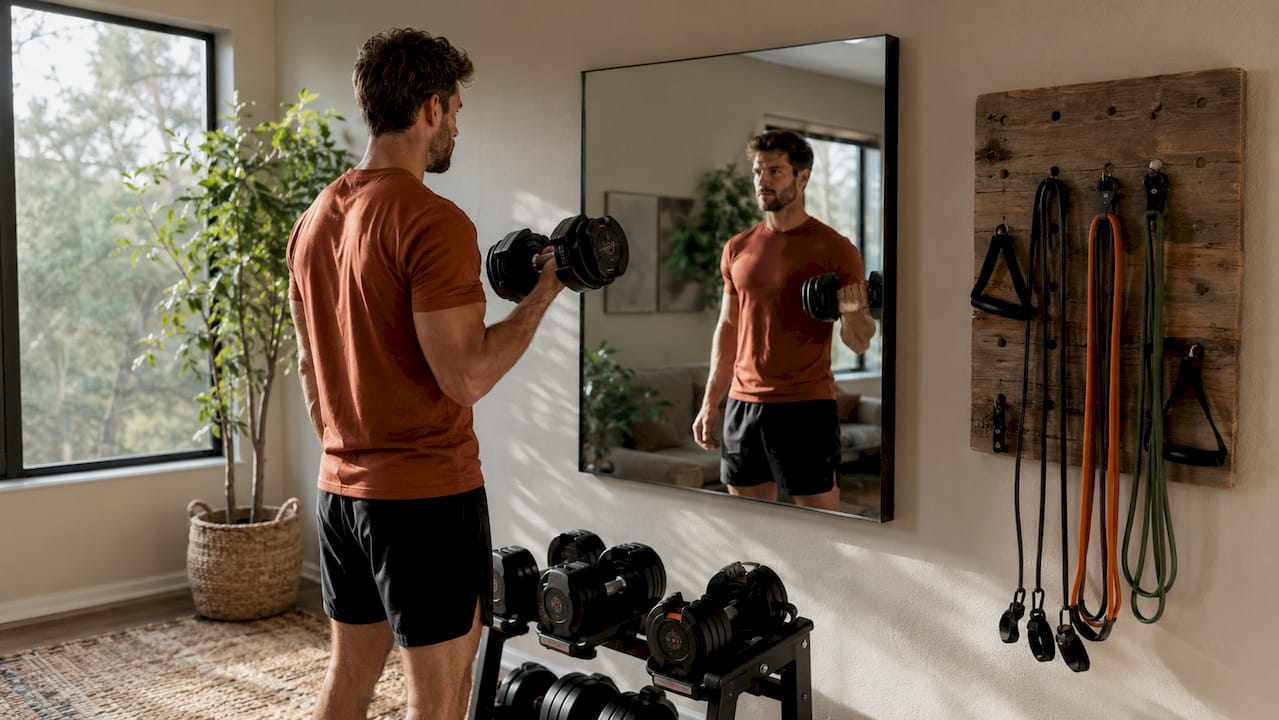
Pro Tip: Choose adjustable dumbbells over a full rack. They deliver the same training range in a fraction of the space, and they look far cleaner on a shelf or in a dedicated cabinet.
3. The Ottagono cabinet gym
The Ottagono cabinet by Cassina and Technogym conceals adjustable 4 to 55 lb dumbbells and resistance gear inside a sculptural wood unit that reads as furniture, not fitness equipment. This is integrated fitness design at its most refined. When closed, it belongs in a living room or study. When open, it is a fully functional strength station. For homeowners who want a beautiful home workout space without dedicating an entire room, this concept sets the benchmark.
4. The luxury wellness sanctuary
Terri Henning’s fitness sanctuary in Charleston is one of the most referenced examples of a home gym that doubles as a personal retreat. Her space includes an infrared sauna used at least 5 days a week, a dedicated recovery zone, and windows positioned to overlook natural scenery. That last detail matters more than most people realize. Natural light and views directly improve user experience and personal motivation in home gym spaces. A luxury gym does not require a massive footprint. It requires deliberate choices about what you include and how each element serves your wellness goals.
5. The boutique basement gym
Basement gyms are the most common canvas for dramatic transformations. The Olathe basement remodel by Cedar Creek turned an unfinished utility space into a boutique studio using wood slat paneling, full-length arched mirrors, decorative sconces, and curated art. The result looks closer to a high-end fitness studio than a home renovation. Layered lighting with dimmable sconces and LED coves is preferred over harsh overhead fixtures because it allows you to shift the mood from an energizing morning session to a calm evening stretch. This is one of the most replicable home gym design ideas for anyone working with a basement or spare room.
6. The wellness-focused natural materials gym
Yovana’s wellness haven, featured in Austin Home magazine, prioritizes natural finishes and low-VOC materials to reduce off-gassing and create a genuinely supportive environment. Oil-based wood sealers, cork flooring, and acoustic dampening panels replace the synthetic rubber and fluorescent lighting found in most home gyms. The result feels more like a spa than a workout room. Avoiding synthetic finishes and embracing tactile natural materials is one of the most overlooked upgrades in decorative home gyms, and it pays off in both air quality and visual warmth.
7. The mid-century modern gym
Mid-century modern is one of the most adaptable styles for home gyms because its core elements, warm wood tones, clean geometric lines, and restrained color palettes, translate naturally to fitness equipment. Teak or walnut shelving for storing kettlebells and foam rollers, a leather bench, and a simple wall-mounted pull-up bar in brushed brass or matte black all fit the aesthetic without forcing it. Pair this with a warm amber lighting scheme and a few well-chosen art prints, and you have a space that feels cohesive from floor to ceiling. This style works particularly well in rooms with original hardwood floors or exposed brick.
8. The art deco glamour gym
Art Deco home gyms lean into bold geometry, metallic accents, and rich jewel tones. Think deep emerald or navy walls, gold-framed mirrors, and equipment with chrome or brass hardware. This aesthetic works best in larger dedicated rooms where the drama has space to breathe. A Peloton Bike or Row in a matte black finish pairs naturally with this palette, and a statement chandelier or pendant light anchors the space visually. The risk with Art Deco is clutter. Every decorative element needs to earn its place, or the space tips from glamorous to overwhelming.
9. The outdoor-inspired indoor gym
Bringing nature indoors is one of the strongest trends in home gym design ideas right now. This means living plant walls, natural stone or wood accent walls, large windows or skylights, and earthy tones throughout. Linen or cotton curtains replace blinds, and equipment finishes lean toward warm wood, matte earth tones, or forest green. The goal is a space that feels connected to the outdoors even when you are training inside. This approach pairs well with yoga, Pilates, or mobility-focused training, where a calm, grounded environment directly supports the practice.
Pro Tip: Add a small indoor plant shelf near your stretching area. Plants like pothos, snake plants, or peace lilies improve air quality and add visual softness without requiring much maintenance.
10. Comparing aesthetic styles for different spaces
Choosing the right aesthetic for your home gym depends on your room size, your home’s existing design language, and how you train. Here is a direct comparison of the four most popular styles:
| Style | Best room size | Key materials | Lighting approach | Best for |
|---|---|---|---|---|
| Minimalist | 100 sq ft and up | Matte black, white walls, glass | Recessed LED, natural light | Small spaces, multi-use rooms |
| Luxury wellness | 200 sq ft and up | Natural stone, wood, linen | Layered sconces, dimmable LEDs | Dedicated rooms, recovery focus |
| Industrial | 150 sq ft and up | Exposed concrete, steel, brick | Track lighting, Edison bulbs | Basements, garages |
| Bespoke boutique | 200 sq ft and up | Wood paneling, arched mirrors, art | Decorative sconces, LED coves | Basement conversions, full remodels |
Minimalist setups offer the most flexibility for small homes and multi-use spaces. Luxury wellness and bespoke boutique styles require more square footage but deliver the strongest visual impact. Industrial works well in raw spaces like garages where the existing architecture does the heavy lifting. For guidance on integrating equipment with your decor, the approach you take to color and storage makes the biggest difference regardless of style.
11. How to personalize your home gym aesthetic
Personalizing your space is where most people get stuck, but it does not require a full renovation. Start with these focused choices:
- Modular and multifunctional equipment: Portable and compact fitness gear like adjustable kettlebells, folding benches, and wall-mounted pull-up systems keep the floor clear and the visual profile clean.
- Acoustic treatment: Fabric wall panels and cork tiles reduce echo and noise while adding texture and warmth. Eco-conscious acoustic dampening materials can make a home gym feel like a wellness retreat rather than a noisy utility room.
- Dimmable lighting layers: Install a dimmable overhead fixture, add a sconce or two at eye level, and consider LED strip lighting under shelving or along the floor perimeter. This gives you full control over the mood at any hour.
- Art and natural elements: A single large-format print or a small gallery wall transforms a bare gym wall into a design statement. Pair it with one or two plants and you have a space that feels personal and alive.
- Stylish storage: A well-designed storage system keeps resistance bands, foam rollers, and accessories out of sight without sacrificing accessibility.
The design should be exercise goal-driven, with equipment placement and architectural choices supporting your actual training. If you do yoga, you need open floor space and soft lighting. If you lift, you need clear sightlines to mirrors and solid flooring underfoot.
Key takeaways
The most effective home gym designs unify fitness equipment, natural materials, and layered lighting into a space that supports both performance and daily wellbeing.
| Point | Details |
|---|---|
| Start with design intent | Define your training style before choosing equipment or finishes to keep the space cohesive. |
| Lighting changes everything | Dimmable, layered lighting schemes shift the mood from energizing to restorative without any renovation. |
| Natural materials improve wellness | Low-VOC finishes, cork, and wood reduce off-gassing and make the space feel genuinely supportive. |
| Storage is a design tool | Concealed or stylish storage keeps the visual profile clean and the space feeling intentional. |
| Style and function are not opposites | Pieces like the Ottagono cabinet prove that fitness equipment can be beautiful furniture when design is prioritized. |
Why intentional design changed how I train
By Belle
I used to think a home gym just needed to work. A rubber mat, some weights, a mirror. Functional, sure. But I stopped using it within a few weeks every single time. The space felt like a chore before I even started moving.
What changed things for me was treating the gym the same way I treat the rest of my home. I added a warm-toned sconce, replaced the harsh overhead bulb, put up one print I genuinely loved, and swapped my plastic storage bins for a simple wood shelf. The room did not change structurally. But the way I felt walking into it changed completely.
I have noticed the same pattern in the spaces I find most inspiring, from Terri Henning’s light-filled sanctuary to the Olathe boutique basement remodel. The equipment is almost secondary. What pulls you in is the atmosphere. The light, the texture, the sense that someone made deliberate choices about every element.
My honest recommendation: do not wait until you have the budget for a full remodel. Pick one thing, the lighting, the storage, one piece of art, and do it well. That single intentional choice will shift how the whole space feels, and it will shift how often you show up to use it. Balancing luxury and practicality is not about spending more. It is about spending with intention.
— Brian Dunn, Couch & Dumbbells
Build your ideal space with Couchanddumbells
Couchanddumbells curates products specifically for people who want their home to look good and support an active life at the same time. Whether you are outfitting a compact minimalist gym or designing a full wellness room, the home and interior collection brings together decor, storage, and fitness gear that work together visually and functionally. You will find pieces that belong in both a living room and a workout space, because that is exactly the point. Browse the full collection and start building a space that reflects how you actually want to live.
FAQ
What makes a home gym aesthetically pleasing?
An aesthetically pleasing home gym unifies equipment, materials, lighting, and color into a cohesive space that feels intentional rather than utilitarian. The key elements are a consistent palette, layered lighting, and stylish storage that keeps clutter out of sight.
How much space do I need for a beautiful home gym?
A minimalist home gym can work in as little as 100 sq ft with the right equipment choices. Luxury or boutique-style setups typically benefit from 200 sq ft or more to accommodate recovery zones and design elements.
What lighting works best in a home gym?
Dimmable, layered lighting with sconces and integrated LEDs is the preferred approach, according to designers behind boutique gym remodels. This setup lets you match the light intensity to your workout type and time of day.
Can I make a basement gym look stylish?
Yes. Wood slat paneling, arched mirrors, decorative sconces, and curated art are the core tools used in boutique basement conversions to transform raw utility spaces into luxurious fitness rooms.
What are the best materials for a wellness-focused home gym?
Natural materials like cork flooring, oil-sealed wood, and low-VOC wall finishes reduce off-gassing and create a healthier environment. Acoustic dampening panels add both sound control and visual texture, making the space feel more like a retreat.