

Combining style and comfort in a sofa is not a compromise. It is a design decision grounded in construction quality, cushion engineering, and fabric science. The right sofa delivers ergonomic back support, a seat depth suited to how you actually sit, and upholstery that holds up to daily life without losing its visual appeal. Frame material, spring suspension, and cushion fill are the three variables that separate a sofa you love for a decade from one you regret in two years. When you know what to look for, you can choose sofa style without sacrificing comfort every single time.
What structural features make a sofa both stylish and comfortable?
The frame is the foundation of every sofa, and it determines both longevity and comfort. A solid hardwood or kiln-dried engineered timber frame resists warping, cracking, and sagging over years of use. Particleboard and MDF frames feel fine in a showroom but break down within a few years under regular weight and movement.
Spring suspension is the next layer of quality. Eight-way hand-tied coil springs distribute weight evenly across the seat and maintain their shape far longer than sinuous wire springs or webbing supports. This matters because a sofa that sags in the center forces your spine into a curved position, which creates discomfort regardless of how good the cushions are.
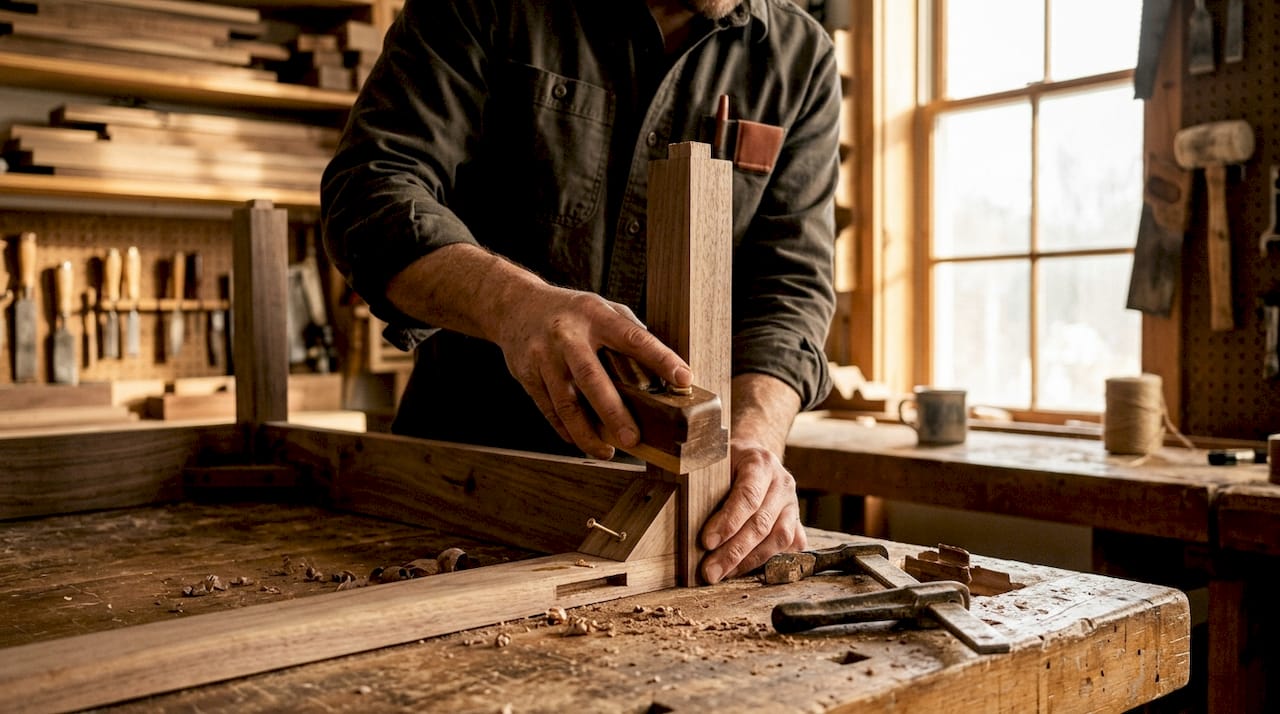
Construction quality also shows up in the joinery. Look for corner blocks glued and screwed into place, not just stapled. Lift one corner of the sofa slightly off the floor. If the frame flexes or twists, the joinery is weak. A well-built sofa feels rigid as a unit.
Key structural features to check before buying:
- Frame material: Hardwood or kiln-dried engineered timber only. Avoid particleboard.
- Spring system: Eight-way hand-tied coil springs for best weight distribution and durability.
- Joinery: Corner blocks that are both glued and screwed, not stapled alone.
- Leg attachment: Legs bolted through the frame, not just screwed into the base.
- Dust cover: A woven fabric dust cover on the underside signals overall build quality.
Pro Tip: Flip the sofa or ask the retailer to show you the underside. A quality dust cover made from woven fabric, rather than cheap plastic sheeting, is one of the clearest signs of a well-built piece.
How do cushion fill and seat dimensions affect comfort and style?
Cushion fill is where most homeowners make their biggest mistake. High-resiliency foam wrapped with down or polyester fiber gives you the best of both worlds: a structured seat that holds its shape and a plush surface that feels welcoming. Pure down cushions feel luxurious but require daily fluffing and lose their form quickly. Foam-only cushions are low maintenance and consistent but can feel hard after extended sitting.
Seat depth is the dimension most people overlook entirely. A seat depth of 20–22 inches suits upright sitting and works well for shorter individuals or formal living rooms. A depth of 24–26 inches or more is ideal for lounging, but deeper seats often need lumbar pillows to support the lower back during upright use. Getting this wrong means you either perch uncomfortably on the edge or slide into a posture that strains your back.
| Seat depth | Best for | Trade-off |
|---|---|---|
| 20–22 inches | Upright sitting, formal use | Less lounging comfort |
| 24–26 inches | Casual lounging, relaxed rooms | May need lumbar support |
| 26+ inches | Deep relaxation, large frames | Can feel too deep for shorter people |
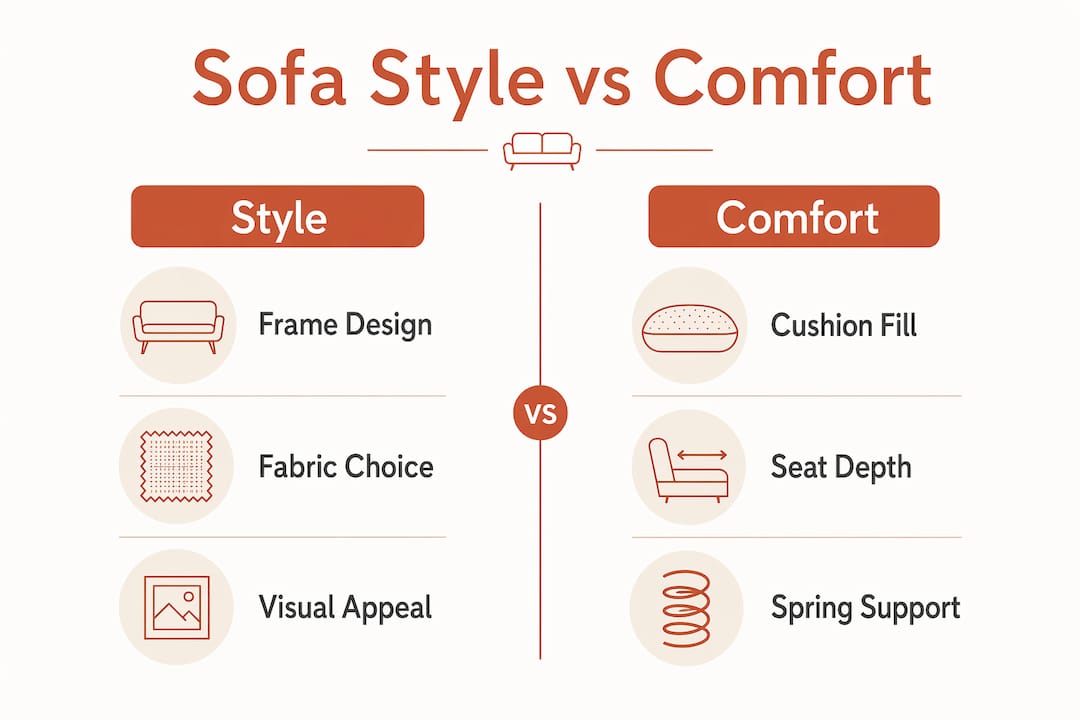
Back height also shapes both comfort and visual proportion. Design experts recommend back heights between 30 and 36 inches to balance ergonomic support with aesthetic appeal. A lower back height creates a sleek, modern silhouette but offers less head and neck support. A taller back suits traditional or transitional styles and works well in rooms with high ceilings.
Pro Tip: Sit on the sofa for at least 10 minutes in a showroom, not just 30 seconds. Your body needs time to settle into the cushions before you can accurately judge long-term comfort.
What upholstery fabrics combine durability and aesthetic appeal?
Fabric choice is where style and practicality meet most directly. Performance fabrics mimic natural fibers like linen and velvet in texture and appearance but resist stains, scratches, and fading far better. They are the practical choice for households with children, pets, or high daily use, and they have improved significantly in quality over recent years.
Natural fibers like linen and cotton offer a relaxed, organic look that photographs beautifully and ages gracefully in low-traffic rooms. They wrinkle easily and stain more readily than performance alternatives. If you love the look of linen but need durability, a linen-blend performance fabric gives you both.
Velvet adds tactile luxury and visual depth to neutral color palettes, making it one of the most effective fabrics for combining comfort and style simultaneously. High-quality velvet is more durable than its reputation suggests. The key is thread count and pile density. A tightly woven velvet holds up well; a loosely woven one crushes and marks easily.
Use these two industry standards when evaluating any fabric:
- Martindale rub count: A count above 25,000 rubs indicates good durability for everyday residential use. Above 40,000 rubs suits heavy use or commercial settings.
- Cleaning codes: W means water-based cleaners are safe. S means solvent only. WS means both work. X means vacuum only. Match the code to your household’s cleaning habits before committing.
How do you balance sofa style with room layout and lifestyle?
Room layout is where many stylish sofa choices go wrong. The most common mistake is buying a sofa that looks right in a showroom but overwhelms the actual room. Before you order, tape out the sofa’s full footprint on your floor using painter’s tape. Walk around it. Open doors near it. Check that traffic can flow naturally without squeezing past the arms.
L-shaped sectionals can disrupt room flow if not planned carefully with scale and sightlines in mind. A sectional that blocks a doorway or cuts off a natural walking path creates daily friction that no amount of style compensates for. Drawing a to-scale floor plan before purchasing is the single most effective way to avoid this mistake.
If you want to style a living room that serves multiple functions, including relaxation and movement, sofa placement becomes even more critical. A sofa positioned against a wall with clear floor space in front gives you room to stretch, exercise, or simply move freely.
Here is a practical approach to integrating your sofa into your room:
- Measure twice, order once. Record the room’s width, length, and ceiling height. Note door swing arcs and window placements.
- Tape the footprint. Use painter’s tape to mark the sofa’s exact dimensions on the floor before purchasing.
- Check traffic flow. Leave at least 30–36 inches of clear walkway around the sofa on all active sides.
- Add armchairs strategically. Armchairs offer a flexible style statement that complements a larger sofa without overwhelming the space. Use them to introduce bold textures or patterns you would not commit to on a full sofa.
- Use accessories to fine-tune comfort. Lumbar pillows, throw blankets, and ottomans let you adjust comfort and reinforce your color palette without changing the sofa itself.
Pro Tip: Choose a sofa color and fabric that works with at least three different accent color schemes. Your taste will evolve, and a neutral or classic sofa gives you flexibility to refresh the room with new pillows and rugs rather than a new sofa.
Key Takeaways
Choosing a stylish sofa that stays comfortable long-term requires prioritizing frame quality, cushion fill, seat dimensions, and fabric durability over showroom appearance alone.
| Point | Details |
|---|---|
| Frame quality first | Choose hardwood or kiln-dried timber frames with eight-way hand-tied springs for lasting support. |
| Match seat depth to use | Use 20–22 inches for upright sitting and 24–26 inches for lounging, adding lumbar pillows as needed. |
| Back height matters | A back height of 30–36 inches balances ergonomic support with visual proportion for most rooms. |
| Fabric durability counts | Check Martindale rub count and cleaning codes before choosing upholstery for your lifestyle. |
| Plan the layout first | Tape out the sofa footprint and verify traffic flow before placing any order. |
What I’ve learned from getting sofas wrong before getting them right
The most expensive sofa mistake I have seen, and made myself once, is choosing based on how a sofa looks in a photo or feels in 30 seconds of showroom sitting. A slightly firmer sofa feels less comfortable in a quick test but delivers better long-term support and shape retention than a cloud-soft option that collapses within 18 months.
The second mistake is treating cushion softness as the primary comfort indicator. Cushion fill is replaceable. The frame and spring system are not. I have watched homeowners spend generously on a beautiful sofa only to find it sagging and misshapen within two years because the frame was particleboard and the springs were cheap sinuous wire. Choosing construction over showroom softness is the single most reliable way to avoid that disappointment.
The third thing I would tell anyone selecting elegant sofas for comfort is this: do not underestimate accessories. A well-built sofa in a neutral performance fabric, paired with the right lumbar pillow and a quality throw, will outlast and outperform a trend-driven piece in a fragile fabric every time. Style is easier to update than structure. Invest in the bones, then dress it up.
— Brian Dunn, Couch & Dumbbells
Style meets substance at Couchanddumbells
Finding a sofa that looks as good as it feels is exactly what Couchanddumbells was built for.
The home and interior collection at Couchanddumbells brings together sofas and seating designed with quality construction and considered aesthetics. Each piece is selected with both comfort and visual appeal in mind, so you are not choosing between a sofa that photographs well and one that supports you through a long evening. The range includes options in performance fabrics and classic upholstery, suited to a range of room sizes and living styles. If your home is a place where you rest, recharge, and move, your sofa should reflect all of that.
FAQ
What is the best cushion fill for a stylish and comfortable sofa?
High-resiliency foam wrapped in down or polyester fiber offers the best balance of structure and plushness. It holds its shape over time while still feeling welcoming from the first sit.
How deep should a sofa seat be for everyday comfort?
A seat depth of 20–22 inches suits upright sitting, while 24–26 inches works better for lounging. Deeper seats often benefit from a lumbar pillow to support the lower back during upright use.
What fabric is most durable for a sofa with pets or children?
Performance fabrics are the most durable choice for high-traffic households. They resist stains and scratches while closely mimicking the look and feel of natural fibers like linen or velvet.
How do I know if a sofa frame is high quality?
Look for a hardwood or kiln-dried engineered timber frame with corner blocks that are both glued and screwed. Lift one corner slightly. A quality frame will not flex or twist under light pressure.
Are modular sofas as comfortable as fixed-frame sofas?
Modular sofas offer flexibility in configuration but can introduce discomfort from gaps between sections over time. A fixed-frame sofa typically delivers more consistent comfort across the full seating surface.