

If you’ve ever tried to squeeze a desk, a sofa, a guest bed, and a workout space into 600 square feet, you already know why city living demands versatile furniture. The problem is rarely just square footage. It’s that most furniture is designed for one job, but your apartment needs to do five. The idea that smaller furniture automatically solves the problem is one of the most common misconceptions urban residents hold. Versatility, not size reduction alone, is what actually makes city apartments feel livable, organized, and genuinely your own.
Table of Contents
- Key takeaways
- Why city living demands versatile furniture
- Core benefits of versatile furniture for city dwellers
- Popular types of versatile furniture for urban apartments
- How to integrate versatile furniture for maximum impact
- My take on versatile furniture and city life
- Discover versatile pieces at Couchanddumbells
- FAQ
Key takeaways
| Point | Details |
|---|---|
| Small doesn’t mean versatile | Scaling down furniture solves one problem but ignores daily function shifts like working, exercising, and hosting. |
| Urban spaces are shrinking | New apartment sizes have dropped 10–15% over the past decade, making adaptability a necessity, not a preference. |
| Function density matters | Prioritize pieces that perform multiple roles so each square foot earns its place. |
| Modular beats fixed | Modular sofas, wall beds, and storage ottomans let you reconfigure as your lifestyle shifts. |
| Sightlines shape perception | Furniture that lifts the eye and clears pathways makes a compact space feel significantly more open. |
Why city living demands versatile furniture
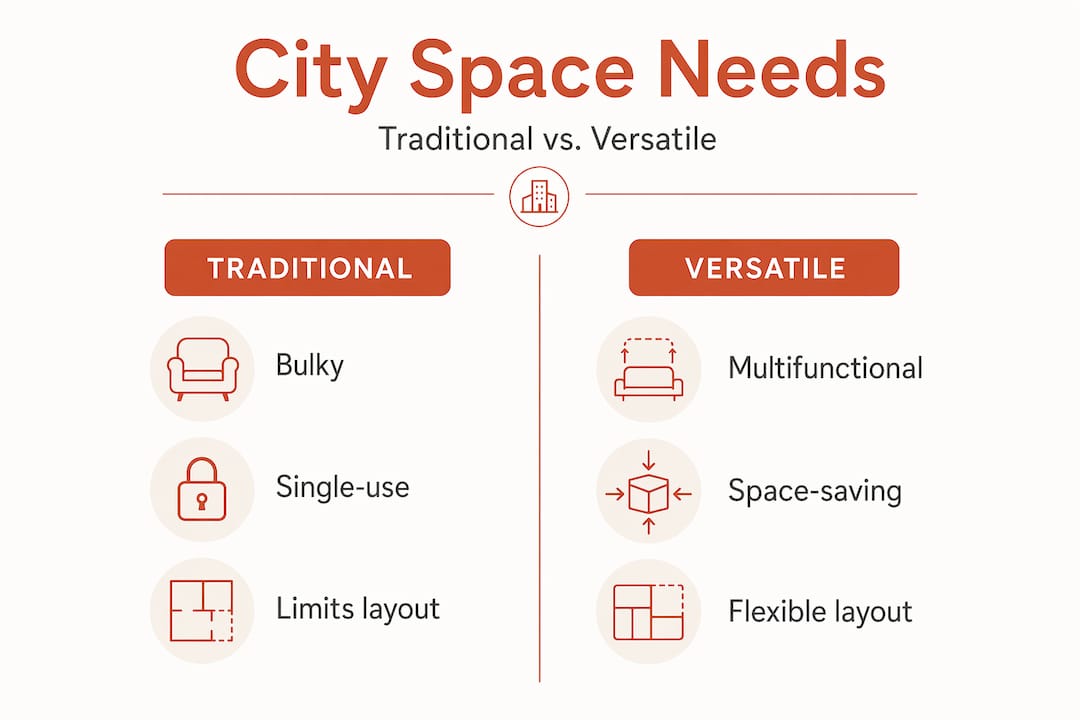
Urban apartments are getting smaller. Fast. New apartment sizes have shrunk by 10–15% over the past decade, and that trend shows no sign of reversing. At the same time, the way people use those spaces has multiplied. You are not just sleeping and eating at home anymore. You are working, exercising, hosting friends, and unwinding, often all within the same four walls.
The hybrid work model accelerated this shift dramatically. 60% of remote-capable employees now prefer hybrid schedules, which means your living room doubles as a boardroom on Tuesday morning and a yoga space by Tuesday evening. This reality has created a genuine mismatch between how traditional furniture is designed and how urban residents actually live.
“Design experts increasingly describe the modern home as a dynamic toolkit rather than a static collection of permanent furnishings.” — Adaptable and Modular Furniture for Evolving Lifestyles
The market is responding to this demand. The global modular furniture market is projected to grow at a compound annual growth rate of 4.5% through 2030. The U.S. home office furniture market alone is expected to reach $6.94 billion in 2026. These numbers reflect a real shift in how people think about their living spaces, and the furniture industry is catching up.
| Urban living shift | Impact on furniture needs |
|---|---|
| Shrinking apartment sizes | Demands pieces that maximize every usable inch |
| Hybrid work schedules | Requires fast transitions between work and leisure setups |
| Rising city rental costs | Pushes residents toward multi-use furniture over single-purpose items |
| Frequent relocations | Favors lightweight, tool-free assembly designs |
Core benefits of versatile furniture for city dwellers
Understanding the urban living furniture needs of today means looking beyond storage. Versatile furniture for city dwellers delivers benefits that touch every part of daily life.
- Space efficiency without sacrifice. A modular sofa that converts to a sleeper, or an ottoman that opens for storage, means you reclaim square footage without giving up comfort. You are not living in a smaller space. You are living in a smarter one.
- Lifestyle fluidity. Versatile furniture enables homes to shift between leisure, work, and social functions without costly redesign. Your space responds to you, not the other way around.
- Clutter reduction. Integrated storage built into your furniture means fewer freestanding shelves, fewer piles, and a calmer visual environment. This matters more than people realize. A cluttered space actively raises cortisol levels and undermines the mental clarity that most city residents are already fighting to protect.
- Aesthetic coherence. Modern space-saving furniture solutions are no longer utilitarian in appearance. Function density is now a core element of contemporary design, meaning flexibility no longer requires sacrificing the look of your space.
- Long-term cost savings. Buying one quality piece that adapts with your life beats buying three mediocre single-use items every two years.
Pro Tip: When evaluating any furniture purchase, ask yourself how many distinct functions it serves. If the answer is one, look for an alternative that does two or three.
The benefits of space-saving furniture go beyond the physical. When your home functions well, you feel more in control, more at ease, and more capable of sticking to the wellness routines you care about. At Couchanddumbells, that connection between a well-designed living space and an active, healthy lifestyle is at the heart of everything.
Popular types of versatile furniture for urban apartments
Knowing the categories helps you shop with intention. Here is a breakdown of the most practical multifunctional furniture for urban living, along with what to look for in each.
| Furniture type | Primary function | Secondary function | Best for |
|---|---|---|---|
| Modular sofa | Seating | Sleeping, reconfiguring layouts | Studios and open-plan apartments |
| Murphy bed (wall bed) | Sleeping | Frees daytime floor space | Studios and guest rooms |
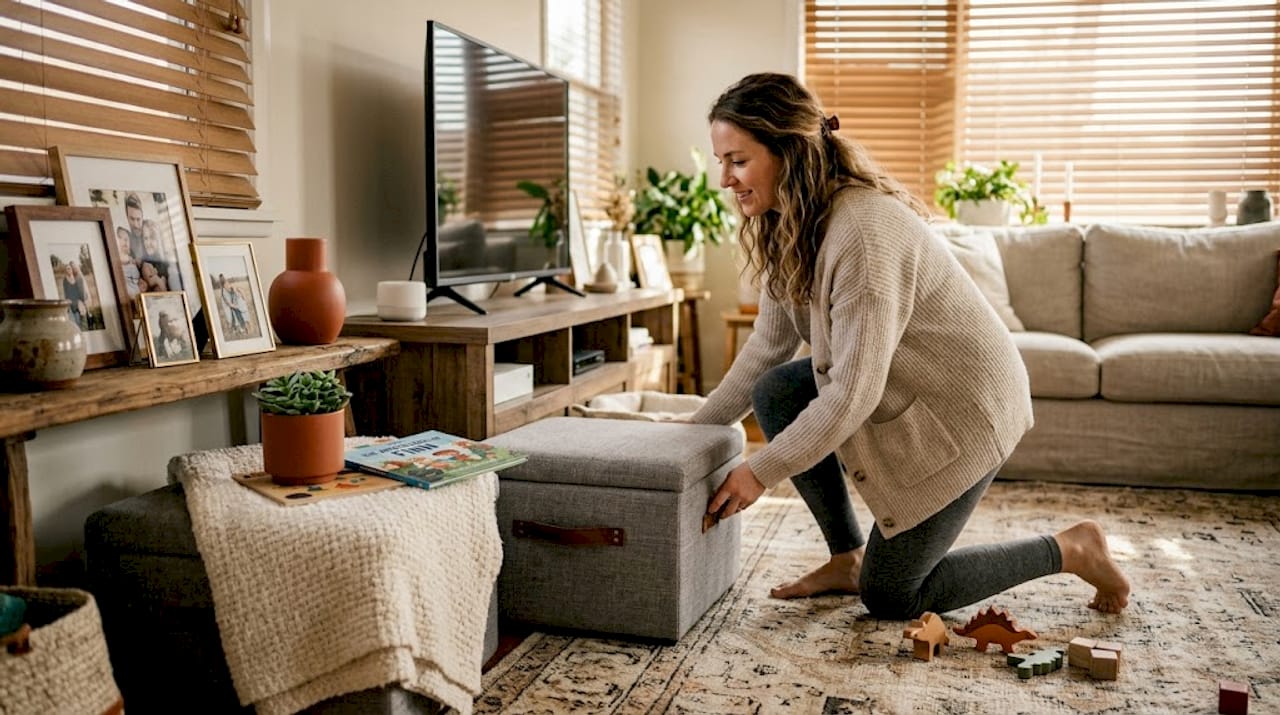
| Storage ottoman | Seating | Hidden storage | Living rooms and bedrooms |
| Extendable dining table | Dining | Work surface | Small dining areas and eat-in kitchens |
| Shelving unit with drawers | Display | Organized storage | Any room needing vertical space use |
- Modular sofas. The modular sofa market is forecast to grow from $5.7 billion in 2025 to $17.9 billion by 2033. The reason is simple. Modular sofas let you add sections, rearrange configurations, and switch between L-shaped layouts and straight seating depending on whether you are hosting ten people or watching a movie alone. Many models include storage under the seats, making them one of the highest function-density pieces available.
- Murphy beds. A Murphy bed folds flat against the wall during the day, turning your bedroom into usable floor space. Not all models are equal, though. Some Murphy beds use gas-piston mechanisms for assisted lifting, while others require manual effort and sometimes a second person. Before purchasing, test the mechanism yourself if possible and consider how often you will be folding it daily.
- Multi-use storage furniture. Ottomans with internal storage, bed frames with under-bed drawers, and staircase steps with hidden compartments are all examples of furniture doing double duty. If you are also trying to organize fitness gear in your apartment, storage-forward furniture is the cleanest solution.
- Easy-assembly pieces. Modern urban furniture increasingly uses cam locks and magnetic connections, with full assembly under 15 minutes. For urban dwellers who move every year or two, this is not a luxury. It is a practical requirement.
Pro Tip: Before buying a wall bed or Murphy bed, measure the ceiling height carefully. Many models need at least 8 feet of clearance, and bulkier frames may require even more.
How to integrate versatile furniture for maximum impact
Choosing the right pieces is only half the work. How you arrange and combine them determines whether your apartment actually feels open or just feels like it contains less stuff.
- Plan for multiple room functions from the start. Sketch a simple floor plan and map out when and where each activity happens. If you work at home three days a week, your desk setup needs dedicated space that does not disappear behind a sofa cushion. Design around your real schedule, not an idealized one.
- Protect your sightlines. This is one of the most under-appreciated principles in furniture for small apartments. A well-chosen piece that lifts the eye and opens sightlines can make a compact apartment feel significantly larger than its square footage suggests. Avoid tall, bulky furniture that bisects the room. Choose pieces that sit lower or use open shelving to maintain visual flow.
- Think in zones, not rooms. When your living area also serves as your office and workout space, physical zoning with rugs, lighting, and furniture placement gives each activity its own psychological territory without requiring walls.
- Choose modular pieces that grow with you. If you are expecting a family member to move in, or you simply want more hosting capacity, modular furniture investment is justified because you can add sections rather than replace everything. This is one of the most financially sound decisions you can make in a city apartment.
- Maintain your pieces for longevity. Wipe down upholstery regularly, tighten cam lock connections after each move, and follow manufacturer care guides. Quality furniture holds up for years when it is treated with intention.
Pro Tip: Use a single, consistent wood tone or metal finish across all your versatile pieces. Visual cohesion makes a space with multiple furniture functions feel curated rather than chaotic.
If you are also setting up a home workout corner, pairing your furniture choices with the right apartment gym essentials helps you design a space that supports both rest and movement without compromise.
My take on versatile furniture and city life
I’ve spent a lot of time thinking about why so many urban dwellers end up frustrated with their apartments, and the answer almost always comes back to the same thing. They bought furniture for the space they thought they had, not the life they were actually living.
I’ve seen people invest in a beautiful, fixed sectional that looked incredible in a showroom and turned their studio into a maze. I’ve watched others stuff a spare room with a single-purpose guest bed that sat unused 340 days a year. These are not bad decisions made by careless people. They are the predictable result of treating a home as a static environment when city life is anything but.
What I find genuinely transformative about adaptable furniture is not the square footage it reclaims. It is the mental shift it encourages. When your home can change as your needs change, you stop fighting your space and start working with it. That ease carries over into everything, including your energy levels, your focus, and your willingness to maintain the healthy habits that city living can sometimes crowd out.
The misstep I see most often is prioritizing aesthetics over function density, then trying to fix the problem with storage bins. Choose pieces that are genuinely multifunctional first. The aesthetics of modern versatile furniture are good enough now that you rarely have to compromise one for the other. Adaptability is not a design limitation. It is a feature, and one of the best skills you can bring to city living.
— Brian Dunn, Couch & Dumbbells
Discover versatile pieces at Couchanddumbells
If this article has you ready to rethink your space, Couchanddumbells has a curated collection built specifically for urban residents who want their homes to look good and function even better.
Browse the home and interior collection to find modular sofas, storage-forward furniture, and space-conscious pieces designed with quality materials and modern aesthetics. Every item in the collection is chosen with the city dweller in mind: practical, stylish, and built to adapt as your life evolves. Whether you are furnishing a studio for the first time or finally replacing single-purpose pieces that no longer serve you, the right starting point is a collection that was designed with your lifestyle in mind.
FAQ
Why is versatile furniture better for small apartments?
Versatile furniture performs multiple functions in the same footprint, replacing several single-use pieces and reducing clutter. This improves both usable space and the overall feel of the apartment.
What is the most practical multifunctional furniture for urban living?
Modular sofas with storage, Murphy beds, and storage ottomans consistently deliver the highest function density for city apartments. Each serves at least two distinct daily needs without taking up additional floor space.
How do I choose between a Murphy bed and a regular bed?
Consider how often you need daytime floor space and whether you have ceiling clearance of at least 8 feet. Murphy bed mechanisms vary in ease of use, so testing the operation before purchasing is strongly recommended.
Does versatile furniture look as good as traditional furniture?
Yes. Function density is now a defining trend in modern design, meaning adaptable furniture is built with quality materials and clean aesthetics that match or exceed traditional options.
How often should I reconfigure my modular furniture?
Reconfigure as often as your lifestyle demands it. One of the core benefits of modular sofas and sectionals is that they can be reshaped for hosting, daily work routines, or family changes without any tools or professional help.