

A cohesive indoor-outdoor living space is defined as a home environment where interior and exterior areas share consistent materials, color palettes, and spatial flow to function as one unified space. This concept, known in architecture and interior design as “indoor-outdoor integration,” goes well beyond opening a back door. It requires deliberate decisions about flooring, thresholds, furniture placement, and lighting that work together from the inside out. When you design cohesive indoor outdoor living space elements correctly, your home feels larger, calmer, and more intentional. The result is a living environment that supports both relaxation and active daily life.
What design elements create seamless indoor-outdoor flow?
The physical connection between your interior and exterior starts at the doorway. Standard 32-inch doors limit seamless indoor-outdoor flow. Experts recommend 4- to 6-foot wide sliding or bi-fold doors for unobstructed transitions. That wider opening does more than let in light. It signals to anyone in the room that the outside is part of the living space, not a separate zone.
Thresholds: flush vs. step-down
The threshold is the point where your interior floor meets the exterior surface. Step-downs of 50–75 mm provide better wind-driven rain resistance and lower installation cost compared to flush thresholds. Flush thresholds look sleek but require specialized sub-sill flashings and trench drains. For most homeowners, a well-executed 50–75 mm step-down is the more practical and durable choice.
Flooring continuity
Flooring is the single most powerful visual tool for creating seamless living spaces. When your interior tile or hardwood extends to an outdoor patio in the same tone or texture, the eye reads both areas as one room. Popular strategies include using large-format porcelain tiles indoors and matching concrete pavers outdoors, or carrying a warm timber tone from interior engineered wood to exterior composite decking.
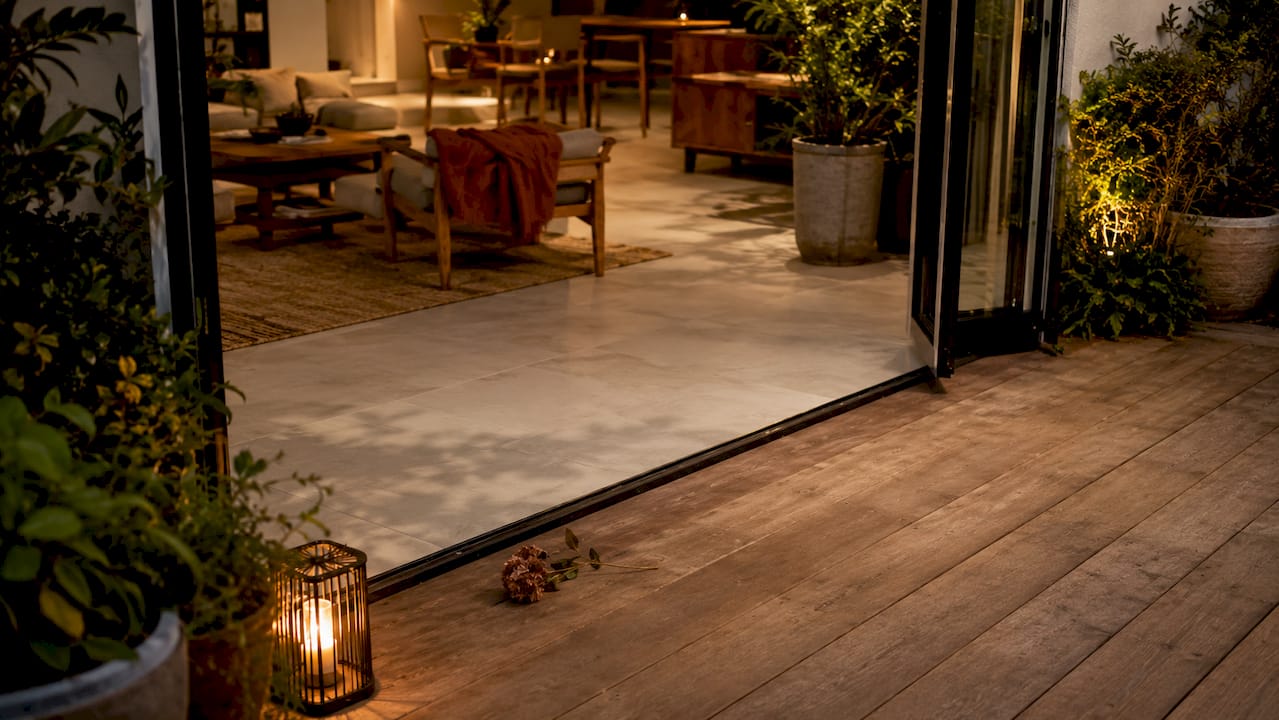
Here is a quick comparison of common flooring pairings for indoor-outdoor cohesion:
| Interior Material | Complementary Exterior Material | Visual Effect |
|---|---|---|
| Large-format porcelain tile | Concrete or stone pavers | Clean, modern continuity |
| Engineered hardwood | Composite decking (warm tone) | Warm, natural flow |
| Polished concrete | Brushed concrete or slate | Industrial, grounded feel |
| Neutral carpet | Outdoor area rug (same palette) | Soft, layered connection |
Color palettes and texture as unifying threads
Color is your most flexible tool. You do not need to copy your interior palette exactly outdoors. Instead, pull one or two accent colors from inside and repeat them in outdoor cushions, planters, or furniture frames. Texture works the same way. If your interior features linen upholstery and raw wood, carry those textures outside with woven outdoor fabrics and timber furniture.
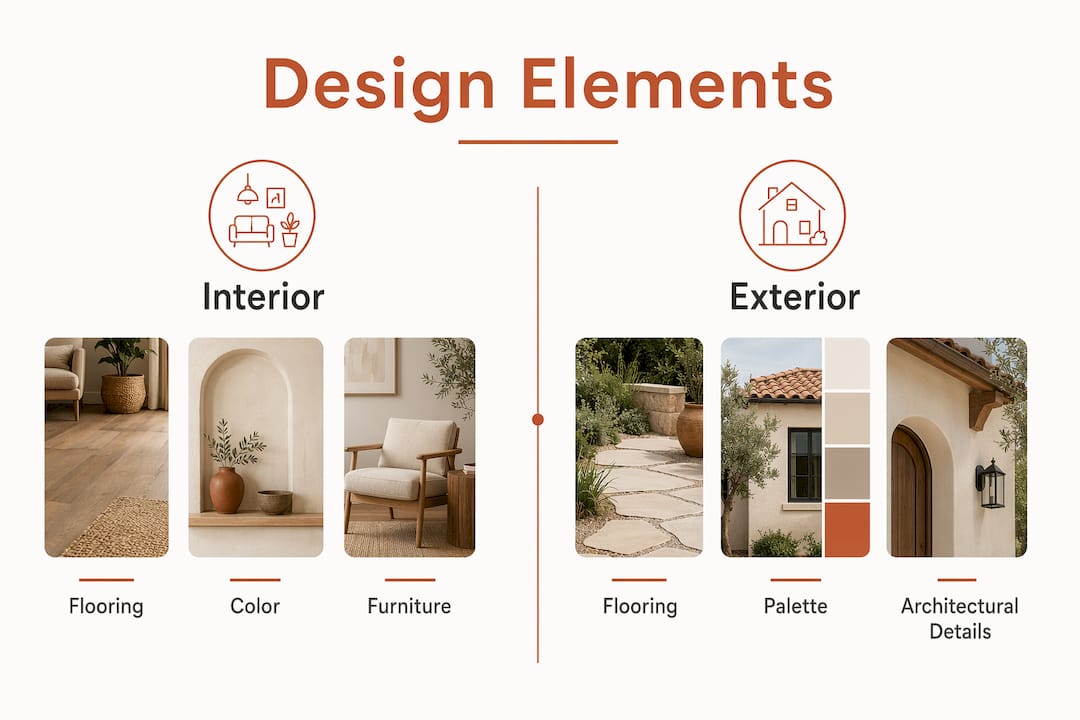
Pro Tip: Choose one grounding neutral, such as warm gray or sand, and use it on both your interior walls and exterior pavers. Then layer accent colors on top of that neutral in both spaces.
How to optimize furniture layout and traffic flow
Furniture placement determines whether your indoor-outdoor connection actually works in daily life. A minimum of 80 cm clearance is needed around dining furniture for passage, with 100 cm recommended for maximum comfort. That standard applies whether the dining zone is inside or on a covered patio. Tight clearances force people to squeeze past chairs, which breaks the sense of open, connected living.
Follow these steps to get your layout right:
- Map your traffic paths first. Draw a simple floor plan and mark the natural routes people take from the kitchen to the patio, from the living room to the garden. These paths are non-negotiable.
- Keep furniture out of those paths. Wider doorways and intentional zoning prevent guests from passing through active furniture zones. A sofa arm or dining chair that sits directly in a traffic path creates friction every time someone moves through.
- Orient indoor seating toward the outside. Rotating your sofa or armchairs to face the outdoor door reinforces the visual connection. You do not need to remodel. Turning a chair 30 degrees toward a glass door changes how the whole room reads.
- Zone your outdoor space with purpose. Create distinct areas outdoors, one for dining and one for lounging, just as you would inside. Each zone should have its own furniture group, rug, and lighting source.
- Add a sightline focal point. Placing a sculptural object in the sightline from inside to outside aligns your indoor orientation to the outdoor space without any renovation.
Pro Tip: Stand at your most-used indoor seating position and look toward the exterior. Whatever you see first becomes your focal point. Make it intentional: a potted olive tree, a water feature, or a well-chosen outdoor chair.
What role does lighting play in indoor-outdoor design?
Lighting is the element most homeowners get wrong in open concept living areas. Matching color temperatures of 2700K–3000K creates a visual and functional link between interior and exterior areas. Mixed lighting colors, such as a warm 2700K living room next to a cool 4000K patio light, destroy visual flow the moment the sun goes down. Consistent warmth across both zones keeps the space feeling unified after dark.
Key lighting strategies for cohesive indoor-outdoor design:
- Layer your light sources. Use ambient, task, and accent lighting both inside and outside. A single overhead fixture outdoors looks flat and disconnected from a layered interior.
- Use string lights and uplighting outdoors. String lights at pergola height and uplighting on trees or architectural features create depth and visual interest that mirrors interior accent lighting.
- Plan for seasonal solar gain. Eave depths of 600–900 mm help maximize winter solar gain and provide summer shade. This is a structural decision that pays off year-round in both comfort and energy efficiency.
- Add climate control features. Outdoor heaters and ceiling fans extend the usability of your outdoor space across seasons. A patio you can only use four months a year is not a true extension of your home.
- Dim your exterior lights. Dimmable outdoor fixtures let you match the mood of your interior lighting at any time of evening, reinforcing the sense of one connected space.
How to unify materials, colors, and architectural details
True cohesive home design is built on a framework of consistent design threads, not identical rooms. Design experts recommend establishing common material weight and color temperature across all spaces to unify a home’s interiors and exteriors. Material weight refers to the visual heaviness of a surface. A chunky stone wall reads as heavy. A thin glass panel reads as light. When you mix heavy and light materials inconsistently between inside and outside, the spaces feel disconnected.
Here is how different design elements contribute to a unified aesthetic:
| Design Element | Indoor Application | Outdoor Application | Unifying Effect |
|---|---|---|---|
| Material weight | Timber beams, stone feature wall | Timber pergola, stone paving | Consistent visual density |
| Color temperature | Warm whites, sand tones on walls | Warm-toned pavers, natural timber | Continuous warmth across zones |
| Accent color | Terracotta cushions, copper fixtures | Terracotta planters, copper outdoor lights | Repeated color story |
| Ceiling line | Flat white ceiling, recessed lighting | Extended eave or pergola ceiling | Architectural continuity |
| Texture | Linen, raw wood, woven textiles | Woven outdoor fabric, timber furniture | Tactile consistency |
Architectural continuity is often the missing piece in indoor outdoor design ideas. Extending your interior ceiling line into a covered outdoor area, through a pergola or eave, makes the exterior feel like a room rather than a yard. Aligning window sills, door heights, and sightlines between inside and outside reinforces the sense that both spaces were designed together.
Viewing your home as a holistic canvas rather than a series of separate rooms is the mindset shift that makes all of this work. When you make a material choice for your patio, ask how it relates to your living room. That single habit prevents the fragmented, piecemeal look that most homes end up with.
What are common mistakes in indoor-outdoor living design?
The most frequent mistake is starting with a standard 32-inch door and assuming it can anchor a connected living space. It cannot. A narrow door makes the outside feel like an afterthought, regardless of how well the patio is furnished.
Other mistakes to avoid:
- Blocking traffic paths with furniture. A sofa placed directly in front of a sliding door forces people to walk around it every time they go outside. That friction adds up and discourages use of the outdoor space.
- Designing outdoor areas as decoration only. Outdoor spaces must be functional with kitchens, dining areas, and comfortable seating to be integrated as true extensions of the home. A patio with only a single chair and a plant is not a living space.
- Ignoring weather and climate. An outdoor area without shade, wind protection, or heating is unusable for much of the year. Climate-responsive design is not optional if you want year-round usability.
- Using mismatched lighting temperatures. As noted above, mixing warm and cool light sources between inside and outside breaks the visual connection the moment evening arrives.
Low-cost design adjustments like furniture rotation and adding sightline focal points can drastically enhance indoor-outdoor coherence without major renovations.
The good news is that many of these fixes cost very little. Repositioning a sofa, adding an outdoor rug in your interior palette, or installing a dimmable exterior light can shift how connected your spaces feel without touching a wall.
Key takeaways
A cohesive indoor-outdoor living space is built on consistent materials, correct door sizing, intentional furniture placement, and matched lighting temperatures across both zones.
| Point | Details |
|---|---|
| Door sizing matters most | Use 4- to 6-foot wide sliding or bi-fold doors to create an open, inviting transition. |
| Thresholds need weather logic | A 50–75 mm step-down offers better rain resistance and lower cost than a flush threshold. |
| Clearance drives comfort | Maintain at least 80 cm around dining furniture, and 100 cm for maximum traffic comfort. |
| Lighting must match | Keep exterior and interior lighting at 2700K–3000K to maintain visual flow after dark. |
| Material threads unify spaces | Repeat material weight, color temperature, and accent colors from inside to outside consistently. |
What i’ve learned from designing indoor-outdoor spaces
Most people approach this the wrong way. They renovate the patio, buy new outdoor furniture, and then wonder why the space still feels disconnected from the house. The problem is almost never the furniture. It is the lack of a shared design language between the two zones.
The biggest shift I have seen in my own work is treating the threshold as a design decision, not a construction detail. Where the floor transitions, how wide the door opens, and whether the ceiling line continues outside: these are the choices that determine whether a space feels unified or just adjacent. You can spend a lot on outdoor furniture and still end up with a yard that feels separate from your home if those foundational elements are wrong.
I also want to push back on the idea that cohesive indoor-outdoor design requires a full renovation. Some of the most effective changes I have seen cost almost nothing. Rotating a sofa to face the garden, adding a pendant light outside that matches the interior fixture, or placing a large potted plant in the sightline from the living room: these moves change how a space reads without changing its structure. Start there. Get the design language right first, then invest in the bigger elements like door systems and weatherproofing once you know what direction you are heading.
If you are thinking about adding a fitness or active zone to your outdoor space, the same principles apply. Clearance, zoning, and material consistency matter just as much in an outdoor fitness area as they do in a living or dining zone.
— Brian Dunn, Couch & Dumbbells
Bring your indoor-outdoor vision to life with Couchanddumbells
You have the design framework. Now you need the right pieces to bring it together. Couchanddumbells curates furniture and decor that works across both interior and exterior spaces, with quality and style built in from the start.
Whether you are starting with a patio refresh or redesigning your entire open-plan layout, the home and interior collection at Couchanddumbells covers furniture, decor, and storage solutions that complement a connected living approach. For your outdoor zones, the outdoor furniture set and outdoor sofa patio furniture options are built for both style and year-round function. Start with one space, get the design language right, and build from there.
FAQ
What is a cohesive indoor-outdoor living space?
A cohesive indoor-outdoor living space is one where interior and exterior areas share consistent materials, color palettes, lighting, and spatial flow. The goal is for both zones to feel like parts of one unified home rather than separate environments.
How wide should doors be for indoor-outdoor flow?
Experts recommend 4- to 6-foot wide sliding or bi-fold doors for true indoor-outdoor connection. Standard 32-inch doors are considered too restrictive to support a genuine open-plan transition.
What is the best flooring strategy for blending indoor and outdoor areas?
Carry the same tone or texture from your interior floor to your exterior surface. Large-format porcelain tiles paired with matching concrete pavers, or engineered hardwood matched to composite decking, are two of the most effective combinations for visual continuity.
How do i maintain lighting consistency between inside and outside?
Match your exterior lighting color temperature to your interior fixtures, targeting 2700K–3000K for both. Mixed warm and cool light sources break visual flow after dark and make the spaces feel disconnected.
Can i improve indoor-outdoor cohesion without a major renovation?
Yes. Rotating indoor furniture to face the outdoor door, adding a sightline focal point outside, and matching your exterior lighting to your interior palette are low-cost changes that improve indoor-outdoor coherence without structural work.