

An accent wall is a single wall treated differently from the others to create a focal point and direct visual attention in a room. Understanding how accent walls work in design means knowing which wall to choose, how color contrast operates, and which materials deliver the most impact. The principles behind a successful accent wall are grounded in the 60-30-10 color rule, Light Reflectance Value (LRV), and the relationship between surface continuity and visual weight. Get these right, and a single wall can redefine an entire room.
How accent walls work in design: the core principles
An accent wall functions as an architectural focal point that defines spatial hierarchy and guides visual movement through a room. It is not simply a decorative choice. It is a structural decision that anchors proportion and tells the eye where to land first.
The most reliable framework for color balance is the 60-30-10 rule. Your dominant wall color covers 60% of the room, a secondary tone covers 30% (often the accent wall itself), and accent accessories fill the remaining 10%. This ratio keeps the room feeling intentional rather than chaotic.
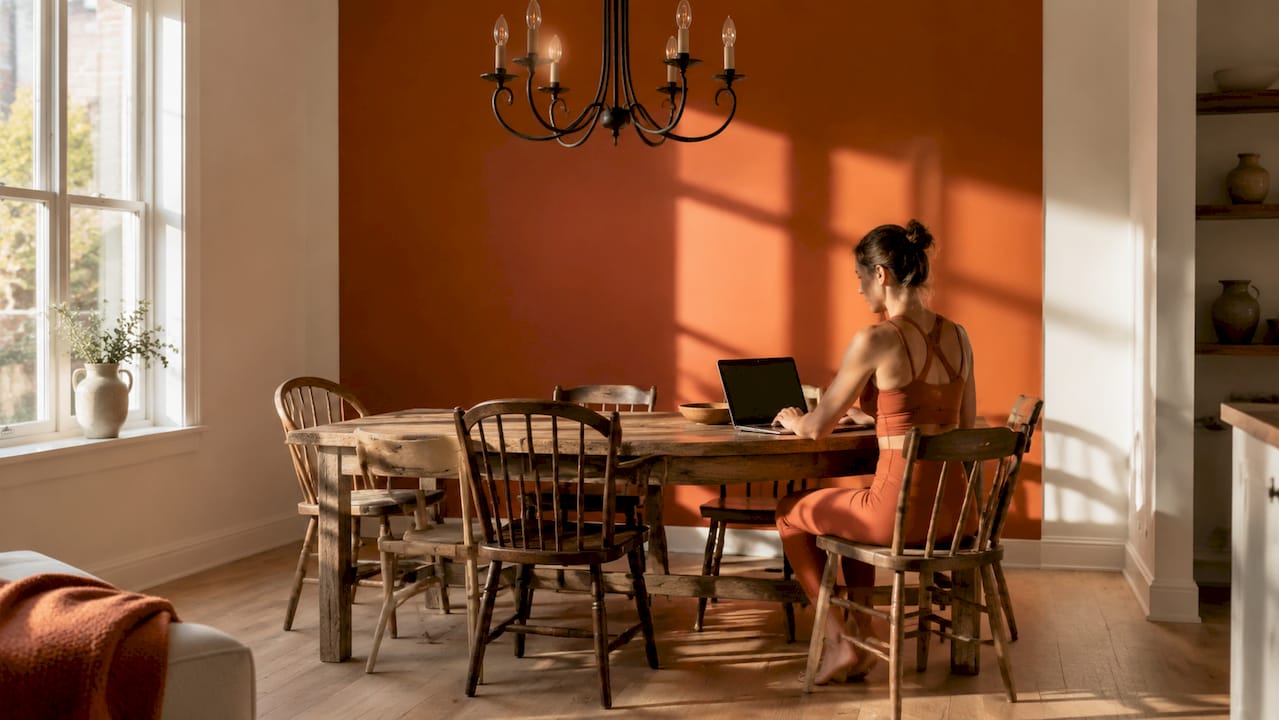
LRV is the other critical factor. It measures how much light a color reflects on a scale from 0 (pure black) to 100 (pure white). Walls with LRV below 15 absorb most light and can make a room feel smaller and heavier. For living spaces, a minimum LRV of 35 is the standard recommendation.
The accent wall does not work in isolation. It works because it contrasts with the surrounding walls. Without that contrast, the effect disappears entirely.
Which walls work best as accent walls?
Choosing the right wall is the single most important decision in the process. The eye should land on the accent wall naturally the moment you enter the room. If you have to search for it, the wall is in the wrong place.
The best candidates share a few consistent traits:
- The wall directly opposite the entry point. This is the first surface your eye meets when walking into a room.
- The wall behind a bed or sofa. These anchor pieces of furniture reinforce the wall’s visual weight and prevent the accent from floating.
- Walls with architectural features. A fireplace surround, built-in shelving, or a recessed alcove already draws attention. An accent treatment amplifies that existing interest.
- Walls with minimal interruptions. A wall broken up by three windows and a door loses its power as a focal point.
An effective accent wall needs at least 80% solid, unbroken surface to function as a strong visual anchor. Doors, large windows, and passageways fragment the surface and dilute the effect. If your best candidate wall has significant interruptions, consider a different wall or a material treatment that works around the openings.
Pro Tip: In a bedroom, the wall behind the headboard is almost always the right choice. It is naturally framed by the bed, which gives the accent wall immediate visual weight without any additional effort.
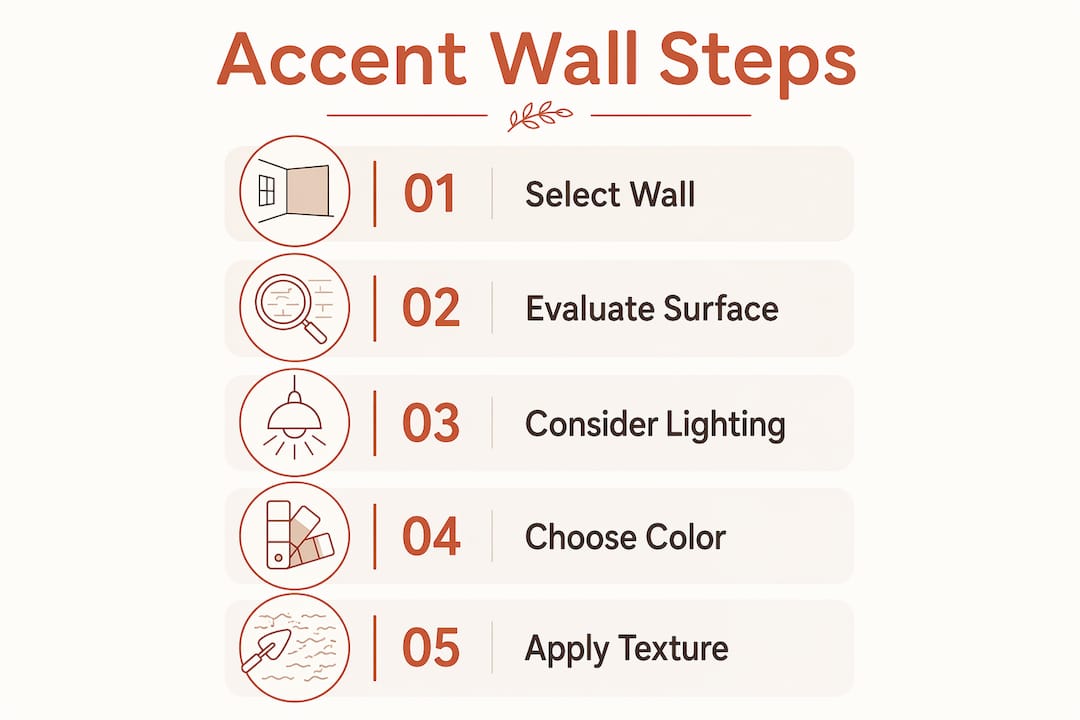
Room shape also matters. In a long, narrow room, placing the accent wall on one of the short ends draws the eye forward and makes the space feel more proportional. In a square room, any wall can work, but the one behind the primary seating or sleeping area remains the strongest option.
How to use color and light to create effective accent walls
Color choice without considering light is guesswork. The same paint color reads completely differently depending on room orientation, natural light levels, and the type of artificial lighting you use.
LRV contrast of 20–30 points between the accent wall and the surrounding walls is the minimum needed for the accent effect to register clearly. Below that threshold, the difference reads as a mistake rather than a deliberate choice. Above it, the wall commands attention.
| Room orientation | Recommended accent approach | Why it works |
|---|---|---|
| South-facing (bright light) | Deep navy, forest green, charcoal | Strong light prevents these from feeling oppressive |
| North-facing (cool, low light) | Warm terracotta, clay, soft ochre | Warm tones counteract the cool, flat light |
| East-facing (morning light) | Soft sage, dusty rose, warm white | Morning warmth enhances soft, muted tones |
| West-facing (evening light) | Amber, rust, warm gray | Evening light deepens warm tones beautifully |
Mixing sheen and texture adds another layer of depth. Matte paint paired with glossy architectural elements creates dimension that a flat, single-finish wall cannot achieve. The contrast between surfaces catches light differently throughout the day, keeping the wall visually interesting.
Pro Tip: Before committing to a color, paint two large swatches (at least 12 inches by 12 inches) on the actual wall and observe them at different times of day. Morning light and evening lamplight can make the same color look like two entirely different choices.
Avoid the common error of choosing a color that is simply a darker version of the existing wall color. That approach rarely produces enough LRV contrast to register as intentional. A genuinely different hue with adequate contrast always reads more confidently.
What materials and techniques go beyond paint?
Paint is the starting point, but the most memorable accent walls in 2026 use texture, dimension, and material contrast to create something more considered. Basic paint accent walls cost between $50 and $100 in materials, making them the most affordable upgrade available. Premium treatments require more investment but deliver proportionally more visual impact.
The most widely used materials include:
- Wallpaper. Geometric patterns, botanical prints, and textured grasscloth all work well. Modern peel-and-stick options make installation and removal far more practical.
- Wood paneling. Shiplap, board-and-batten, and slat panels add warmth and texture. They work particularly well in living rooms and home offices.
- Stone and brick veneer. These bring natural texture and weight. They suit fireplaces, entryways, and kitchen feature walls.
- Tile. Zellige, subway, and handmade ceramic tiles create striking accent walls in kitchens and bathrooms.
- Murals and large-scale art. A hand-painted or printed mural turns the wall into a statement piece. Scale matters here. The mural must fill the wall fully to avoid looking undersized.
- Fabric and tapestries. These add softness and acoustic benefit, particularly in bedrooms and reading spaces.
| Material | Relative cost | Best room | Key consideration |
|---|---|---|---|
| Paint | Low ($50–$100) | Any room | Color contrast and LRV are critical |
| Wallpaper | Medium | Bedroom, living room | Pattern scale must suit room size |
| Wood paneling | Medium to high | Living room, office | Grain and finish must coordinate with furniture |
| Stone veneer | High | Fireplace, entryway | Weight and installation complexity |
| Tile | High | Kitchen, bathroom | Grout color affects the overall tone |
Scale and proportion determine whether a material treatment succeeds or overwhelms. A large-scale geometric wallpaper in a small bedroom fragments the space. The same pattern in a spacious living room feels bold and curated. If you are working with a smaller room, choose materials with smaller repeat patterns or linear textures that draw the eye upward rather than outward. For fitness spaces at home, accent wall treatments like painted panels or slat wood can define the workout zone without competing with equipment.
Common mistakes that undermine accent wall design
The most frequent mistake is choosing a wall without a clear reason. Accent walls must amplify existing visual interest or anchor the room’s focal point. A wall chosen at random produces a disjointed look that reads as an afterthought rather than a design decision.
Other mistakes worth avoiding:
- Ignoring the existing color palette. The accent wall must connect to the colors already in the room through furniture, textiles, or artwork. An isolated color with no echo elsewhere in the space feels disconnected.
- Fragmenting small rooms. In small rooms, accent walls on fragmented or narrow surfaces cause visual fragmentation. The accent needs enough surface area and furniture backing to carry its visual weight.
- Competing with existing focal points. If a room already has a fireplace or a large window as its natural focal point, the accent wall should support that feature, not compete with it.
- Underestimating texture. A flat coat of paint on a wall with no architectural interest rarely achieves the depth that mixing sheen and texture delivers.
- Skipping the lighting check. Choosing a color without testing it under the room’s actual lighting conditions is one of the most avoidable errors in the process.
Pro Tip: Pull one color from your existing soft furnishings, such as a cushion, rug, or curtain, and use it as the base for your accent wall color selection. This creates an automatic connection between the wall and the room.
Designers like Cindy Smith and Madelaine Mayer consistently emphasize intentionality as the foundation of successful accent wall design. The wall should feel like it belongs there, not like it was added later. When the accent wall supports the room’s existing proportions and palette, it reads as confident and considered.
Key takeaways
An accent wall works when it is placed on the right surface, uses adequate color contrast, and connects deliberately to the room’s existing palette and focal points.
| Point | Details |
|---|---|
| Wall selection is critical | Choose the wall the eye lands on first, with at least 80% unbroken surface area. |
| LRV contrast drives visibility | A difference of 20–30 LRV points between the accent and surrounding walls makes the effect register clearly. |
| Color follows light | Match accent color to room orientation: deep tones for south-facing rooms, warm tones for north-facing rooms. |
| Material choice affects scale | Match material pattern and texture to room size to avoid visual fragmentation. |
| Intention prevents mistakes | Every accent wall must amplify or anchor an existing focal point, not compete with it. |
What I’ve learned from getting accent walls wrong first
The first accent wall I ever committed to was a deep charcoal in a north-facing bedroom. The LRV was well below 15. By midafternoon, the room felt like a cave. I had read about the color. I had not tested it under the actual light conditions. That single oversight cost me a full repaint.
What I know now is that the technical rules exist for a reason. LRV contrast, the 60-30-10 framework, and surface continuity are not design theory for its own sake. They are the difference between a wall that looks intentional and one that looks like a regret. Most homeowners skip the testing phase because it feels slow. It is the most important step in the process.
The trend toward textured and dimensional accent walls in 2026 is genuinely exciting. Slat wood panels, limewash paint, and artisan tile are all producing results that flat paint simply cannot match. But texture amplifies both good and bad decisions. A well-placed limewash wall in a warm, south-facing living room looks extraordinary. The same treatment on a poorly chosen wall in a dark room looks unfinished.
My honest recommendation: spend more time choosing the wall than choosing the color or material. The location decision determines everything else. Once you have the right wall, the color and material choices become much clearer. And if you are designing a home gym or fitness corner, accent walls in active spaces follow the same rules but benefit from energizing tones and durable, easy-to-clean finishes.
— Brian Dunn, Couch & Dumbbells
Bring your accent wall vision together with the right decor
An accent wall sets the tone for a room. The furniture and decor you place in front of it either reinforce that tone or undermine it.
Couchanddumbells carries a curated range of home and interior pieces designed to complement intentional spaces. Whether your accent wall is a deep-toned painted surface, a wood-paneled feature, or a textured statement wall, the right furniture anchors it. From seating that frames a living room accent wall to storage that supports a bedroom feature wall, the collection is built around the idea that beautiful spaces are both considered and livable. Browse the full range and find pieces that work with the wall you have just designed.
FAQ
What is an accent wall in interior design?
An accent wall is a single wall in a room treated with a different color, texture, or material to create a focal point. It directs visual attention and defines the room’s spatial hierarchy.
Which wall should be the accent wall?
Choose the wall the eye naturally lands on when entering the room, typically the wall behind the primary furniture piece like a bed or sofa. The wall should have at least 80% solid surface with minimal interruptions from doors or windows.
How much contrast does an accent wall need?
A minimum LRV difference of 20–30 points between the accent wall and the surrounding walls is needed for the effect to register clearly. Below that threshold, the difference reads as unintentional.
Can accent walls work in small rooms?
Yes, but placement and scale matter more in small rooms. Avoid fragmented or narrow walls, and always back the accent wall with substantial furniture to give it enough visual weight.
What is the most affordable accent wall option?
Paint is the most cost-effective choice, with material costs typically between $50 and $100. It also offers the widest range of color and finish options, making it the best starting point for most homeowners.