

Compact furniture solutions are engineered pieces that fold, transform, or combine multiple functions within a single footprint to dramatically increase usable space in small homes and apartments. The industry term for this category is “multifunctional furniture,” and understanding how compact furniture solutions work gives you a real advantage when planning any small living space. Murphy beds reclaim 32–45 sqft of floor area, while sofa-cum-beds recover 18–25 sqft. Even more striking, a set of six multifunctional pieces can recover 85–140 sqft in a typical 550 sqft one-bedroom apartment. That kind of space recovery changes how a home feels and functions every single day.
How do compact furniture mechanisms work?
The transformation capability of compact furniture comes from precision-engineered hardware, not clever design alone. Gas springs, telescopic slides, swivel plates, and heavy-duty hinges are the core components that allow a wall bed to fold flat or a dining table to expand from a console. Each mechanism must handle repeated stress without loosening, sticking, or making noise.
Precision is the defining factor in quality hardware. Premium hardware is engineered to tolerances tighter than 0.5mm, which keeps moving parts aligned through thousands of cycles. That level of accuracy is what separates a Murphy bed that glides smoothly after five years from one that binds after five months.
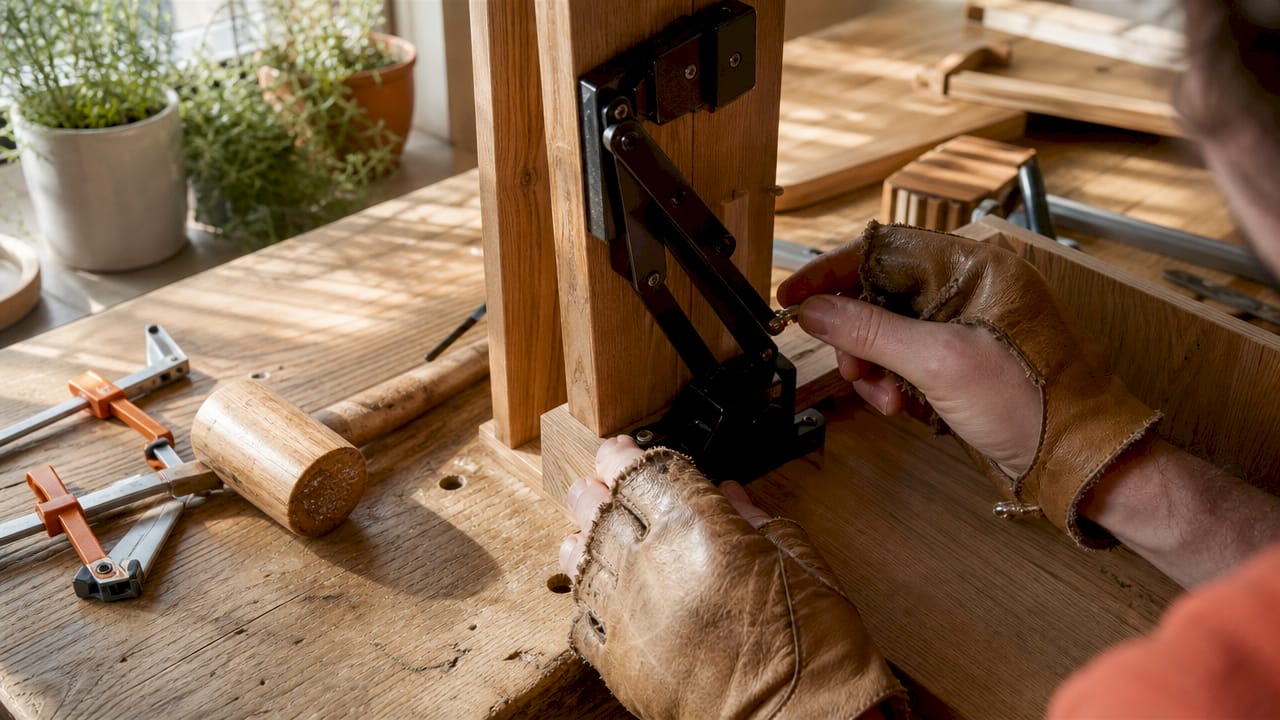
Durability standards in this category are genuinely impressive. Quality hardware is cycle-tested up to 80,000 actuations, far beyond what standard cabinet hardware endures. For a Murphy bed used twice daily, that translates to over 100 years of operation before mechanical failure.
Safety is built into the folding action itself. Integrated damping systems are calibrated to forces between 50N and 120N, which prevents panels from slamming down and keeps the movement controlled and quiet. Without this calibration, a folding bed or drop-leaf table becomes a safety hazard.
Here are the key hardware components you will find in well-made compact furniture:
- Gas springs: Control the speed and resistance of folding panels in wall beds and lift-top coffee tables
- Telescopic slides: Allow dining tables and storage drawers to extend smoothly without wobbling
- Swivel plates: Enable rotating sections in corner sofas and convertible seating
- Heavy-duty hinges: Support repeated folding in drop-leaf tables and cabinet-style wall beds
- Locking mechanisms: Secure transformer tables and modular units in their deployed positions
One often-overlooked installation detail: transformer dining tables need at least 50mm of floor clearance to deploy without jamming, especially on high-pile carpets. Measure your floor surface before purchasing.
Pro Tip: Before buying any folding or transforming piece, ask the retailer for the cycle-test rating. Anything below 20,000 actuations is not built for daily use.
What types of space-saving furniture work best?
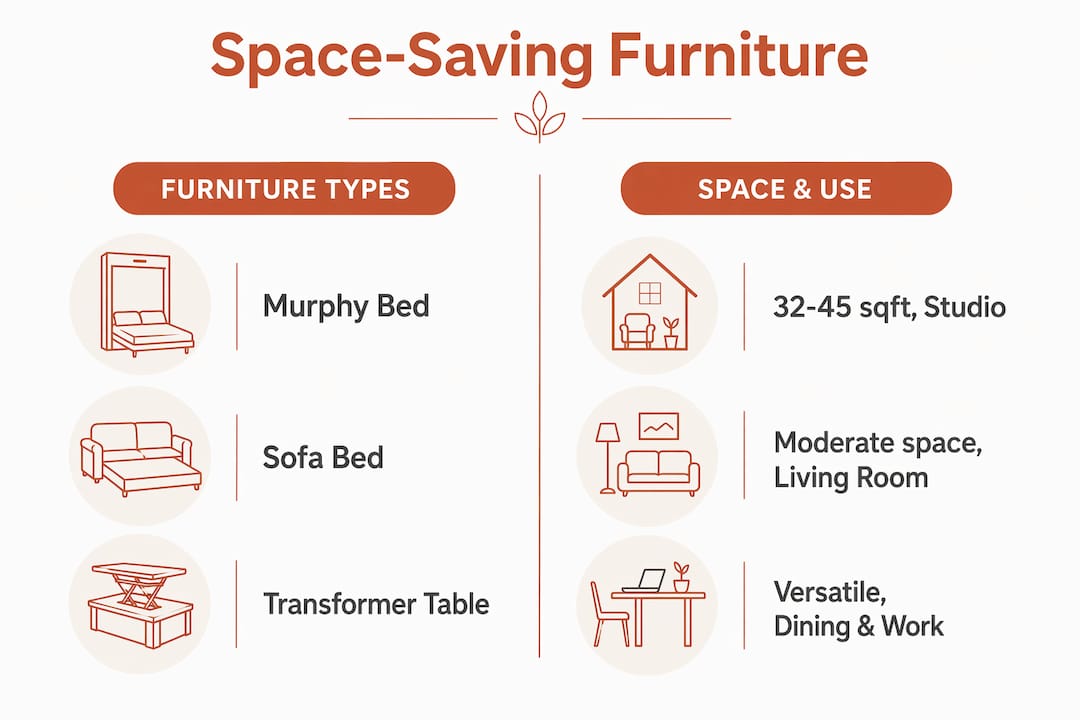
Different living situations call for different solutions. A studio apartment has different needs than a two-bedroom home used for remote work and occasional hosting. The table below compares the most effective categories.
| Furniture Type | Space Recovered | Best Use Case | Key Consideration |
|---|---|---|---|
| Murphy bed | 32–45 sqft | Studio or guest room | Requires reinforced wall |
| Sofa-cum-bed | 18–25 sqft | Living room doubling as guest space | Mattress quality varies widely |
| Transformer dining table | 10–20 sqft | Combined living and dining areas | Needs 50mm floor clearance |
| Drop-leaf table | 8–15 sqft | Small kitchens and breakfast nooks | Limited seating capacity |
| Modular wardrobe | Vertical gain | Bedrooms with high ceilings | Customizable to corner spaces |
| Storage ottoman or coffee table | 5–10 sqft | Living rooms with limited storage | Weight capacity matters |
Murphy beds are the highest-impact single piece for studio apartments. Murphy bed installations require a reinforced concrete or properly stud-framed wall of at least 9 inches thickness to handle dynamic loads safely. That is a real structural commitment, so confirm your wall type before purchasing.
Sofa-cum-beds suit living rooms that need to double as guest spaces without the wall installation. They recover less floor area than Murphy beds, but they require zero structural modification and convert in under 60 seconds with most modern designs.
Transformer dining tables and drop-leaf tables serve the growing number of people who work from home and need a surface that shifts from desk to dining table. Modular furniture designed with CAD and rapid prototyping delivers high customization and structural strength with less material waste than traditional manufacturing. This matters when you need a piece that fits an awkward corner or an unusual room dimension.
For fitness-focused apartment dwellers, compact furniture can also support a home workout space. Pairing a gym storage system with modular shelving keeps equipment organized without consuming floor space you need for movement.
How to choose and arrange compact furniture for maximum impact
Choosing compact furniture well starts with understanding a key distinction. “Compact” means physically smaller. “Space-saving” means multifunctional. The best choices for small apartments are both: pieces that are physically modest in size and serve more than one purpose.
Follow this process when selecting and arranging your pieces:
- Measure your floor plan first. Note ceiling height, door swing radius, and any fixed features like radiators or outlets. A Murphy bed that blocks a window is not a win.
- Identify your activity zones. Map where you sleep, work, eat, and relax. Each zone should have at least one multifunctional piece that supports two of those activities.
- Prioritize circulation paths. Maintain at least 36 inches of clear walkway between major pieces. Cramped circulation makes a room feel smaller, not larger.
- Choose light colors and reflective surfaces. White, cream, and pale gray furniture visually expand a room. Mirrored cabinet doors on a Murphy bed unit add depth without taking up space.
- Place storage near its use zone. Keep kitchen storage near the kitchen, bedroom storage near the bed, and workout gear near your exercise area. Logical placement reduces visual clutter.
- Evaluate the room in its transformed state. Open the Murphy bed, extend the dining table, and unfold the sofa before committing to a layout. Many buyers skip this step and discover conflicts after delivery.
The most common mistake in small-space design is buying too many pieces, even compact ones. A room with six small items still feels cluttered if there is no clear visual line from one end to the other. Edit ruthlessly. Two well-chosen multifunctional pieces outperform six single-purpose ones every time.
Pro Tip: Use painter’s tape on the floor to simulate furniture footprints before buying. Mark both the stored and deployed positions of any transforming piece to confirm the layout works in both states.
If you are blending fitness equipment with decor, the same principle applies. Choose compact, wall-mounted, or foldable fitness pieces that disappear when not in use.
What are the lifestyle benefits beyond space saving?
The benefits of multifunctional furniture extend well past square footage. Compact furniture designs support mental health by reducing the stress caused by cramped, cluttered living. Fold-away beds, wall-mounted drop-leaf tables, and ceiling-mounted clothes airers create a dynamic environment that feels calm and ordered even in a small footprint.
The psychological effect of a tidy, open room is real. When your home can shift from sleeping mode to working mode to hosting mode without effort, daily life feels lighter. You spend less mental energy managing your space and more on the things that matter.
“The hallmark of multifunctional furniture is simplifying daily transitions, so the home feels easy to navigate rather than a collection of cumbersome pieces.” — 2A Magazine on compact urban homes
Furniture that transitions smoothly without effort reduces daily complexity and clutter, improving overall home usability. This is especially true for apartment dwellers who host guests, work from home, or maintain a fitness routine in limited space. A sofa that converts to a guest bed in 30 seconds removes the anxiety of last-minute visitors. A wall-mounted desk that folds flat after work hours restores the living room to a relaxation space.
For those who also prioritize fitness, the same intentional approach to space applies to workout areas. Urban apartment gym essentials follow the same logic as compact furniture: choose pieces that do more, take up less, and store cleanly when not in use.
Key takeaways
Compact furniture solutions work by combining precision hardware, multifunctional design, and intentional arrangement to recover significant floor space and improve daily life quality in small homes.
| Point | Details |
|---|---|
| Space recovery is measurable | Murphy beds reclaim 32–45 sqft; six multifunctional pieces can recover up to 140 sqft in a 550 sqft apartment. |
| Hardware quality determines longevity | Look for cycle-tested hardware rated to 80,000 actuations and tolerances under 0.5mm for lasting performance. |
| Installation requirements matter | Murphy beds need reinforced 9-inch walls; transformer tables need 50mm floor clearance to operate correctly. |
| Choose multifunctional over merely small | Pieces that serve two or more purposes outperform multiple single-use items in both space and mental clarity. |
| Arrangement is as important as selection | Maintain 36-inch circulation paths, place storage near use zones, and always test the deployed layout before committing. |
Why i think most people underestimate compact furniture
By Belle
Most people approach compact furniture as a compromise. They assume smaller or folding means lower quality, less comfort, or a constant reminder that their space is limited. After spending years thinking about how intentional design shapes daily life, I believe the opposite is true.
The best compact furniture I have encountered does not feel like a workaround. It feels like a deliberate choice. A well-engineered Murphy bed with a quality mattress sleeps better than a cheap standard bed in a crowded room. A transformer dining table that folds to a console gives you a cleaner, calmer living space every single day, not just when guests arrive.
What I tell people who are hesitant: focus on the hardware first, not the aesthetics. A beautiful piece with weak gas springs or undersized hinges will frustrate you within a year. Budget for quality mechanisms, and the style will follow. Also, do not overlook maintenance. Hydraulic lift systems in storage beds typically need piston replacement every 4–5 years at a cost of roughly $25–$50. That is a small price for a decade of smooth operation, but only if you plan for it.
The real value of compact living solutions is not just the square footage you reclaim. It is the clarity and calm that comes from a home that works with you, not against you.
— Brian Dunn, Couch & Dumbbells
Find your perfect space-saving pieces at Couchanddumbells
You now know what makes compact furniture worth investing in. The next step is finding pieces that match your space, your style, and the way you actually live.
Couchanddumbells curates a collection of stylish home and interior pieces designed for people who want their homes to look intentional and function beautifully. From storage solutions to statement furniture, every piece is chosen with both aesthetics and practicality in mind. Whether you are outfitting a studio apartment or rethinking a spare room, the collection gives you options that do not ask you to choose between form and function. Explore the full range and find the pieces that make your space feel exactly the way you want it to.
FAQ
What is the difference between compact and space-saving furniture?
Compact furniture is physically smaller in size, while space-saving furniture is multifunctional and transforms or stores to free floor area. The best choices for small apartments combine both qualities in a single piece.
How much floor space can a murphy bed actually recover?
Murphy beds reclaim 32–45 sqft of usable floor space when folded against the wall. That is roughly the size of a large walk-in closet returned to your living area.
Do compact furniture mechanisms require maintenance?
Yes. Hydraulic lift systems in storage beds typically need piston replacement every 4–5 years at a cost of $25–$50. Gas springs and hinges in wall beds should be inspected annually for wear.
What wall type is required for a murphy bed installation?
Murphy beds require a reinforced concrete wall or a properly stud-framed wall of at least 9 inches thickness to safely support the dynamic loads generated during daily use.
Can compact furniture genuinely improve mental well-being?
Research confirms that transforming furniture reduces stress caused by cramped, cluttered living by creating a dynamic, ordered home environment that adapts to your daily needs.