
Group fitness programming is defined as a structured system of organized exercise sessions designed to guide participants through phased movement, shared effort, and progressive training toward measurable physical and psychological outcomes. Understanding how group fitness programming works gives both fitness enthusiasts and instructors a clear framework for building sessions that people actually return to. Standard group fitness sessions last 45–60 minutes, divided into warm-up, main workout, and cool-down phases. That structure is not arbitrary. It reflects decades of coaching practice showing that balanced phases improve member retention by managing intensity and recovery in a deliberate sequence.
How does group fitness programming work?
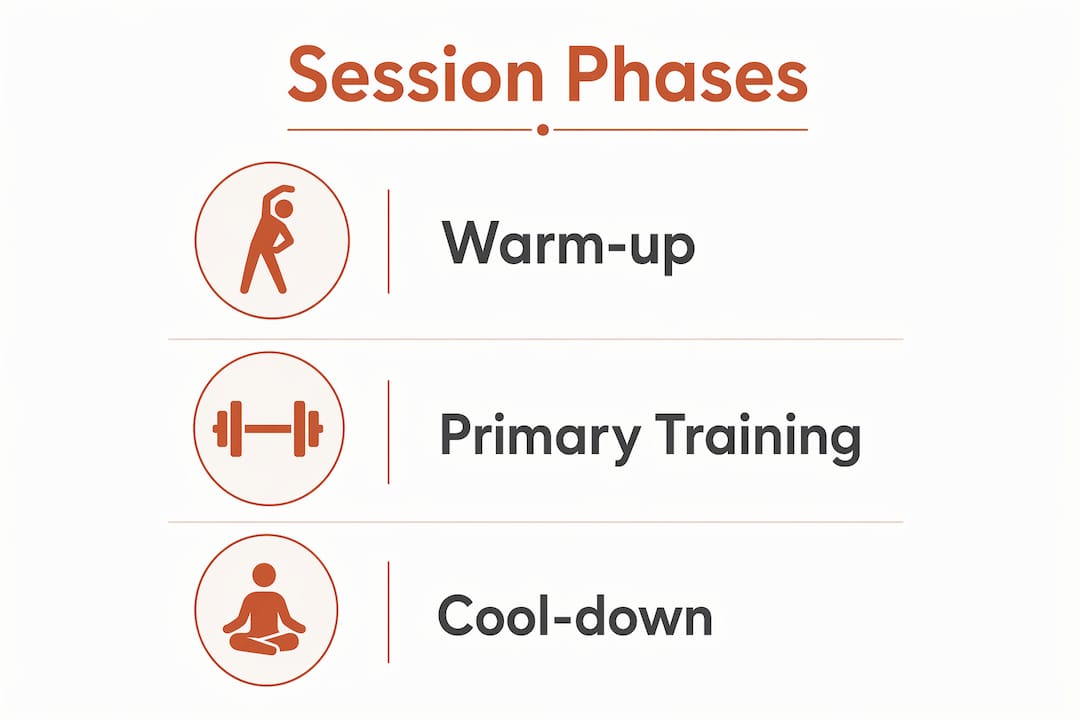
Group fitness program design organizes every session into three distinct phases: warm-up, primary training, and cool-down. Each phase serves a specific physical purpose, and skipping any one of them disrupts the session’s effectiveness.
The warm-up phase (5–10 minutes)
The warm-up raises heart rate, mobilizes joints, and prepares the nervous system for load. A well-designed warm-up mirrors the movement patterns of the main workout. If the primary training block includes squats and hinges, the warm-up should include bodyweight versions of those same patterns.
The primary training block (30–40 minutes)
This is where the session’s core work happens. Instructors use structured formats to manage intensity and fatigue across the group. Three common formats include:
- Wave loading: Intensity rises and falls in waves, giving participants brief recovery before the next push.
- Build format: Effort increases progressively from the first set to the last, peaking near the end of the block.
- Descending format: The hardest work comes first, then volume or intensity drops as fatigue accumulates.
Each format suits different goals. Wave loading works well for mixed-ability groups because it creates natural rest points. Build format suits conditioning-focused classes. Descending format fits strength-focused sessions where quality matters most in the early sets.
The cool-down phase (5–10 minutes)
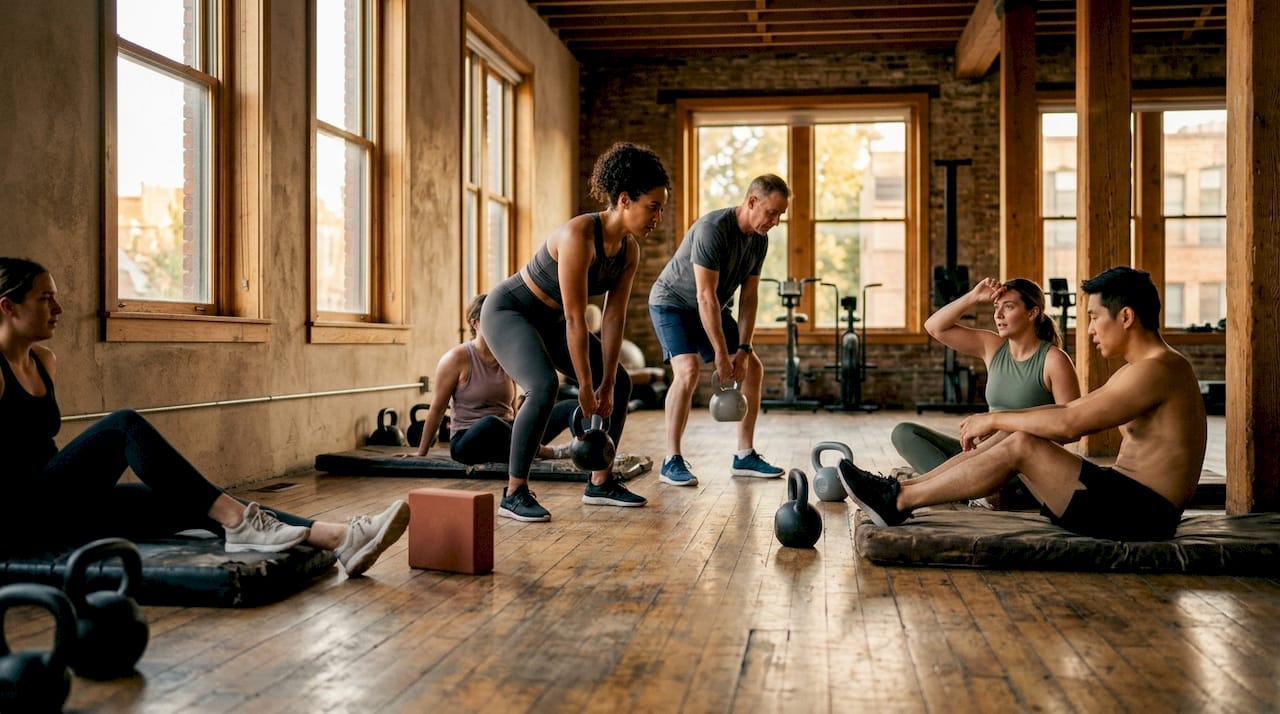
The cool-down lowers heart rate, reduces muscle tension, and signals the nervous system that the session is complete. Stretching, breathing work, and light mobility exercises belong here. Skipping the cool-down leaves participants feeling abrupt and unfinished, which affects how they feel about returning.
Pro Tip: Plan equipment transitions before class starts. Knowing exactly when participants switch from dumbbells to resistance bands, and in what order, prevents confusion and keeps the session’s energy steady.
Why do group dynamics improve fitness outcomes?
The psychological benefits of group fitness classes go well beyond motivation. Group exercise reduces depression and stress significantly compared to solo workouts, a finding supported by a meta-analysis of nearly 80,000 participants. That scale of evidence makes the mental health case for group training hard to dismiss.
One mechanism behind this effect is co-regulation. Shared rhythm and collective movement signal safety to participants’ nervous systems, reducing emotional distress and helping people engage more deeply. When you move in sync with others, your body interprets that coordination as a sign that the environment is safe. That response is biological, not motivational.
“True group dynamics involving intentional group-building principles improve functional outcomes beyond merely exercising together. Establishing group goals, fostering shared identity, and using group feedback all contribute to results that solo training cannot replicate.”
Source: Nature, Individual versus Group-Based Interventions Meta-Analysis
True group dynamics require more than putting people in the same room. Instructors who build shared goals, create group identity, and use collective feedback produce better outcomes than those who simply run parallel individual sessions. The difference between a class and a community is intentional design.
Social trust also drives adherence. When participants feel they belong, they show up consistently. That consistency is what produces long-term physical results. Building belonging is not a soft skill. It is a core programming responsibility.
What programming cycles sustain group fitness progress?
Effective group training strategies rely on periodization, which means organizing training into planned cycles with distinct phases. 4–8 week periodization cycles move participants from technique focus through volume, peak intensity, and active recovery. This structure prevents overtraining and keeps the program fresh without abandoning the consistency participants need.
A well-designed cycle looks like this:
- Weeks 1–2 (Technique phase): Focus on movement quality. Introduce the session format and primary exercises. Keep intensity low so participants can learn patterns without fatigue interfering.
- Weeks 3–4 (Volume phase): Increase the number of sets or reps. Participants now know the movements, so adding volume builds capacity without confusion.
- Weeks 5–6 (Peak intensity phase): Push effort higher. Use constraints like slower tempo, shorter rest periods, or reduced support base to increase challenge without adding new exercises.
- Week 7–8 (Deload or active recovery): Reduce volume and intensity. Let the body absorb the training. This phase prevents burnout and prepares participants for the next cycle.
Mixed-ability groups need three intensity tiers within each phase: easy, medium, and advanced. Every participant should find a version of each exercise that challenges them without overwhelming them.
Structured progression through constraints, such as adjusting tempo, rest time, or support base, builds technique and creates visible wins without requiring constant intensity escalation. That visibility matters. When participants can see their own progress, they stay motivated to continue.
Predictable class structures also support mastery. Many instructors assume participants want constant variety. Research shows the opposite. Participants prefer repeatable formats because familiarity lets them track improvement and feel competent. Novelty has its place, but it should serve the structure, not replace it.
Pro Tip: When offering modifications, use language like “choose the version that lets you keep quality” rather than labeling options as easier or harder. Normalizing modifications as intelligent choices removes stigma and increases participation across all ability levels.
How can instructors design effective group fitness programs?
Knowing how to create a fitness group that actually works requires attention to both delivery and design. The session plan matters, but so does how you communicate it in real time.
Practical implementation strategies for instructors include:
- Communicate the session flow early. Tell participants what the class will cover at the start, but keep it brief. A one-sentence overview is enough. Detailed explanations mid-session create confusion.
- Disperse logistical information throughout the class. Gradual cueing about transitions and set counts reduces participant anxiety. Telling someone “you have two more sets after this” at the right moment feels supportive, not overwhelming.
- Use demonstration before verbal explanation. Show the movement first. Then add cues. Most participants process visual information faster than verbal instructions, especially when they are already breathing hard.
- Create visible progress markers. Monthly challenges, tracked personal bests, or simple before-and-after comparisons give participants concrete evidence of improvement. That evidence builds commitment.
- Build social connection into the session. Pair participants for accountability check-ins. Use group warm-up conversations. Acknowledge milestones publicly. These small actions build the community that keeps people coming back.
You can also explore home workout program structures to see how the same phased approach applies across different training environments, from studio classes to solo home sessions.
A group fitness program functions as an operating system for community retention. Clarity of coaching and visible progress are its two most critical outputs. When participants understand what they are doing and can see that it is working, they stay.
Key Takeaways
Group fitness programming works because it combines structured session phases, social co-regulation, and planned periodization cycles to produce physical results and lasting participant commitment.
| Point | Details |
|---|---|
| Session structure drives outcomes | Warm-up, primary training, and cool-down phases each serve a distinct purpose and should not be skipped. |
| Group dynamics are biological | Co-regulation through shared movement signals safety to the nervous system, reducing stress and deepening engagement. |
| Periodization prevents burnout | 4–8 week cycles with technique, volume, intensity, and deload phases sustain progress without overtraining. |
| Predictability supports mastery | Repeatable class formats let participants track improvement and feel competent, which drives adherence. |
| Language shapes participation | Framing modifications as quality choices removes stigma and encourages smarter, more confident training decisions. |
What I’ve learned about building group fitness programs that last
Most instructors I’ve observed spend their energy on programming variety and underinvest in programming clarity. They rotate exercises weekly, introduce new formats constantly, and wonder why attendance plateaus. The participants are not bored. They are lost.
What actually keeps people coming back is the feeling that they are getting better at something. That feeling requires repetition. When you run the same movement patterns across a 6-week cycle, participants notice their squat getting cleaner, their rest periods feeling shorter, their confidence growing. That noticeability is the product you are selling.
The social piece is equally underrated. I’ve seen technically perfect programs fail because the instructor never learned participants’ names. And I’ve seen simple, imperfect programs thrive because the instructor built a room where people felt seen. Community is not a bonus feature of group fitness. It is the retention mechanism.
If you are building a program from scratch, start with a repeatable structure and a clear progression plan. Then invest the same energy in learning your participants’ names, acknowledging their milestones, and using language that makes every ability level feel welcome. The programming gets people fit. The community gets them back.
— Brian Dunn, Couch & Dumbbells
Gear that supports your group fitness sessions
Whether you are an instructor setting up a studio space or a fitness enthusiast building a home training environment, the right equipment makes your programming more effective. Couchanddumbells carries a curated selection of fitness gear and exercise equipment designed for real training needs, from portable tools that work in any space to performance apparel that moves with you through every phase of your session. You can also find portable fitness equipment suited for group setups where flexibility and quick transitions matter. Quality gear does not replace good programming, but it removes the friction that gets in the way of it.
FAQ
What is group fitness programming?
Group fitness programming is the structured design of exercise sessions organized into warm-up, primary training, and cool-down phases, with planned progressions across multiple weeks to guide participant outcomes.
How long should a group fitness session be?
Standard group fitness sessions last 45–60 minutes. That duration allows enough time for all three phases without causing excessive fatigue or reducing session quality.
What are the main benefits of group fitness classes?
Group fitness reduces depression and psychological stress significantly compared to solo training, supported by a meta-analysis of nearly 80,000 participants. Social co-regulation and shared movement also improve emotional engagement and adherence.
How do instructors handle mixed-ability groups?
Effective instructors offer three intensity tiers within each exercise, labeled by quality rather than difficulty, so every participant can find a version that challenges them without stigma or exclusion.
How often should a group fitness program change?
Programs benefit from 4–8 week periodization cycles. Changing the program too frequently prevents participants from building mastery and tracking progress, which are two of the strongest drivers of long-term commitment.