

Hybrid work has quietly rewritten the rules of home design, and the changes go far deeper than adding a desk to the bedroom. Understanding how hybrid work affects home design means recognizing that your home now serves as office, meeting room, wellness space, and retreat all at once. The old assumption that you need a large, dedicated room to work productively at home is giving way to something smarter: flexible, intentional spaces that shift with your schedule and support your whole lifestyle.
Table of Contents
- Key takeaways
- How hybrid work changes the spatial needs inside a home
- Designing your hybrid home office for productivity
- Integrating wellness into your hybrid home design
- Practical tips for adapting your existing home
- My honest take on hybrid work home design
- Build your ideal hybrid home with Couchanddumbells
- FAQ
Key takeaways
| Point | Details |
|---|---|
| Zoning beats dedicated rooms | Multi-use spaces with clear visual boundaries outperform large, isolated home offices for most hybrid workers. |
| Three modes drive design | Plan your workspace around focus, collaboration, and reset modes to stay productive throughout the day. |
| Acoustics are non-negotiable | Sound control through soft furnishings and layout choices protects your concentration and video call quality. |
| Wellness belongs in the plan | Natural light, air quality, and fitness integration directly support long-term focus and mental clarity. |
| Flexibility is the long-term strategy | Adaptable furniture and zoning cues let your home evolve as your work schedule and family needs change. |
How hybrid work changes the spatial needs inside a home
Hybrid work adoption has reached 64% of organizations globally, with rates exceeding 90% in some markets. That scale of change means millions of homes are being asked to do something they were never originally designed to do: host focused professional work during the day, then fully reset for personal life in the evening.
The first major shift is the move away from open-plan living. Open layouts, once celebrated for their social energy, struggle to support deep work. Even soft sounds, a television in another room, a conversation nearby, interrupt concentration. Successful hybrid homes adapt by prioritizing zoning over traditional open-plan layouts, using subtle physical and visual separations to define where work happens and where it stops.
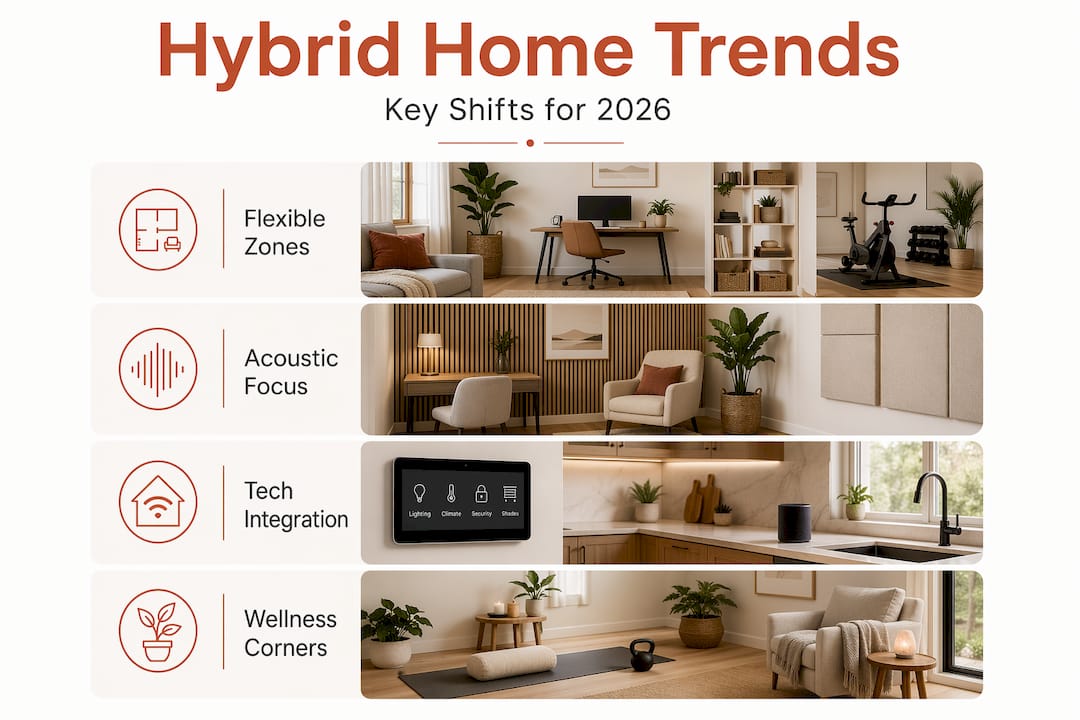
Younger homeowners are driving this trend hard. Consumers aged 21 to 30 are prioritizing multi-functional hybrid homes that combine office, gym, and guest spaces in smaller footprints. They are not looking for a dedicated office wing. They want rooms that flex, furniture that transforms, and layouts that serve multiple needs within the same square footage.
Here is what smart zoning actually looks like in practice:
- Visual anchors: A specific rug, a pendant light, or a bookshelf wall signals “this is the work zone” without requiring walls or doors.
- Acoustic layering: Curtains, upholstered furniture, and rugs absorb sound and reduce echo in open spaces, protecting your focus during calls.
- Physical dividers: Bookshelves, room dividers, or sliding partitions create separation without permanent construction.
- Lighting zones: Warm ambient light for living areas and cooler, brighter task lighting for work zones help your brain shift between modes.
Pro Tip: If you share a living space with others, a simple visual cue like a specific desk lamp being switched on can serve as a household signal that you are in focused work mode. It sets expectations without a conversation every morning.
The acoustic element deserves special attention. Acoustic design, including soft furnishings and strategic furniture layout, is one of the most frequently overlooked factors in home office productivity. Hard floors and bare walls turn your home into an echo chamber that undermines every video call and chips away at your concentration hour by hour.
Designing your hybrid home office for productivity
The concept of designing a home office around three distinct modes — focus, collaboration, and reset — is one of the most practical frameworks available for hybrid workers right now. Instead of building one static workspace, you design a space that can shift depending on what you need in the next hour.
Here is how to plan each mode intentionally:
- Focus mode: Your desk faces a wall or window to minimize visual distraction. Noise-cancelling headphones are within reach. Notifications are off. The space feels contained and calm.
- Collaboration mode: Your webcam angle shows a clean, intentional background. Lighting sits at face level rather than overhead to prevent harsh shadows. Your microphone and speaker setup is ready without cables scattered across the desk.
- Reset mode: A chair, a small plant, or even a stretch mat placed nearby gives you a physical reason to step away from screens. Movement breaks become built into the space rather than forgotten.
Lighting and background design matter more than most people realize for professional video presence. A ring light or a lamp placed at eye level makes an immediate difference in how you appear on calls. Your background should feel intentional too, whether that means a tidy bookshelf, a neutral wall, or a plant.
| Design element | Low-budget option | Investment option |
|---|---|---|
| Task lighting | Adjustable desk lamp | LED panel at face level |
| Seating | Ergonomic seat cushion on existing chair | Dedicated ergonomic office chair |
| Background | Tidy bookshelf or neutral wall | Styled shelving with plants and art |
| Sound control | Area rug and heavy curtains | Acoustic panels or wall-mounted shelving |
| Cable management | Cable clips and velcro ties | In-desk cable tray with power station |
Tech essentials like noise-cancelling headsets, quality webcams, and organized cable management reduce cognitive load and make every workday feel more controlled. You do not need to spend a fortune. You need to be intentional about what is on your desk and what is not.
Pro Tip: A fold-away desk or a Murphy-style wall desk is one of the best investments for small spaces. It lets a guest room, dining area, or corner of a living room function as a proper workspace during the day and disappear completely by evening.
The Home Office 2.0 trend reflects exactly this thinking. Rather than creating isolated offices that feel cut off from the rest of daily life, the goal is to integrate work zones into living spaces in ways that feel natural, aesthetically pleasing, and easy to transition in and out of.
Integrating wellness into your hybrid home design
Designing a home for hybrid work is not only about productivity. Your long-term focus and mental clarity depend directly on the physical environment you spend eight or more hours in each day.
Natural light is the simplest and most effective wellness tool in any home. Position your primary work area near a window where possible. The psychological lift from daylight exposure during work hours is real and cumulative. If your space lacks natural light, full-spectrum LED bulbs make a meaningful difference.
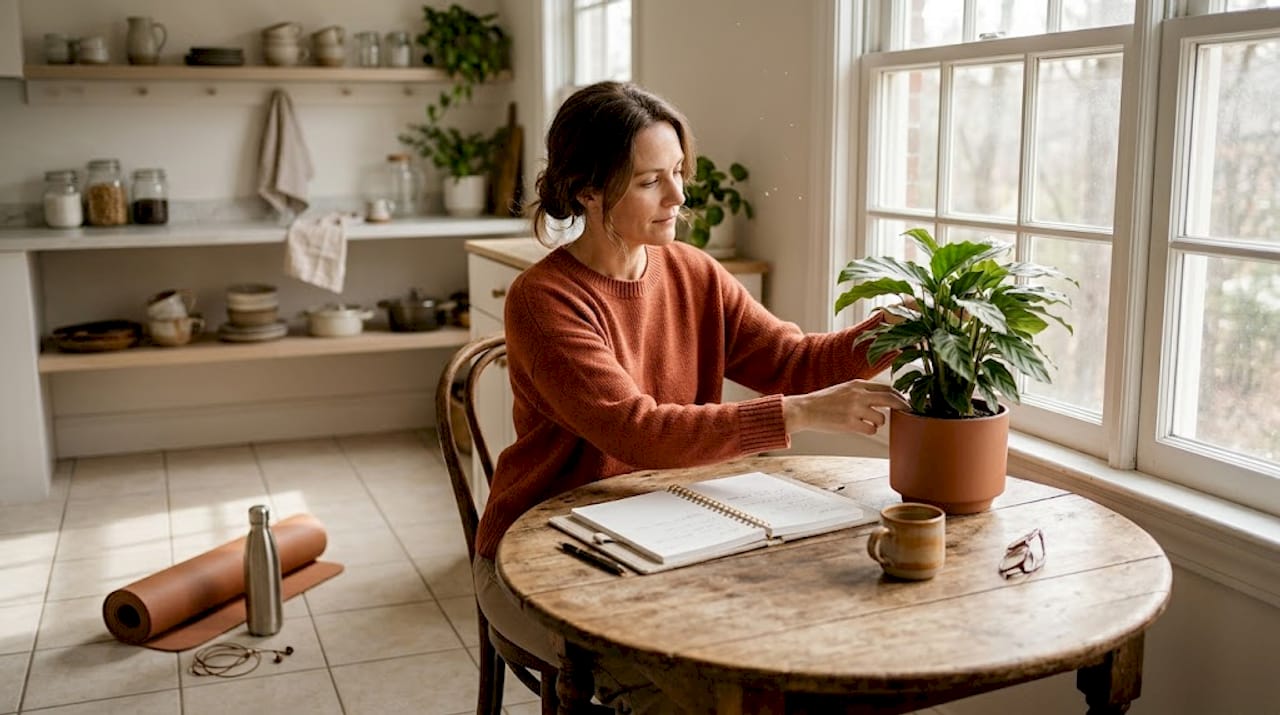
Air quality and plants round out the picture. Studies consistently show that indoor plants reduce stress and improve air quality perception, even when the measurable effect on air chemistry is modest. A few low-maintenance plants on your desk or shelving add life to the space without requiring expertise.
Here are the most impactful wellness features to incorporate into your hybrid home design:
- Movement zones: A small area with a yoga mat, resistance bands, or portable fitness equipment gives you a reason to move during breaks without leaving the room.
- Biophilic elements: Plants, natural materials like wood and stone, and views of outdoor spaces reduce mental fatigue during long work sessions.
- Temperature and ventilation: A space that is too warm or too stuffy kills concentration faster than noise does. A small fan or a cracked window makes a measurable difference.
- Energy efficiency: Energy-efficient home design has become a real priority as hybrid workers face higher utility bills from spending more time at home. Better insulation and smart thermostats pay for themselves within a reasonable timeframe.
Portable fitness equipment and adaptable home gym zones are increasingly central to how hybrid workers design their homes. A dedicated wellness corner, even a small one, reinforces the habit of movement and helps prevent the physical stagnation that comes from desk-bound days.
Practical tips for adapting your existing home
You do not need to renovate your house to make it work better for hybrid work. Most meaningful improvements come from smarter use of what you already have.
- Use zoning cues first. Before buying anything, experiment with a rug, a floor lamp, or a rearranged bookshelf to define your workspace. These cost little and change how the space feels immediately.
- Address cables before aesthetics. A visually messy workspace increases stress and reduces focus. Cable clips, velcro ties, and a small power strip mounted under the desk take an afternoon and make the space feel entirely different.
- Try a flexible partition. Flexible layouts using sliding partitions and zoning cues allow spaces to shift between work and living functions without construction. Curtain-style room dividers are one of the most affordable options available.
- Optimize your chair before your desk. Posture-related fatigue is one of the leading causes of afternoon productivity drops for home workers. An ergonomic seat cushion on an existing chair is a low-cost first step worth taking before investing in a full office chair.
- Plan storage with the whole household in mind. Work materials, fitness gear, and everyday items often collide in shared spaces. A well-designed storage system keeps work and personal zones from creeping into each other.
Pro Tip: Set a physical “end of day” ritual tied to your space. Close the laptop, fold the desk, or dim the task light. These small actions signal to your brain that work is over, which protects your rest and your focus the next morning.
Balancing work zones with family needs is one of the most common pain points for hybrid workers. The answer is almost never to claim more space but to use shared space more intentionally. Clear agreements about when and where work happens go a long way, especially when paired with design choices that make those boundaries visible.
My honest take on hybrid work home design
I’ve spent enough time thinking about how people actually live and work at home to have a few firm opinions on this, and the biggest one is this: flexibility beats permanence every time.
I’ve seen homeowners invest heavily in a dedicated home office only to find that their schedule shifted, their family needs changed, or they simply stopped using the space as intended within a year. The people who seem most satisfied with their home work setup are the ones who treated it as an evolving system rather than a fixed room.
What I’ve learned is that acoustics and psychological boundaries are the two most consistently underestimated factors in home office design. Everyone asks about furniture and lighting. Almost no one asks about sound until a failed video call or a month of broken focus forces the issue.
The other thing I’d push back on is the idea that home offices need to look like offices. The hospitality-inspired approach to home office design, making spaces feel warm, intentional, and personally meaningful rather than corporate, actually supports better work. A space you enjoy being in is a space you show up to with more energy.
My honest expectation for the next few years is that hybrid home design will keep moving toward spaces that feel alive rather than dedicated. Rooms that breathe, flex, and support the whole person rather than just the worker. If you design with that in mind now, your home will serve you well regardless of how your work patterns shift.
— Brian Dunn, Couch & Dumbbells
Build your ideal hybrid home with Couchanddumbells
If this article got you thinking about your own space, the next step is easier than you might expect. At Couchanddumbells, we curate furniture, storage, and wellness products specifically for people who want their home to look good and support how they actually live.
Whether you are looking for versatile home interior pieces to define your workspace or an outdoor furniture set that creates a genuine reset zone away from your desk, we have options that blend style and function without compromise. A well-designed home supports not just your productivity but your whole sense of wellbeing. Browse our collection and find the pieces that make your space work as hard as you do.
FAQ
How does hybrid work change home design needs?
Hybrid work requires homes to serve as both professional workspaces and personal retreats, pushing design toward flexible zoning, acoustic control, and multi-use furniture rather than large dedicated rooms.
What are the most important features of a home office for hybrid work?
The most impactful features are ergonomic seating, quality lighting at face level, sound control through soft furnishings, and cable management that keeps your workspace visually calm and functional.
Can small spaces support effective hybrid work design?
Yes. Fold-away desks, flexible partitions, and zoning cues like rugs and dedicated lighting allow even compact spaces to shift between work and living modes without renovation.
How do I separate work and personal life in a shared home space?
Use visual anchors like a specific lamp or rug to define your work zone, and build a consistent end-of-day ritual tied to a physical action in that space to signal the mental shift away from work.
Why does acoustic design matter for hybrid home offices?
Sound-conscious design reduces distractions, lowers fatigue, and improves video call quality. Soft furnishings, rugs, and curtains absorb noise and protect your focus during long work sessions at home.