

Most people assume creating a connected indoor outdoor living space requires a full home renovation or a massive budget. That assumption stops a lot of great projects before they start. Understanding how indoor outdoor living works is really about knowing which design decisions create that effortless connection between your home’s interior and the world just outside it. This guide breaks down the architectural principles, real benefits, common pitfalls, and practical steps you need to make it happen, whether you’re starting from scratch or refining what you already have.
Table of Contents
- Key takeaways
- How indoor outdoor living works: the design principles
- Functional benefits and wellness impact
- Common challenges and how to solve them
- Practical steps to create your indoor outdoor space
- My honest take on indoor outdoor living
- Build your outdoor space with Couchanddumbells
- FAQ
Key takeaways
| Point | Details |
|---|---|
| Floor alignment matters most | Matching floor levels and materials between inside and outside creates visual and physical continuity. |
| Wellness benefits are real | Spending time in nature-connected spaces supports mental and physical health, backed by WHO guidelines. |
| Property value increases | Well-executed indoor outdoor integration can raise home value by 8 to 12 percent. |
| Drainage comes before design | Water management must be planned before finishes to prevent structural damage long-term. |
| Start small, plan precisely | Phased projects with careful material planning avoid costly delays and deliver lasting results. |
How indoor outdoor living works: the design principles
At its core, indoor outdoor living design removes the visual and physical barriers between your interior rooms and the outdoor areas directly connected to them. The result is a space that feels larger, more open, and more intentional. But that feeling doesn’t happen by accident. It comes from a set of specific architectural decisions working together.
The most foundational element is floor level alignment. When your interior floor and exterior surface sit at the same height, movement between the two spaces feels natural. Continuous flooring creates a smooth indoor-outdoor flow and visual unity that no amount of furniture or decoration can replicate on its own. Designers often use large-format porcelain tiles, concrete, or natural stone that work in both environments to reinforce this connection.
The type of opening you choose between spaces shapes the entire experience. Your main options are:
- Sliding glass doors: Affordable and practical, they offer wide openings without requiring much wall space. Best for moderate climates.
- Bi-fold or folding glass walls: These stack to one side and open up almost the entire wall, creating a full indoor-outdoor merge. Ideal for entertaining spaces.
- Retractable glass walls: The most flexible option. They disappear completely into a wall pocket, leaving zero visual interruption.
- Pivot doors: A single oversized panel that rotates. Strong visual statement, though with a smaller opening than folding systems.
Beyond the opening itself, continuity in materials and finishes carries the design language from inside to outside. Matching ceiling heights, repeating trim profiles outdoors, and extending interior lighting fixtures to covered outdoor areas all reinforce the sense that these are one connected space rather than two separate ones.
Pro Tip: When choosing exterior flooring to match your interior, order samples of both materials and view them together in natural daylight. Artificial lighting indoors can make colors appear significantly warmer, leading to mismatched selections once installed.
Functional benefits and wellness impact
The benefits of indoor outdoor spaces go well beyond aesthetics. When your home opens up to the outside, you get better cross-ventilation, which reduces your reliance on air conditioning during mild weather. Natural light penetrates deeper into your interior, cutting artificial lighting costs and improving the overall mood of your living spaces.
The wellness connection is well-documented. The WHO recommends 120 minutes of weekly time in nature to support mental and physical well-being. A well-designed indoor outdoor space makes that easy to achieve without leaving your property. You’re more likely to spend time outdoors when the transition requires no effort.
“Successful indoor-outdoor living is about reducing daily friction and making outdoor spaces natural extensions of indoor routines.” — Richmond American Homes
From a financial standpoint, the numbers are compelling. Home property value can increase by 8 to 12 percent with well-executed indoor outdoor integration. The global outdoor kitchen market reached $26.35 billion in 2025, which tells you how seriously American homeowners are investing in multi-season outdoor living. This isn’t a niche trend. It’s a mainstream shift in how people use their homes.
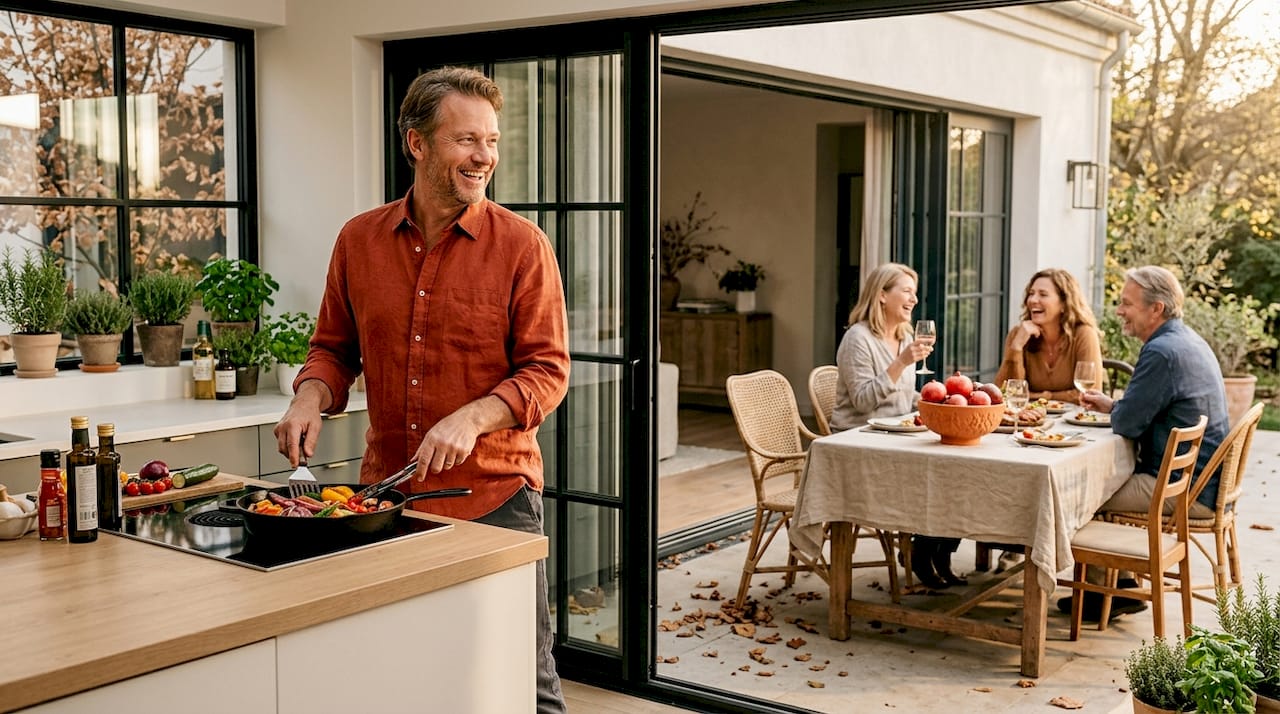
Practically speaking, these spaces transform how you entertain. A kitchen that opens directly to an outdoor dining area removes the constant back-and-forth that makes hosting feel like work. Families use their homes differently when the backyard feels like a natural extension of the living room rather than a separate destination.
Common challenges and how to solve them
Knowing how to create outdoor living spaces that actually hold up over time means confronting a few technical realities upfront. Most problems in indoor outdoor projects come from decisions made too early or too late in the process.
-
Plan drainage before anything else. Poor water management and improper threshold drainage lead to structural damage over time. Your contractor should design the drainage slope and channel placement before selecting any finishes. A minimum 1 to 2 percent slope away from the structure is standard.
-
Account for material dimension differences. Homeowners frequently overlook dimension discrepancies when ordering interior and exterior materials, leading to costly delays. Interior tiles are often thinner than exterior pavers. Confirm exact thicknesses with your supplier before finalizing the floor plan.
-
Choose your threshold design carefully. Flush thresholds look elegant but are technically complex and expensive to execute correctly. A small step-down of 1 to 2 inches offers practical water protection and can still be made accessible with a short ramped transition.
-
Meet slip resistance standards. Outdoor surfaces that get wet need a COF rating of 0.6 or higher to be safe in wet conditions. Many homeowners choose tiles that look great but become dangerously slippery after rain. Always check the rating before purchasing.
-
Manage wind, sun, and privacy. An open outdoor space with no shade or wind protection becomes unusable in summer. Retractable shade sails, pergolas with adjustable louvers, and strategic planting all extend the time you can comfortably use the space.
-
Think about long-term maintenance. Natural wood looks beautiful but requires regular sealing. Composite decking and powder-coated aluminum need far less upkeep. Match your material choices to the time you’re realistically willing to spend on maintenance each year.
Pro Tip: Before finalizing your threshold design, walk through the space with a glass of water in hand. If you feel any hesitation about the step or surface, your guests will too. Comfort and safety should always take priority over a purely flush aesthetic.
Practical steps to create your indoor outdoor space
Turning indoor outdoor living ideas into reality starts with a clear plan. Here’s how to approach the project in a way that saves time, money, and frustration.
The first decision is where your primary connection point will be. The kitchen-to-outdoor-dining link is the most functional for most households. A living room-to-lounge terrace works well for relaxation-focused spaces. Pick the connection that matches how your family actually lives, not just what looks good in photos.
Once you’ve identified the opening, think about circulation. People should be able to move between spaces without navigating around furniture or squeezing past obstacles. A clear path of at least 36 inches wide is the practical minimum for comfortable flow.
Furniture selection is where many indoor outdoor living ideas come to life. Modern outdoor furniture now matches indoor aesthetics with weather-resistant modular and upholstered pieces. You no longer have to choose between comfort and durability. Look for solution-dyed acrylic fabrics, teak or powder-coated aluminum frames, and modular configurations that let you reconfigure the layout as your needs change.
Here’s a quick comparison to help you choose the right furniture approach:
| Feature | Indoor-style outdoor furniture | Traditional outdoor furniture |
|---|---|---|
| Comfort level | High, with deep cushions | Moderate, often firmer |
| Weather resistance | High (solution-dyed fabrics) | High (but less stylish) |
| Aesthetic match | Matches interior design closely | Often contrasts with interior |
| Maintenance | Low to moderate | Low |
| Cost | Higher upfront | More affordable |
For climate comfort, ceiling fans, retractable screens, and covered pergolas extend usability across more seasons without closing off the open-air feel. Outdoor-rated ceiling fans move more air than you’d expect and make a significant difference on warm evenings.
Technology integration is worth considering from the start. Running conduit for outdoor Wi-Fi access points, smart lighting, and weatherproof speakers during construction costs very little compared to retrofitting later. Landscape planting that mirrors your interior color palette or plant choices ties the two environments together visually without requiring a designer’s budget.
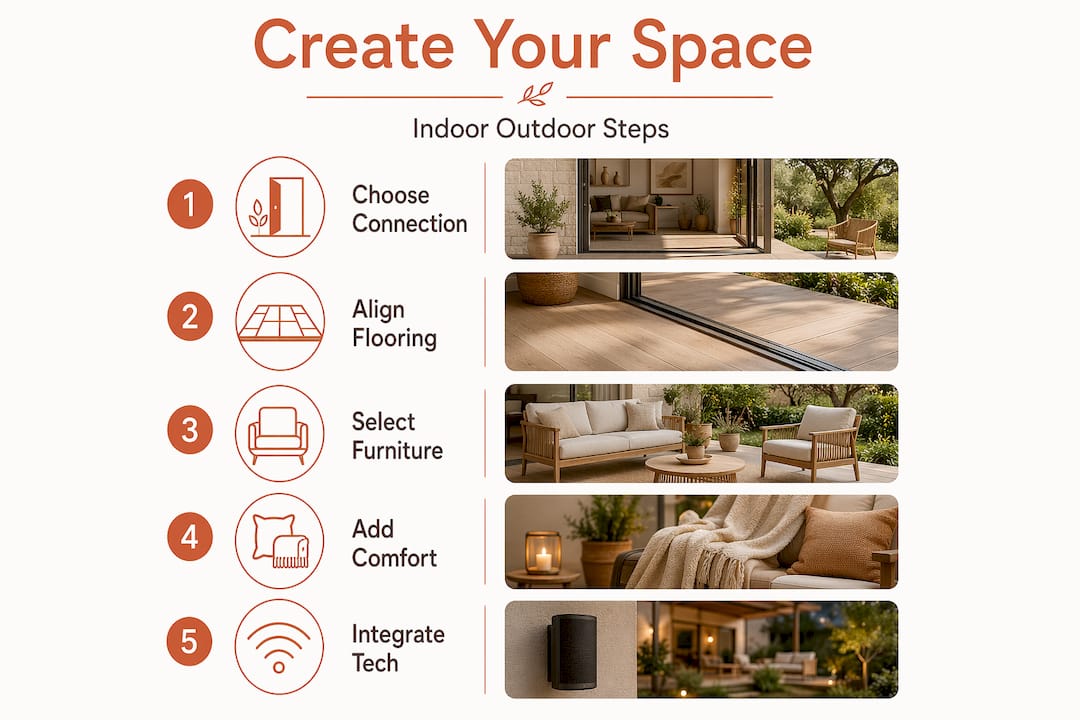
If you’re working with a limited budget, phase the project. Start with the opening and flooring, then add furniture and climate features in subsequent stages. Continuous flooring with expansion joints or flush metal strips handles outdoor substrate movement and preserves visual flow even as you add to the space over time.
My honest take on indoor outdoor living
I’ve seen a lot of homeowners approach indoor outdoor projects with the idea that the transformation happens through furniture and plants. It doesn’t. The spaces that genuinely change how a family lives are the ones where someone made careful decisions about the threshold, the floor level, and the opening width before a single piece of furniture was chosen.
What I’ve learned from watching these projects succeed and fail is that the friction points are almost always technical, not aesthetic. A beautiful folding glass wall that leaks when it rains. A stunning flush threshold that floods the living room after a heavy storm. These aren’t design failures. They’re planning failures.
My honest advice: spend more time and money on the structural and technical elements than feels comfortable, and less on the decorative ones. The decor can always be updated. A poorly drained threshold is a much harder fix.
The other thing I’d tell you is to think about how you actually live, not how you want to live. If you don’t currently spend time outside, a grand outdoor room won’t change that on its own. But if you find yourself gravitating to the backyard whenever the weather allows, even a modest well-connected outdoor space will transform your daily routine. Start with that connection point. Build from there.
— Brian Dunn, Couch & Dumbbells
Build your outdoor space with Couchanddumbells
If you’re ready to put these ideas into practice, Couchanddumbells has curated a range of outdoor furniture and décor designed specifically for the indoor outdoor lifestyle. The focus is on pieces that look as good as your interior while holding up to real outdoor conditions.
Whether you’re furnishing a covered terrace or an open patio, the outdoor furniture sets at Couchanddumbells combine weather-resistant construction with the kind of comfort you’d expect from indoor seating. For a relaxed lounge feel, the outdoor sofa patio furniture collection offers modular configurations that adapt to your space. You can also browse the full home and interior collection for décor pieces that carry your interior aesthetic outside. Building a space that looks good and feels even better starts with the right foundation.
FAQ
What is indoor outdoor living design?
Indoor outdoor living design refers to the architectural and decorative practice of connecting interior rooms to outdoor spaces through aligned floor levels, large openings, and continuous materials, creating a unified living environment.
How much does indoor outdoor integration increase home value?
A well-executed indoor outdoor connection can increase property value by 8 to 12 percent, depending on the quality of materials and the level of integration achieved.
What flooring works best for indoor outdoor spaces?
Large-format porcelain tiles, concrete, and natural stone work well in both environments. Outdoor surfaces should have a COF rating of 0.6 or higher for safety in wet conditions.
What is the biggest mistake homeowners make with these projects?
The most common mistake is prioritizing aesthetics over drainage and threshold design. Poor water management leads to structural damage that is far more expensive to fix than it would have been to prevent.
How do I start creating an indoor outdoor living space on a budget?
Begin with the structural connection, specifically the opening and floor level alignment, then phase in furniture and climate features over time. Planning the conduit for technology during construction avoids costly retrofits later.