

Open concept living is defined as the intentional removal of walls between the kitchen, dining room, and living room to create one unified, flexible space. This layout promotes natural light, social flow, and a sense of spaciousness that walled rooms simply cannot match. Understanding how open concept living works means going beyond knocking down walls. It requires deliberate zoning, layered lighting, and thoughtful furniture placement to make each area feel purposeful. The design principles behind an open layout are what separate a beautiful, functional home from a large, confusing room.
How does zoning work in open concept living?
Open concept design is not about creating one giant undefined room. It is about creating connected spaces with clearly defined micro-zones and natural pathways between them. Without this structure, the space feels awkward and hard to use.
Successful open plans use micro-zones of 80–120 square feet to create contained, intentional areas within the larger space. That size is enough to hold a sofa grouping or a dining table without the zone feeling cramped or bleeding into the next area.
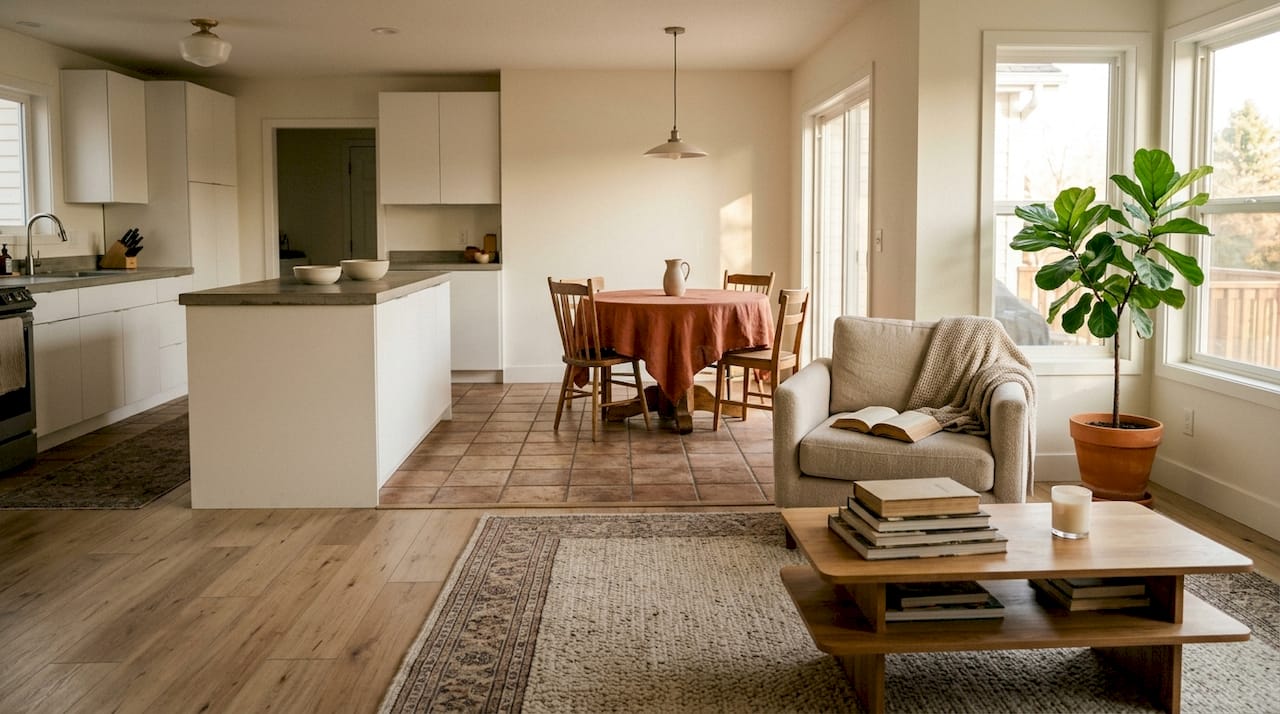
Each zone should serve one clear function: cooking, dining, or relaxing. When you define the purpose of each area before placing furniture, the whole layout becomes easier to read and navigate. Guests and family members move through the space naturally because the zones guide them.
The tools for defining zones do not require walls. You can use area rugs, low shelving, and furniture placement as what designers call “invisible architecture.” Low-profile furniture around 42 inches tall, like a bookshelf or a sofa with a finished back, marks boundaries without blocking sightlines.
Here are the most effective zoning tools for open layouts:
- Area rugs: Anchor each zone visually and signal where one area ends and another begins.
- Sofa backs: A sofa placed with its back to the kitchen creates a clear boundary between the living and cooking zones.
- Low shelving: Open shelves at 42 inches high divide space while keeping the room airy.
- Lighting fixtures: A pendant light over a dining table signals that zone even without any physical barrier.
- Flooring transitions: A shift from hardwood to tile subtly marks the kitchen boundary.
Pro Tip: Plan your circulation paths first. Leave at least 36 inches of clear walkway between zones so the space feels intentional, not cluttered.
What design strategies create flow and cohesion in an open home?
Visual unity is the foundation of a well-designed open layout. Without it, the space reads as several mismatched rooms pushed together rather than one cohesive home.
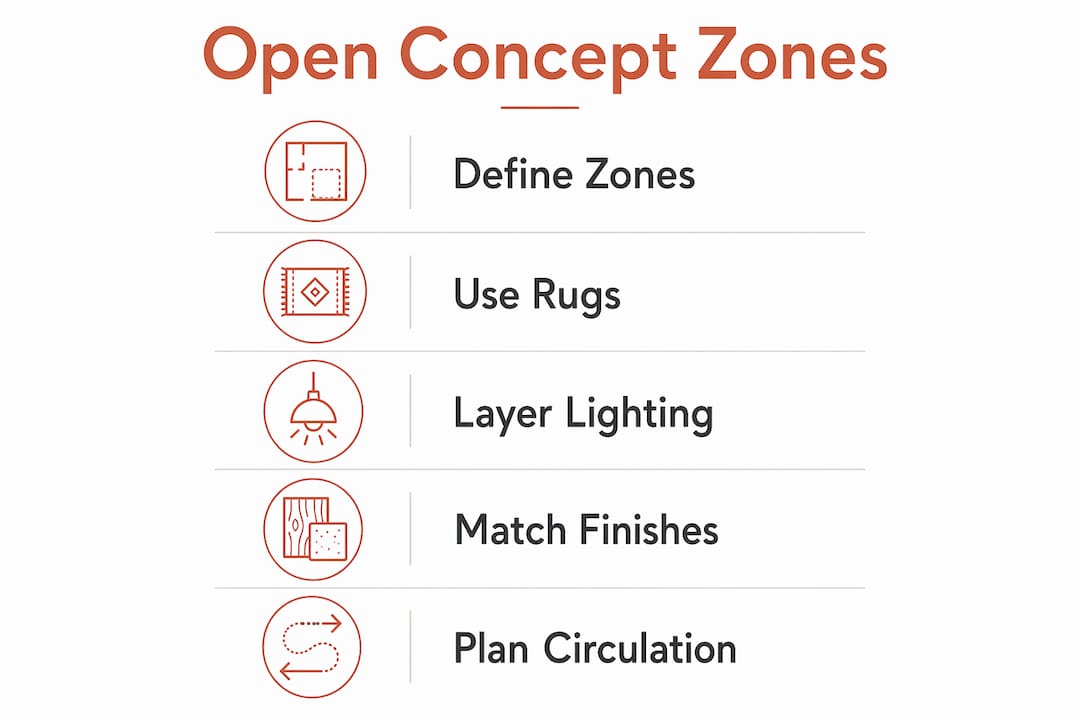
A single warm white paint color with creamy undertones across the entire open plan acts as visual glue. It ties the zones together while letting accent furniture colors do the work of defining separate functions. This approach is far more effective than using different colors per zone, which fragments the space visually.
Lighting is the most underused design tool in open layouts. Layered lighting that combines ambient, task, and accent sources defines zones effectively without any physical dividers. A single overhead light flattens the entire space and removes any sense of zone distinction.
Follow these steps to build a cohesive open concept design:
- Choose one base paint color. Apply it to all walls and ceilings throughout the open area for visual continuity.
- Layer your lighting. Install recessed lights for ambient coverage, pendants over dining and kitchen zones, and floor or table lamps in the living area.
- Pull furniture away from walls. Seating placed 12–18 inches from walls creates intentional layouts and prevents that hollow, empty-perimeter look.
- Use material transitions. A shift in flooring material or texture between the kitchen and living area acts as a subtle divider without any construction.
- Manage natural light. Place sheer curtains on large windows to diffuse harsh light evenly across all zones rather than creating bright spots and dark corners.
- Apply the 80/20 rule. Keep 80% of elements cohesive in style and let 20% introduce contrast through accent pieces. This prevents monotony without disrupting unity.
Pro Tip: Use the same metal finish, such as brushed brass or matte black, across light fixtures, cabinet hardware, and decor throughout the open space. Repeating one finish ties every zone together without effort.
What are the real benefits and trade-offs of open concept living?
Open concept layouts offer genuine advantages, but they come with real trade-offs that homeowners often underestimate before committing to the design.
Open layouts promote natural light distribution and flexible social spaces. Light travels freely across the entire area without walls blocking it, making even modest-sized homes feel larger and brighter. For families and people who entertain, the connected layout means no one is isolated in the kitchen while guests sit in the living room.
The benefits of an open living area include:
- More natural light: Windows in one zone illuminate the entire space.
- Better social flow: Conversations carry across cooking, dining, and relaxing areas without interruption.
- Flexible use: Zones can shift purpose as your lifestyle changes, such as adding a home gym corner to the living area.
- Perceived spaciousness: The absence of walls makes the same square footage feel significantly larger.
The trade-offs are equally real. Noise transmission increases significantly in open layouts because sound travels without walls to absorb it. Kitchen noise, television audio, and conversations all compete in the same space. Reduced wall space also limits storage options and display areas.
“The main trade-off in open concept living is the tension between fostering interaction and maintaining acoustic privacy. Proactive noise mitigation is not optional. It is part of the design.”
Textiles, rugs, and layout adjustments are the primary tools for managing sound in open plans. Heavy curtains, upholstered furniture, and layered rugs all absorb sound and reduce echo. Addressing acoustics at the design stage prevents frustration later.
How should you arrange furniture and lighting in open concept spaces?
Furniture placement in an open layout follows different rules than in a traditional room. The goal is to create groupings that feel complete on their own while still connecting to the larger space.
Seating groupings work best when kept within 8 feet of each other. That distance supports easy conversation without requiring people to raise their voices. Beyond 8 feet, a seating arrangement starts to feel like a waiting room rather than a living space.
| Zone | Rug Size Rule | Light Temperature | Furniture Distance from Wall |
|---|---|---|---|
| Living area | Large enough to anchor all seating | 2700K warm white | 12–18 inches |
| Dining area | 24 inches beyond table edges on all sides | 2700K warm white | Centered in zone |
| Kitchen | Not required | 3000K neutral white | N/A |
Rug sizing is one of the most common mistakes in open layouts. A dining rug must extend at least 24 inches beyond the table edges on all sides. That keeps chairs on the rug when pulled out, which reinforces the zone boundary and protects the floor.
Light color temperature is a subtle but powerful zoning tool. Use 2700K warm white bulbs in the living and dining areas for a relaxed, comfortable feel. Switch to 3000K neutral white in the kitchen for task clarity. The brain registers this temperature shift and subconsciously distinguishes the zones without any physical divider.
Pro Tip: Never rely on a single overhead fixture for any zone. Each area needs at least three light sources at different heights: one overhead, one at eye level, and one at floor or table level. This layering creates depth and warmth.
For open layouts that double as adaptable living spaces, furniture with finished backs and clean lines works best. A sofa with a polished back face can serve as a room divider while still looking intentional from every angle.
Key Takeaways
Open concept living works through deliberate zoning, layered lighting, and consistent visual elements that define each area without physical walls.
| Point | Details |
|---|---|
| Micro-zones create structure | Size each functional zone at 80–120 sq ft to keep areas contained and purposeful. |
| Invisible architecture defines space | Use sofa backs, low shelving, and area rugs to mark boundaries without blocking sightlines. |
| Layered lighting is non-negotiable | Combine ambient, task, and accent lights per zone; use 2700K for living areas and 3000K for kitchens. |
| Noise requires proactive management | Add textiles, rugs, and upholstered furniture to absorb sound before it becomes a problem. |
| Visual unity ties the layout together | One base paint color and a repeated metal finish connect all zones into a single cohesive space. |
What most homeowners get wrong about open concept design
The biggest mistake I see is treating open concept as a subtraction project. Homeowners remove walls and expect the space to feel finished. It never does. Open concept is an addition project. You are adding zones, adding lighting layers, adding texture, and adding intentional pathways. The removal of walls is just the starting point.
The trend I find most encouraging in 2026 is the move toward hybrid open layouts. These designs use flexible partitions, sliding panels, or tall open shelving to create zones that can open up or close off depending on the moment. A family with young children can close off the living area during homework time and open it back up for movie night. That adaptability is what makes a home feel truly livable, not just visually impressive.
I also want to push back on the idea that open concept suits every lifestyle. If you work from home, need acoustic privacy, or simply prefer defined rooms, a fully open layout will frustrate you. The better path is a hybrid approach: open the kitchen and dining area, but keep a separate room for focused work or quiet retreat. Design should serve your actual life, not a floor plan trend.
Under-furnishing is the other pitfall I see constantly. Homeowners open up a space and then fill it with too little furniture, thinking minimalism is the goal. The result is a space that echoes, feels cold, and lacks any sense of zone definition. Fill your zones with purpose. Every piece should earn its place by defining space, absorbing sound, or supporting how you actually live.
— Brian Dunn, Couch & Dumbbells
Style your open space with pieces from Couchanddumbells
A well-designed open layout needs furniture and decor that work as hard as they look good. The right pieces define zones, absorb sound, and bring the whole space together without a single wall.
At Couchanddumbells, the Home & Interior collection includes curated furniture, storage solutions, and decor designed for intentional living spaces. Whether you are anchoring a living zone with a statement sofa, adding low shelving to mark a boundary, or layering textures to manage acoustics, you will find pieces built for both beauty and function. If your open layout includes an outdoor extension, the outdoor furniture set options bring the same intentional design to your patio or deck.
FAQ
What is open concept living?
Open concept living is a floor plan design that removes walls between the kitchen, dining room, and living room to create one connected, multifunctional space. The layout promotes natural light, social interaction, and flexible use of square footage.
How do you define zones in an open concept home?
Zones are defined using area rugs, low shelving, furniture placement, lighting fixtures, and flooring transitions rather than walls. Each zone should measure roughly 80–120 square feet and serve one clear function such as cooking, dining, or relaxing.
What are the biggest challenges of open concept living?
Noise transmission and reduced acoustic privacy are the primary challenges. Sound travels freely without walls to absorb it, so textiles, upholstered furniture, and layered rugs are necessary to manage echo and competing sounds.
What size rug do you need for an open concept dining area?
A dining area rug should extend at least 24 inches beyond the table edges on all sides. This keeps chairs on the rug when pulled out and reinforces the zone boundary visually.
What light bulb temperature works best in an open concept layout?
Use 2700K warm white bulbs in the living and dining zones for comfort and warmth. Switch to 3000K neutral white in the kitchen for task clarity. The temperature difference helps the brain distinguish zones without any physical divider.