
Your dumbbells don’t have to clash with your decor. For many homeowners, the challenge of trying to blend fitness equipment home decor is real. Bulky machines and scattered resistance bands can undercut years of thoughtful interior design in seconds. But the idea that fitness gear and beautiful living spaces can’t coexist is outdated. With the right equipment choices, storage strategies, and styling techniques, your workout area can feel like a natural, even stylish, extension of your home.
Table of Contents
- Key takeaways
- How to blend fitness equipment into your home decor
- Choosing equipment and storage that double as decor
- Styling techniques for a cohesive workout and living space
- Maintaining balance over time
- My honest take on blending workouts with living spaces
- Find stylish fitness gear at Couchanddumbells
- FAQ
Key takeaways
| Point | Details |
|---|---|
| Start with space and needs | Measure your room and clarify your workout goals before buying any equipment. |
| Choose dual-purpose pieces | Select gear that functions as decor through premium materials and sculptural design. |
| Color cohesion matters most | Repeat your accent color in at least three spots to create a unified, intentional look. |
| Smart storage prevents clutter | Use decorative baskets and labeled drawers to keep small accessories out of sight. |
| Maintain gradually | Avoid overbuying and refresh accent pieces seasonally to sustain visual balance. |
How to blend fitness equipment into your home decor
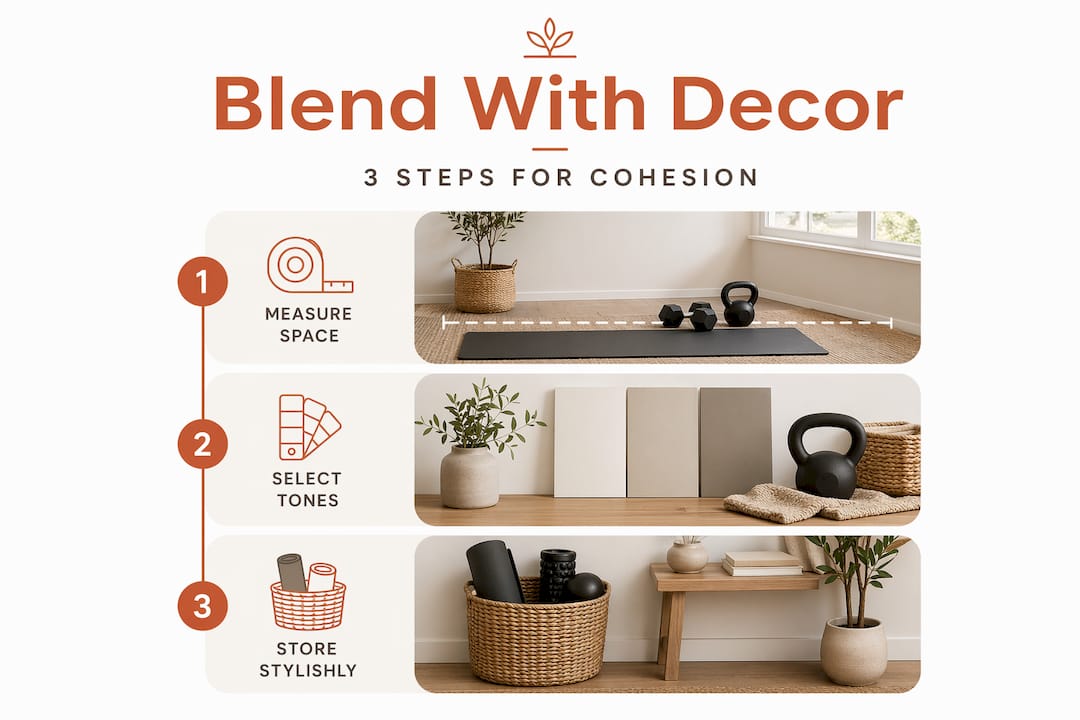
Before you shop for a single piece of equipment, take stock of your space. Walk through the room where you plan to work out and notice what already works. What colors dominate? What materials are used in the furniture? Understanding your existing design language is the foundation for making fitness gear feel like it belongs.
Start by measuring. Clearance of 2 to 3 feet around any exercise zone keeps the space feeling open and safe, not cramped. This is especially worth planning in multi-use rooms where a yoga mat or kettlebell might share space with a reading chair.
Next, define what kind of workouts you actually do. Someone focused on bodyweight training needs far less equipment than someone lifting heavy. A minimal, targeted approach prevents visual clutter before it starts. Overbuying is one of the most common pitfalls, and experts consistently recommend starting with a flexible, minimal setup before expanding.
Here’s a quick checklist to guide your planning:
- Measure your available floor space and note ceiling height for overhead movements
- Identify your workout style (strength, cardio, flexibility, or a mix)
- Note your room’s dominant color palette and material finishes (wood, metal, fabric)
- Decide whether you want equipment on display or concealed after use
- Check your flooring. Rubber tiles starting at $75 per square meter protect surfaces and absorb sound in multi-use rooms
On the design trend front, 2026 is a strong year to refresh your home gym decor ideas. Brands like Technogym are leading the shift with mica casings and warm wood accents that read as furniture rather than gym machines. Natural materials, warm earth tones, and matte finishes are where fitness equipment styling is heading.
Pro Tip: Photograph your room before buying anything. Looking at a photo, rather than the live space, makes it much easier to spot visual mismatches in color and scale.
| Design Goal | Equipment Attribute to Look For |
|---|---|
| Blend with wood tones | Beech, ash, or oak accents on frames |
| Match metal hardware | Matte black or brushed steel finishes |
| Neutral color palette | Equipment in white, gray, or sand tones |
| Minimize visual bulk | Compact or foldable silhouettes |
Choosing equipment and storage that double as decor
The best approach to integrating fitness into home decor is to stop thinking of equipment as gear and start thinking of it as furniture. Modern fitness equipment is increasingly designed as sculptural pieces crafted from oak, carbon fiber, and leather. These materials do not look out of place next to a credenza or an accent chair.
When selecting pieces for an aesthetic home workout space, prioritize the following:
- Modular and compact designs. A multifunctional fitness board takes up minimal floor space while covering a broad range of exercises, making it far easier to style around than a full rack.
- Neutral or warm color tones. Black, white, and wood remain timeless for a clean, intentional look regardless of budget.
- Matching finishes. If your room features brushed gold hardware, look for equipment with similar metallic accents. If the space leans Scandinavian, lean into light wood and white frames.
- Vertical storage racks. A well-designed weight rack or band organizer mounted on the wall functions as a visual feature rather than an eyesore, especially in matte black or natural wood.
Storage is where most people lose the battle. Small accessories like resistance bands, jump ropes, and ankle weights are the biggest aesthetic disruptors. Labeled drawers or opaque decorative baskets keep these items organized and out of the visual frame when not in use. Reinforced ottomans and storage benches offer a practical way to hide gear while adding seating.
The choice between concealment and display comes down to your equipment quality and your room’s purpose. If you have genuinely beautiful pieces, display them with intention. If your gear is purely functional, invest in storage that looks good instead.
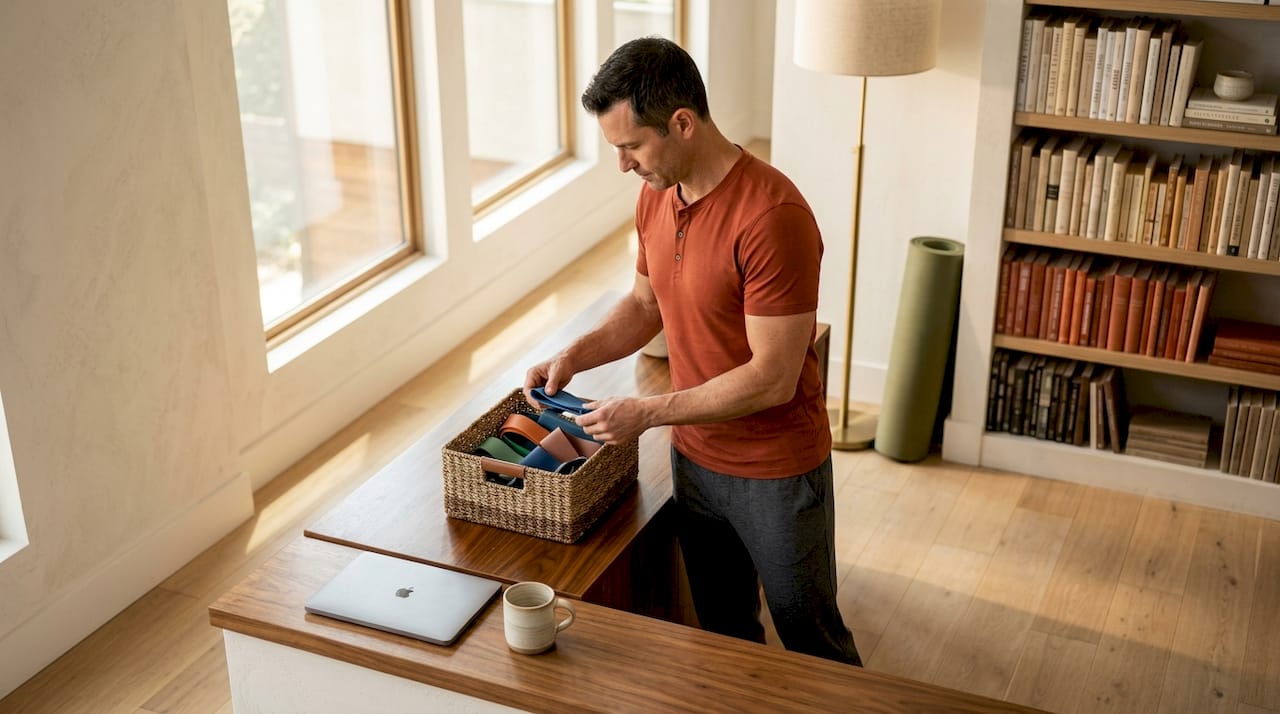
Pro Tip: Think of your equipment placement the same way a stylist thinks about a bookshelf. Group items by height and material, and leave visual breathing room between pieces.
Styling techniques for a cohesive workout and living space
Color is your most powerful tool for functional home decor for fitness. Design experts recommend repeating your accent color in at least three places to create visual cohesion, whether that color shows up in your equipment, a throw pillow, a plant pot, or a piece of wall art. Without this repetition, the fitness area reads as an afterthought rather than an intentional design choice.
Here is a practical styling sequence to follow:
- Set your base palette. Choose two neutral tones (white and warm gray, or cream and sand) for walls and large surfaces. These create calm and make equipment less visually intrusive.
- Introduce one accent color. This might be a deep olive, a dusty terracotta, or a classic navy. Carry it into your equipment color, a yoga mat, a storage basket, and one piece of wall art.
- Swap harsh overhead lighting. Warm ambient lighting or wall sconces make the biggest single improvement in how a blended gym space reads. Standard cool-white gym lighting kills any sense of comfort or design intention immediately.
- Add textiles and plants. A jute rug, a linen curtain, or a rubber plant placed near equipment softens the industrial quality of metal and rubber. These elements signal that this is a living space, not a commercial facility.
- Use mirrors with frames. A mirror is both functional for checking form and decorative when it has an arched frame or warm wood border. Frameless gym mirrors belong in a basement setup, not a blended living space.
- Hang intentional artwork. A single large print or a small gallery wall near the workout zone creates a visual anchor. It draws the eye purposefully and signals that the area was designed, not pieced together.
Pro Tip: If your workout area sits in a corner of your living room or bedroom, use a large area rug to define the zone visually. This simple separation technique makes both areas feel more intentional rather than competing.
Maintaining balance over time
Getting your space styled is one thing. Keeping it that way over weeks and months takes a few consistent habits. The good news is that none of them require much time.
- Put small items away after every session. Resistance bands left on the floor or a water bottle sitting on a side table erodes the aesthetic quickly. A two-minute reset after each workout preserves the look you worked to create.
- Clean equipment regularly. Fingerprints on matte black finishes and dust on rubber surfaces are visible in well-lit, styled spaces. A weekly wipe-down keeps decorative home exercise gear looking sharp.
- Rotate accent pieces seasonally. Swap a plant for a different variety, change a throw pillow color, or update the artwork near your workout area. These small shifts keep the space feeling fresh without a full redesign.
- Invest in sound management. Gym flooring reduces workout noise and protects your surfaces, which matters both for comfort and for maintaining peace in shared or multi-story homes.
- Resist adding more equipment. Every new piece is a styling challenge. Treat your current setup as complete and only swap in new items when something is no longer serving you.
Compact fitness equipment decor works best when you treat it like any other furniture category. You wouldn’t overcrowd a living room with chairs just because you like seating options. The same discipline applies here.
My honest take on blending workouts with living spaces
I’ve seen hundreds of home gym setups, and the ones that actually work long-term have one thing in common. They were designed with the room in mind, not bolted onto it afterward.
In my experience, most people make the mistake of buying equipment first and worrying about aesthetics later. That backwards approach almost always produces a space that feels like two rooms fighting for the same square footage. What I’ve found actually works is treating your first equipment purchase as a design decision, not just a fitness decision. Ask yourself: would this piece look intentional if a guest saw it?
The other thing I’d push back on is the idea that a dedicated gym room is somehow superior. Some of the most effective workout spaces I’ve seen are corners of bedrooms and living rooms where fitness gear is treated as furniture. When your equipment is beautiful and your storage is thoughtful, you actually use the space more consistently. The friction of entering a separate, purely functional room disappears.
Start small. Get one or two pieces right. Then build from there with intention, and you’ll end up with a space that looks good and feels even better to be in.
— Brian Dunn, Couch & Dumbbells
Find stylish fitness gear at Couchanddumbells
If you’re ready to stop compromising between a good-looking home and an effective workout space, Couchanddumbells was built for exactly that balance.
The home and interior collection features storage solutions and decor-friendly furniture designed to complement your fitness setup rather than fight it. For the equipment itself, the fitness and gear collection offers compact, design-conscious options in finishes that work with real living spaces. Every product is selected with both aesthetics and performance in mind, because at Couchanddumbells, those two things are never in competition.
FAQ
What is the easiest way to blend fitness equipment with home decor?
Start by choosing equipment in neutral tones or warm materials like wood and matte black that match your existing furniture finishes. Pair this with intentional storage and a consistent accent color repeated across the space.
How much space do I need for a home workout area?
Maintain at least 2 to 3 feet of clearance around any exercise zone for safety and to prevent the area from feeling cramped in a multi-use room.
Can I create a stylish home gym on a budget?
Yes. A cohesive color palette does more for a luxury gym look than expensive equipment. Prioritize black, white, and wood tones, and invest in quality storage before adding more gear.
What lighting works best for a blended gym and living space?
Warm ambient lighting or wall sconces are far more effective than overhead gym lighting. They create a curated, comfortable atmosphere that makes fitness gear feel like part of the room’s design rather than an intrusion.
How do I keep small accessories from cluttering the space?
Store items like resistance bands and jump ropes in labeled drawers or decorative baskets that match your room’s aesthetic. A two-minute reset after each session keeps the space looking intentional every day.