
Tangled resistance bands on the floor. Kettlebells rolling under the bench. Foam rollers blocking the doorway. If your home gym looks like this before you even start your workout, the clutter is already costing you energy and focus. A well-designed storage system for gym accessories changes that completely. It keeps your space calm, your gear accessible, and your workout flow uninterrupted. This guide walks you through every step, from measuring your walls to choosing the right mounting hardware, so your gym looks as good as it performs.
Table of Contents
- Design your gym storage system the right way
- Choose modular and multi-tier storage systems
- Design specialized storage for small accessories and weight plates
- Integrate storage into workout equipment and racks
- Plan for safe and stable installation
- Our take: storage is part of your training environment
- Elevate your gym and your home with Couch & Dumbbells
- Frequently asked questions
Key Takeaways
| Point | Details |
|---|---|
| Plan storage around space | Measure wall length, ceiling height, and floor layout to place storage where you train for easy access. |
| Use modular systems | Choose expandable, multi-tier storage units to fit your equipment mix and adjust as needs grow. |
| Designate homes for small accessories | Store small items like bands and gloves in bins or pegboards to prevent clutter. |
| Match plate storage specs | Ensure plate storage pegs fit your plates’ collar size and diameter for safety and compatibility. |
| Install storage securely | Mount wall storage on studs and use wide-base freestanding units to ensure stability and safety. |
Design your gym storage system the right way
Before you buy a single shelf or bin, you need to understand your space. This is where most people go wrong. They purchase storage solutions that look great online and then realize the unit is too tall, too deep, or placed too far from where they actually train.
Physical’s 2026 guidance on modular rack storage is clear: start with wall length, ceiling height, and floor layout to place storage close to where equipment is used. That proximity matters more than most people expect. When your accessories are stored right where you use them, you spend less time walking and more time training.
What to measure before you plan:
- Wall length available for mounted or freestanding units
- Ceiling height, especially important for tall multi-tier racks
- Floor area around each training zone, including clearance for movement
- Distance from power outlets if you use smart fitness devices nearby
Categorize your gear by size and frequency of use. Daily-use items like jump ropes, resistance bands, and lifting straps belong at eye level or within easy reach. Heavier or less-used items like weight plates and specialty bars can go lower or further away. This simple sorting step shapes your entire layout before you spend a dollar.
| Accessory type | Recommended storage location | Access priority |
|---|---|---|
| Resistance bands | Eye-level hooks or bins | High |
| Dumbbells and kettlebells | Mid-height tiered rack | High |
| Weight plates | Low wall pegs or floor rack | Medium |
| Foam rollers and balls | Lower shelf or basket | Medium |
| Lifting belts and straps | Hooks near barbell station | High |
Pro Tip: Sketch your gym layout on paper first, marking each training zone and the accessories you use there. It takes ten minutes and saves you from buying storage that ends up in the wrong spot.
You can also explore home gym accessibility insights to understand how layout and storage connect to a better daily workout experience.
Choose modular and multi-tier storage systems
With your space and equipment needs clear, the next step is choosing flexible storage systems that work for you now and grow with you later.
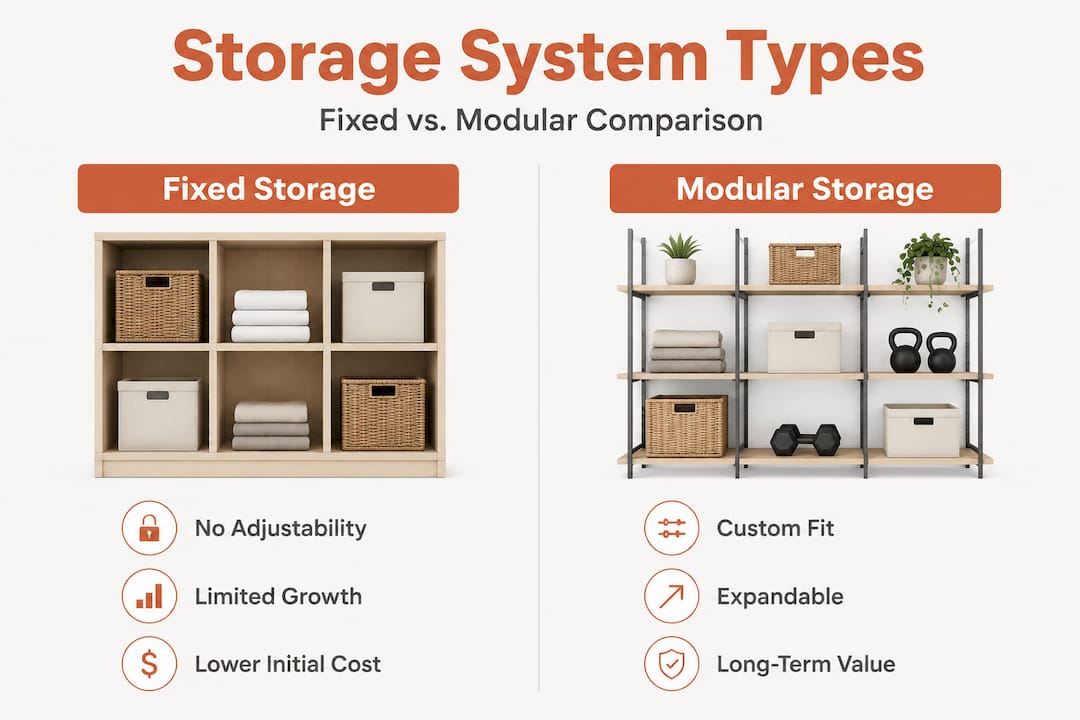
Modular, multi-tier systems are the smartest investment for a home gym. They adapt to your gear mix instead of forcing your gear to fit them. BLK BOX’s Basecamp, for example, is a customizable multi-tier system that handles different equipment types and expands as your collection grows. That expandability is the feature most buyers overlook until they need it.
What to look for in a modular storage unit:
- Adjustable shelf angles to cradle dumbbells and prevent rolling
- Multiple tier heights to accommodate kettlebells, medicine balls, and plates on the same unit
- Uprights that accept add-on shelves or hooks without replacing the whole frame
- Weight ratings clearly listed per shelf, not just total unit capacity
| Feature | Fixed storage unit | Modular storage unit |
|---|---|---|
| Shelf adjustability | None | Yes, repositionable |
| Expandability | No | Yes, add tiers or sections |
| Equipment versatility | Limited | Wide range supported |
| Long-term value | Lower | Higher |
| Upfront cost | Lower | Moderate to higher |
The upfront cost difference is real, but a modular unit you can reconfigure in two years is worth more than a fixed unit you replace entirely. Think of it as buying a system, not just a shelf.
Pro Tip: When comparing modular units, check whether the manufacturer sells individual uprights and shelves separately. If they do, you can start small and expand without buying a whole new unit.
For more on the advantages of adaptable setups, browse modular gym storage benefits to see how flexibility translates to long-term value.
Design specialized storage for small accessories and weight plates
Understanding your gear mix leads naturally to specialized storage approaches for small accessories and heavy plates. These two categories cause the most clutter when left without a dedicated home.
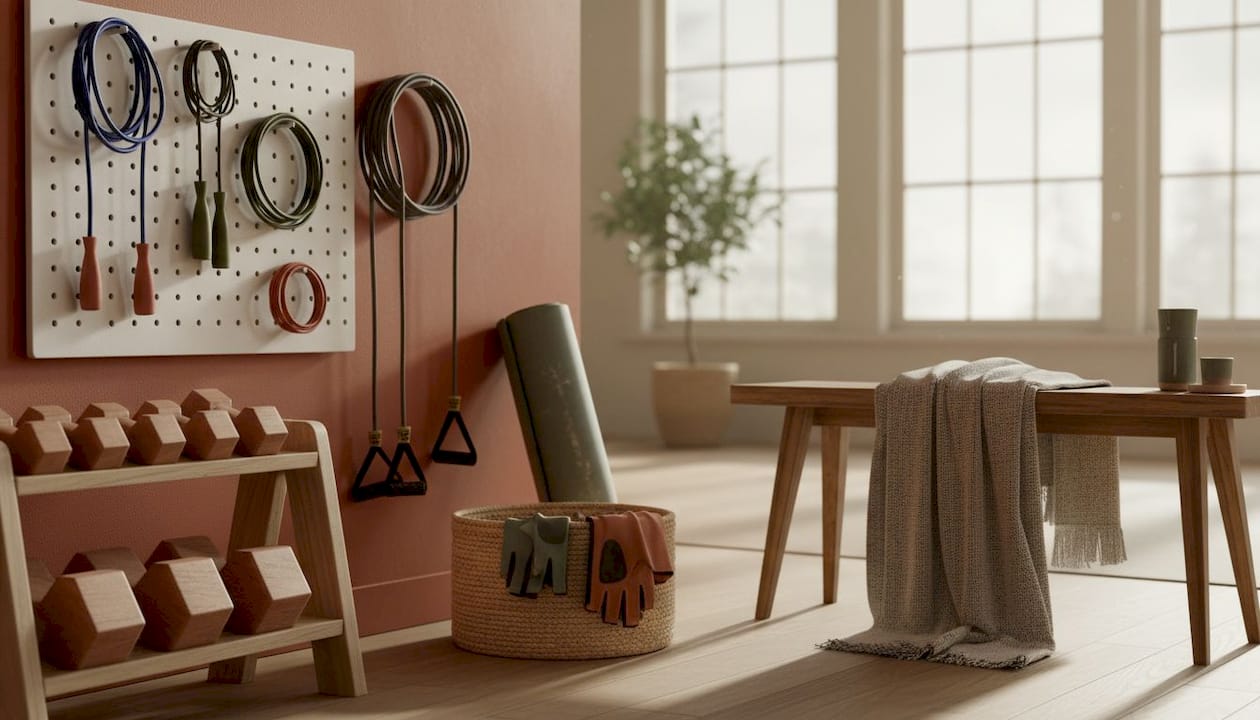
Physical Company’s guidance on gym organization is direct: designated bins prevent clutter of small accessories like resistance bands and gloves far better than open shelves. Open shelves invite pile-ups. Bins create boundaries. Label each bin clearly so every item has one place to return to after your session.
Small accessory storage ideas for your gym:
- Clear bins for resistance bands sorted by resistance level
- A shallow basket near your bench for lifting straps, chalk, and wrist wraps
- A hook rail for jump ropes, agility ladders, and stretching straps
- A small drawer unit for earbuds, heart rate monitors, and recovery tools
For weight plates, the fit between peg and plate matters. PRx Performance’s plate storage provides peg dimensions and capacities that help you match the peg diameter to your plate collars before you buy. A peg that is too narrow for your plates is a safety risk. Always verify compatibility.
| Plate type | Recommended peg diameter | Storage style |
|---|---|---|
| Standard 1-inch plates | 1-inch peg | Wall-mounted or floor rack |
| Olympic 2-inch plates | 2-inch peg | Wall-mounted peg or A-frame |
| Bumper plates | 2-inch peg, wider spacing | Vertical or horizontal rack |
Pro Tip: Mount your plate pegs at a height where you can load and unload without bending your lower back awkwardly. Somewhere between hip and chest height works well for most people.
You can find practical ideas for organizing small gym accessories that keep your space tidy without sacrificing style.
Integrate storage into workout equipment and racks
Besides standalone storage, integrating storage directly into your equipment improves accessibility and keeps the visual look of your gym clean and intentional.
Many modern racks and functional trainers now come with built-in storage features. REP Fitness’ Arcadia includes a built-in pegboard rated for heavy small-attachment storage, keeping your cable attachments, bands, and handles right at the machine where you use them. That eliminates the habit of leaving attachments on the floor between sets.
If your existing rack does not have built-in storage, bolt-on solutions are a practical alternative. Better Body’s rack-mounted system bolts onto compatible power racks and is also available as a freestanding unit, giving you flexibility depending on your setup.
Questions to ask before choosing integrated storage:
- Does your rack have compatible mounting points for add-on storage?
- What is the weight rating for each peg or shelf on the integrated unit?
- Are the peg sizes compatible with your specific attachments and accessories?
- Would a freestanding unit positioned next to your rack serve the same purpose more affordably?
Pro Tip: If you train with cable machines, store all your attachments on a pegboard directly beside or on the machine. Reaching across the room for a handle mid-workout breaks your rhythm and your focus.
Explore integrated gym rack storage options that combine function and clean design for a more intentional training space.
Plan for safe and stable installation
With your storage components chosen, safe and stable installation is the final piece of a functional gym. A storage system that tips, shifts, or pulls from the wall is not just an inconvenience. It is a genuine safety hazard.
Step-by-step installation checklist:
- Locate wall studs using a stud finder before marking any drill points
- Confirm the stud spacing matches the mounting hole spacing on your unit
- Use the correct hardware length, typically at least 2.5 inches into the stud for heavy loads
- Test each mounted piece with a firm tug before loading any weight
- Load plates gradually, starting with lighter weights to confirm stability
Synergee’s wall plate pegs require mounting on wall studs and use a slight incline with stoppers to prevent plates from sliding off. That incline design is a small detail that makes a real difference when you are loading and unloading quickly.
For freestanding units, RXDGear’s upright storage system uses a wide base design that requires no floor or wall anchoring while maintaining stability. That is a meaningful advantage in a rented space or a room where you cannot drill into walls.
A well-installed storage system protects both your gear and the people around it. Take the extra time to do it right the first time.
Safety features to prioritize:
- Plate stoppers or end caps on all weight pegs
- Non-slip feet on freestanding units
- Rounded edges on shelves and bins to prevent injury during fast transitions
- Clear weight ratings labeled on each shelf or peg
Pro Tip: After installation, do a monthly check on all bolts and mounting hardware. Vibration from heavy training can loosen fasteners over time, especially on wall-mounted units.
Secure your setup with guidance from secure gym storage installation resources that help you build a safe and lasting home gym.
Our take: storage is part of your training environment
Here is something most gym storage guides will not tell you: the way your gym looks directly affects how consistently you show up to train. A cluttered, disorganized space creates low-level mental friction every time you walk in. You may not notice it consciously, but it chips away at motivation over time.
We have seen this pattern repeatedly. Someone builds a solid home gym, buys quality equipment, and then leaves storage as an afterthought. Six months later, the gear is piled in corners, the floor is a hazard zone, and the gym feels more like a storage room than a training space. Workouts become less frequent.
The counterintuitive truth is that investing in your storage system is investing in your workout consistency. A gym that looks intentional and calm is one you want to enter. That matters more than the extra set of dumbbells you could have bought instead.
We also believe that fitness accessory storage strategies should match the rest of your home’s aesthetic, not fight against it. Your gym does not need to look like a commercial facility. It can feel like a purposeful room in a home you love, with clean lines, thoughtful organization, and gear that is easy to find and put away. That balance between beauty and function is exactly what makes a home gym sustainable long term.
Elevate your gym and your home with Couch & Dumbbells
At Couch & Dumbbells, we believe your home gym should feel just as intentional as the rest of your living space. Beautiful, functional storage is not a luxury. It is what makes your wellness routine stick.

We curate storage solutions, fitness gear, and home design pieces that work together to create spaces you genuinely enjoy being in. Whether you are building your first home gym or refining an existing setup, our collection brings together quality and style in one place. Browse our fitness and home design collection to find storage pieces, accessories, and smart devices that support the lifestyle you are building. Your space deserves to look as good as your goals feel.
Frequently asked questions
How do I measure my space to design a gym storage system?
Measure your wall length, ceiling height, and available floor area to plan storage close to equipment use and maximize accessibility. Wall length and ceiling height are the two most critical dimensions for selecting the right unit size.
What is the best way to store small gym accessories?
Use designated bins or baskets to keep small items like resistance bands and gloves organized and prevent clutter. Designated storage homes for small accessories eliminate the pile-up that builds on open shelves.
Can I mount weight plate storage pegs on any wall?
No, weight plate pegs should be installed on wall studs for stability and safety. Mounting on wall studs ensures the hardware can support the load without pulling free over time.
Are modular storage systems expandable if I get more gym equipment?
Yes, modular systems are designed to grow with your collection. Adding uprights and shelves later lets you expand without replacing the whole unit.
What are the benefits of integrated storage on gym racks?
Integrated racks keep accessories within reach, reduce floor clutter, and improve workout flow. Rack-integrated storage ecosystems keep small attachments neatly stored and improve the overall look of your training space.