
A style living room gym corner is defined as a dedicated fitness zone within your living space that uses intentional design, smart storage, and coordinated decor to make workout equipment feel at home rather than out of place. The industry term for this concept is a “residential fitness zone,” but most homeowners know it simply as a gym corner. Done well, it gives you a space that motivates you to move without sacrificing the aesthetic you’ve worked hard to create. The right combination of multifunctional furniture, compact equipment, and layered lighting turns even a modest corner into a space that looks designed, not improvised.
What equipment and furniture work best for a stylish gym corner?
Choosing the right gear is the foundation of any successful living room gym design. The goal is function without visual noise. Every piece you bring in should earn its place both physically and aesthetically.
Start with the essentials and resist the urge to overbuy. Adjustable dumbbells, a bench, and proper flooring cover the majority of home workout needs without overwhelming a shared living space. That simplicity also makes it easier to keep the corner tidy. A cluttered gym corner stops feeling like a design feature and starts feeling like a problem.
Here are the furniture and equipment choices that consistently deliver both form and function:
- Adjustable dumbbells (such as those from Bowflex or PowerBlock): replace an entire rack of weights with a single compact unit
- Foldable resistance bands and yoga mats: roll up and disappear into a storage ottoman when not in use
- Storage benches: double as seating and conceal resistance bands, foam rollers, and jump ropes inside
- Wall-mounted pull-up bars: keep the floor clear and add a structural, intentional look to the wall
- Portable fitness equipment: compact and foldable options that tuck away without disrupting the room’s visual flow
Color coordination matters more than most people expect. If your living room runs neutral with warm wood tones, choose equipment in matte black, sand, or walnut finishes rather than chrome or neon. Matching the material palette of your gym gear to your existing furniture creates visual cohesion that makes the corner feel planned rather than added as an afterthought.
Sequencing your purchases reduces waste and lets you test what actually fits your space before committing to larger items. Start with a mat and adjustable dumbbells, then add a bench, then consider a compact machine if space allows.
Pro Tip: Before buying any equipment, tape out the footprint on your floor with painter’s tape. Live with it for a day. You’ll immediately see whether the size works with your traffic flow and furniture arrangement.
How do you organize a living room gym corner without clutter?
Organization is what separates a stylish fitness corner from a chaotic pile of gear. Wall-mounted shelves, hooks, and multi-purpose furniture are the most effective tools for keeping equipment visible but ordered. Vertical storage is your best friend in a corner layout because it draws the eye up rather than across, making the space feel taller and less crowded.
Follow this sequence to build a storage system that holds up over time:
- Audit what you own. Lay everything out and categorize by size and frequency of use. Items you use daily stay accessible; items used weekly go behind closed doors or in labeled bins.
- Install vertical storage first. Wall-mounted shelves above eye level hold foam rollers, resistance bands, and water bottles without eating floor space. A pegboard panel in matte black or white blends into most living room walls while holding hooks, clips, and small gear.
- Use labeled baskets and stackable bins. Wicker or linen-covered bins on lower shelves keep smaller items contained and look intentional. Label each bin clearly so the tidy-up routine takes under two minutes.
- Incorporate hidden compartments. Storage ottomans and benches with lift-top lids are the most underused storage tools in home gym design. They hold a surprising amount of gear while functioning as seating or a footrest.
- Declutter on a schedule. Every two weeks, spend five minutes removing anything that doesn’t belong in the corner. Consistency here prevents the slow creep of clutter that undermines even the best-designed spaces.
Here’s a quick comparison of the most popular storage approaches:
| Storage method | Best for | Visual impact |
|---|---|---|
| Wall-mounted shelves | Foam rollers, bottles, small gear | Minimal, clean lines |
| Pegboard panels | Resistance bands, hooks, clips | Graphic, intentional |
| Storage ottoman | Mats, bands, jump ropes | Invisible, doubles as furniture |
| Stackable bins | Accessories, towels, small items | Organized, color-coordinated |
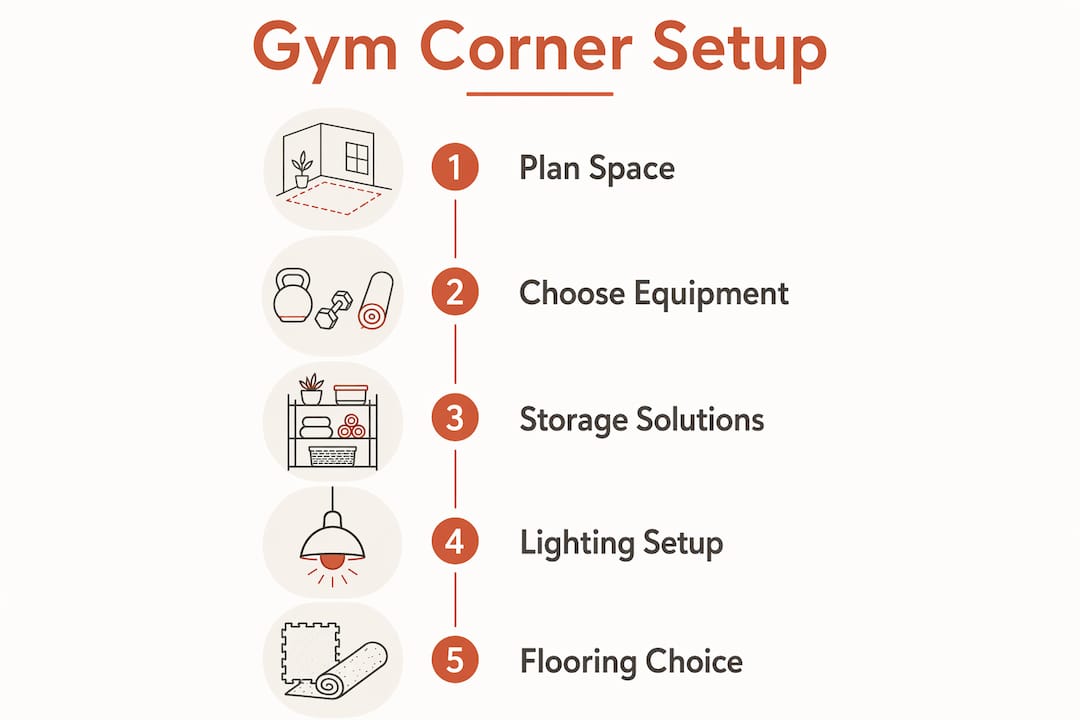
For a deeper look at building a system that scales with your collection, the gym accessories storage guide at Couchanddumbells walks through layouts suited to living room constraints.
Pro Tip: Assign every item a “home” before you buy it. If you can’t picture where it lives when not in use, don’t bring it into the space.
How do lighting, flooring, and space layout affect your gym corner?
The physical environment of your gym corner determines how much you actually use it. A poorly lit, cramped corner with hard flooring feels uninviting. A well-considered space with the right light and surface underfoot feels like somewhere you want to be.
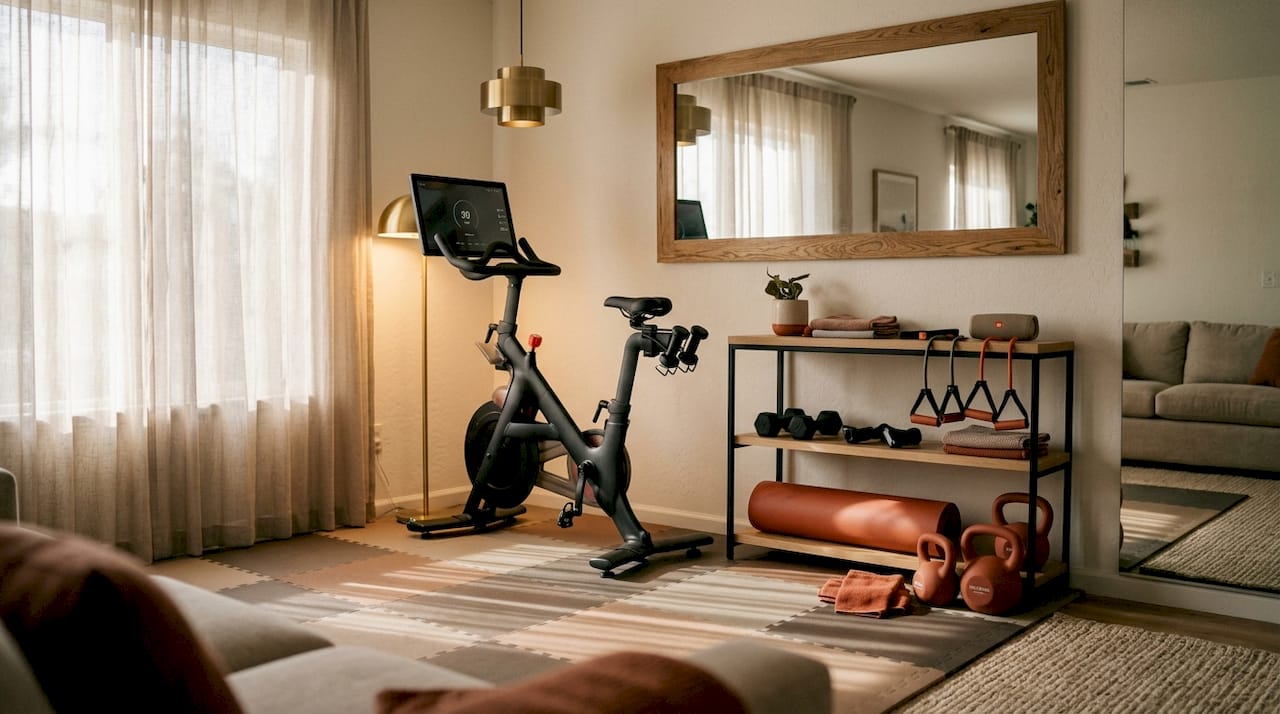
Large mirrors are one of the highest-impact additions you can make to a small fitness corner. They visually double the perceived size of the space and let you check your form during workouts. A full-length mirror leaned against the wall or mounted flush reads as a design element in any living room style, from minimalist to maximalist.
Lighting deserves more attention than most gym corner guides give it. Dimmable lighting and layered light sources create an inviting atmosphere versus the flat, clinical feel of a single overhead bulb. Use a combination of ambient light from your existing living room fixtures and a directed task light near the gym corner. A simple LED floor lamp or a wall sconce on a dimmer gives you the option to energize the space for a high-intensity session or soften it for yoga and stretching.
| Lighting type | Function | Recommended placement |
|---|---|---|
| Ambient (ceiling) | General room illumination | Existing fixture, dimmable bulb |
| Task (directed) | Energizes workout zone | Floor lamp or wall sconce at corner |
| Mirror reflection | Amplifies natural and artificial light | Opposite or adjacent to window |
Flooring is the detail most people overlook until they’ve already made a mistake. Hard wood or tile floors transmit impact noise and vibration directly to the floor below, which matters in apartments and multi-story homes. Resilient gym flooring in the 6 to 12 mm range reduces structure-borne noise by approximately 19 dB, protecting both your floors and your relationships with neighbors. Interlocking rubber tiles in gray, charcoal, or warm brown blend naturally into most living room color schemes.
A corner gym layout works effectively in as little as 48 square feet (a 6 by 8 foot footprint) when you treat the corner itself as the storage anchor and keep the open floor area clear for movement. Leave at least 24 inches of clearance on all active sides of any equipment. That clearance prevents injury and keeps the space from feeling cramped.
Pro Tip: Place your gym flooring tiles before you finalize equipment placement. The visual boundary the tiles create naturally defines the zone and makes the corner feel intentional from day one.
How do you blend gym decor with your living room aesthetic?
The most common fear about adding a fitness corner to a living room is that it will look like a gym invaded the space. Visual zoning without walls is the design principle that prevents exactly that. You define the gym area through flooring, lighting, and decor rather than physical barriers, keeping the room open while giving the corner its own identity.
These strategies consistently produce a cohesive result:
- Match your equipment finishes to your furniture. If your sofa has brushed brass legs, choose equipment with warm metal tones. If your shelving is matte white, look for equipment in white, light gray, or cream.
- Add living elements. A potted plant or two near the gym corner softens the hard lines of equipment and signals that this is a living space first. Snake plants and ZZ plants thrive in low-light corners and require minimal maintenance.
- Use artwork intentionally. A single framed print or canvas on the wall above the gym area ties the corner into the room’s overall gallery wall or art program. Choose something that motivates you without clashing with the room’s color story.
- Keep negative space. Resist filling every inch. Open wall space and clear floor area around the corner make the gym feel like a considered design choice rather than an overflow zone.
- Choose equipment with design intent. Brands like Technogym and NOHrD produce fitness equipment in wood, leather, and premium finishes specifically designed for residential spaces. These pieces read as furniture as much as fitness gear.
For guidance on blending fitness gear with your existing interior, Couchanddumbells has a dedicated resource that covers material matching and color coordination in detail.
What are the most common gym corner mistakes to avoid?
Even well-intentioned gym corners fail when a few key details are ignored. Knowing the pitfalls ahead of time saves you from redesigning the space twice.
- Overbuying equipment before testing the layout. Bringing in too much gear too fast is the single most common mistake. Choosing equipment that fits your lifestyle and leaves adequate clearance protects both your safety and your floor plan. Buy one piece, use it for a month, then decide what to add.
- Ignoring power outlet placement. Treadmills, smart mirrors, and resistance machines all need power. Running an extension cord across a living room floor is a safety hazard and an aesthetic problem. Plan outlet access before you commit to a location.
- Skipping proper flooring. Hard floors amplify every dropped weight and jumping movement. Installing even a basic rubber mat under your equipment protects your floors and reduces noise significantly.
- Letting the corner become a catch-all. Without a deliberate tidy-up habit, gym corners accumulate water bottles, towels, chargers, and random items that have nothing to do with fitness. A five-minute reset after every workout keeps the space functional and visually clean.
- Locking in a permanent layout too early. Your fitness needs will change. Leave room to adapt. A corner that works for bodyweight training today may need to accommodate a compact rowing machine next year.
A gym corner that works for your life today should be easy to adjust for your life tomorrow. Build in flexibility from the start.
Key takeaways
A stylish living room gym corner succeeds when smart storage, coordinated design, and the right equipment work together as a unified system rather than separate decisions.
| Point | Details |
|---|---|
| Start with less equipment | Adjustable dumbbells, a mat, and a bench cover most needs without crowding the space. |
| Use vertical storage | Wall-mounted shelves and pegboards keep gear organized without consuming floor area. |
| Layer your lighting | Combine ambient and task lighting on dimmers to match workout intensity and mood. |
| Define the zone with flooring | Interlocking rubber tiles create a visual boundary and reduce impact noise by up to 19 dB. |
| Match finishes to your decor | Equipment in matte black, warm wood, or neutral tones integrates naturally with living room furniture. |
What I’ve learned from designing my own fitness corner
When I first set up a workout corner in my living room, I made every mistake in this article. I bought a full set of fixed dumbbells before measuring the shelf space, chose chrome finishes that clashed with my warm-toned furniture, and skipped the flooring because I thought a yoga mat would be enough. The corner looked like an afterthought for months.
What changed everything was treating the corner as a design project first and a fitness project second. Once I approached it the way I’d approach choosing a new sofa or a lighting fixture, the decisions became clearer. I replaced the fixed weights with a single pair of adjustable dumbbells in a matte finish, added interlocking tiles in a warm gray, and mounted a full-length mirror that made the corner feel twice as large.
The motivational shift was immediate. Fitness spaces designed with intent genuinely increase how often you use them. When a space looks good, you want to be in it. That’s not a minor detail. It’s the whole point. The corner I have now gets used six days a week because it feels like part of my home, not a compromise within it. If you’re building your first fitness corner or rebuilding one that isn’t working, start with the design and let the equipment follow.
— Brian Dunn, Couch & Dumbbells
Build your living room gym corner with Couchanddumbells
If you’re ready to move from planning to building, Couchanddumbells has everything you need in one place. The home and interior collection includes storage ottomans, multifunctional benches, and decor pieces selected specifically for spaces where living and fitness overlap. For the fitness side, the portable fitness equipment range covers compact, foldable gear that fits a living room without dominating it.
Every product is chosen with both aesthetics and performance in mind, because at Couchanddumbells, the belief is that your home should look good and support the life you want to live. Browse the collections and find the pieces that make your corner feel complete.
FAQ
What is a style living room gym corner?
A style living room gym corner is a dedicated fitness zone within a living room that uses coordinated decor, smart storage, and compact equipment to integrate workout functionality with home aesthetics. The goal is a space that looks intentional rather than improvised.
How much space do I need for a living room gym corner?
A corner gym layout works effectively in as little as 48 square feet, roughly a 6 by 8 foot footprint, when storage anchors the corner and the open floor area stays clear for movement.
What flooring is best for a living room gym corner?
Interlocking rubber tiles in the 6 to 12 mm thickness range reduce impact noise by approximately 19 dB and protect hard floors from equipment damage, making them the most practical and visually neutral choice for living room fitness zones.
How do I keep my gym corner from looking cluttered?
Use vertical storage through wall-mounted shelves and pegboards, assign every item a fixed storage location, and spend five minutes resetting the space after each workout. Hidden storage in ottomans and benches keeps the visual footprint clean.
Can I build a functional gym corner on a limited budget?
A functional home gym corner starts with adjustable dumbbells, a mat, and a storage solution, which together cost well under $500. Sequencing purchases over time lets you add equipment gradually without overcommitting space or budget upfront.