

A living room workout space is a dedicated fitness zone created within your existing living room by combining smart layout choices, multi-use furniture, and compact equipment. You can transition your living room into a workout space that looks great and functions well without sacrificing comfort or style. The key tools for this shift are foldable benches, adjustable dumbbells, resistance bands, and storage ottomans. Done right, a multi-use living room gives you a place to relax and a place to move, all in the same square footage.
What space factors should you assess before converting your living room?
The first number to know is 36 square feet. That is the minimum floor area needed for a functional workout zone, with 50–80 square feet being the ideal range for using equipment like a foldable bench and adjustable dumbbells. A 6’x6’ patch supports floor exercises, yoga, and bodyweight work. An 8’x10’ area opens the door to resistance training and light cardio.
Ceiling height matters just as much as floor space. Safe overhead clearance sits at 8–9 feet for dynamic movements like overhead presses, jump rope, or standing stretches. Rooms with lower ceilings limit your exercise options and raise injury risk. Check your ceiling before buying any equipment that requires vertical movement.
| Factor | Minimum | Ideal |
|---|---|---|
| Floor area | 36 sq ft (6’x6’) | 50–80 sq ft (8’x10’) |
| Ceiling height | 8 feet | 9 feet |
| Lighting | Natural or overhead | Adjustable layered lighting |
| Ventilation | Open window | Fan plus air circulation |
Lighting and air quality shape how much you enjoy working out at home. Natural light boosts energy and mood during morning sessions. If your living room runs dark, add a floor lamp with adjustable brightness near your workout zone. Good ventilation prevents overheating and keeps the space feeling fresh, which matters when you share the room with others.
Pro Tip: Tape out your intended workout zone on the floor before moving any furniture. This simple step shows you exactly how much clearance you have and prevents costly equipment purchases that do not fit.
Which equipment and furniture choices work best for a living room fitness space?
Multi-purpose equipment like adjustable dumbbells replaces bulky fixed-weight racks and saves significant floor space. A single set of adjustable dumbbells covers the weight range of an entire rack while taking up the footprint of one pair. Resistance bands add full-body training options and store in a drawer. Foldable benches fold flat against a wall when not in use.
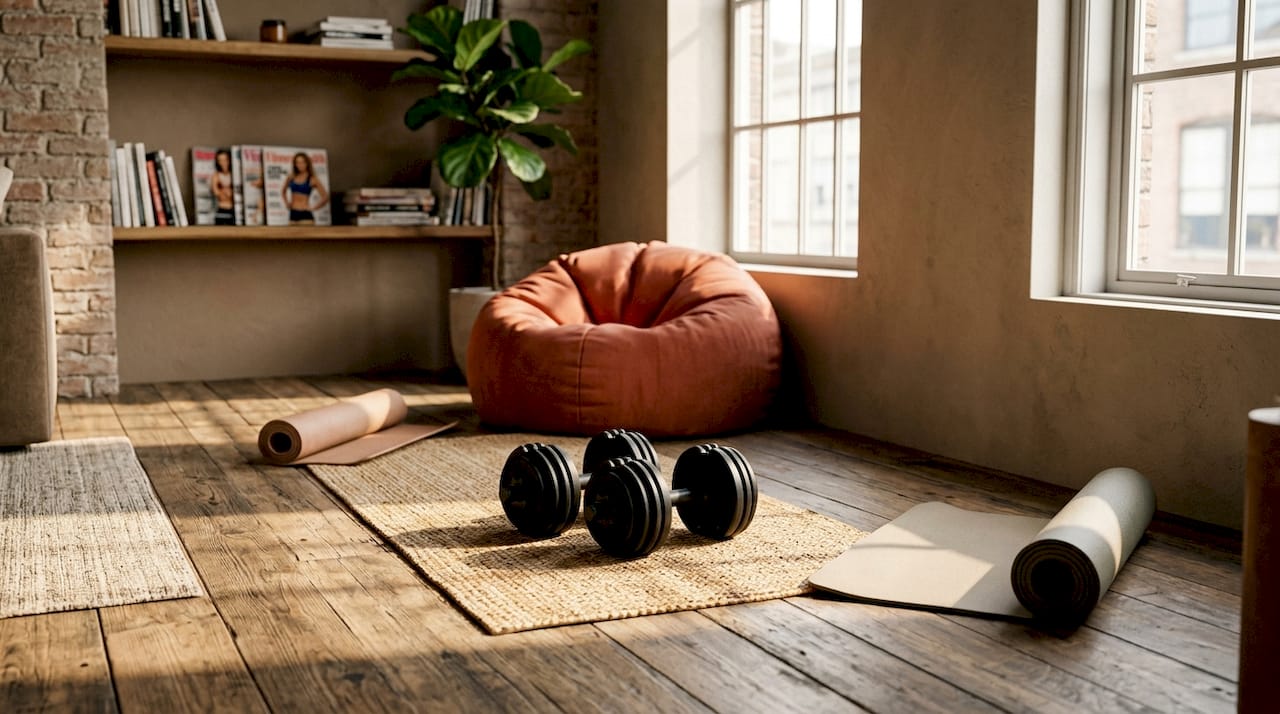
Here is a quick comparison of common equipment choices for small living room gyms:
| Equipment | Space needed | Storage | Aesthetic fit |
|---|---|---|---|
| Adjustable dumbbells | Minimal | Shelf or ottoman | High |
| Resistance bands | Near zero | Drawer or basket | High |
| Foldable bench | 4’x2’ in use | Flat against wall | Medium |
| Foam roller | Minimal | Vertical in corner | High |
| Jump rope | Open floor area | Hook or drawer | High |
Storage furniture does double duty in a living room gym. Storage ottomans and narrow console tables hide fitness gear immediately after use, keeping the room looking like a living room rather than a gym. Wall-mounted racks hold resistance bands, foam rollers, and light weights without taking floor space. Vertical storage is your best friend in any room under 300 square feet.
- Choose equipment in neutral colors like black, gray, or white to blend with most decor styles.
- Avoid neon or heavily branded gear that reads as gym equipment at a glance.
- Use a decorative basket or woven storage bin to hold bands, jump ropes, and small accessories.
- Mount a full-length mirror on one wall. It doubles as a design element and helps you check form during workouts.
Pro Tip: Look for compact furniture solutions that serve two purposes. A storage ottoman that holds your resistance bands and doubles as a coffee table is worth twice its price in a small living room.
Visual neutrality through minimalist equipment and hidden storage keeps the living room feeling calm and comfortable. When your gear disappears into furniture after each session, the room resets instantly. That reset matters for your mental state as much as your decor.
How can zoning and layout design define your workout and relaxation areas?
Zoning via roll-out mats or rugs acts as a psychological trigger that shifts your mindset into workout mode without any physical dividers. This technique builds workout consistency more reliably than relying on storage habits alone. Your brain learns to associate that mat with movement, and the rest of the room with rest.
Here is a practical four-step layout process:
- Identify your anchor point. Place your workout zone near the TV or a wall-mounted screen. Aligning your workout area with your entertainment system makes cardio sessions more engaging and easier to repeat.
- Lay your mat or rug. Choose a size that fits your full movement range. A 6’x4’ exercise mat works for most floor and standing routines.
- Position your storage. Place your ottoman or wall rack at the edge of the mat zone. This creates a clear boundary between the workout area and the seating area.
- Add a mirror. Mount it at the far end of your workout zone. Mirrors expand the perceived size of the room and let you monitor your form without stopping.
“Planning and layout matters more than raw square footage. An organized 80 sq ft corner can outperform a cluttered larger space.” — Home Gym Space Requirements
Lighting reinforces zoning without any furniture. A bright, cool-toned light over the workout zone signals activity. Warmer, dimmer lighting over the sofa signals rest. This contrast costs very little to set up and pays off every time you use the space.
What are the essential steps to set up your living room gym correctly?
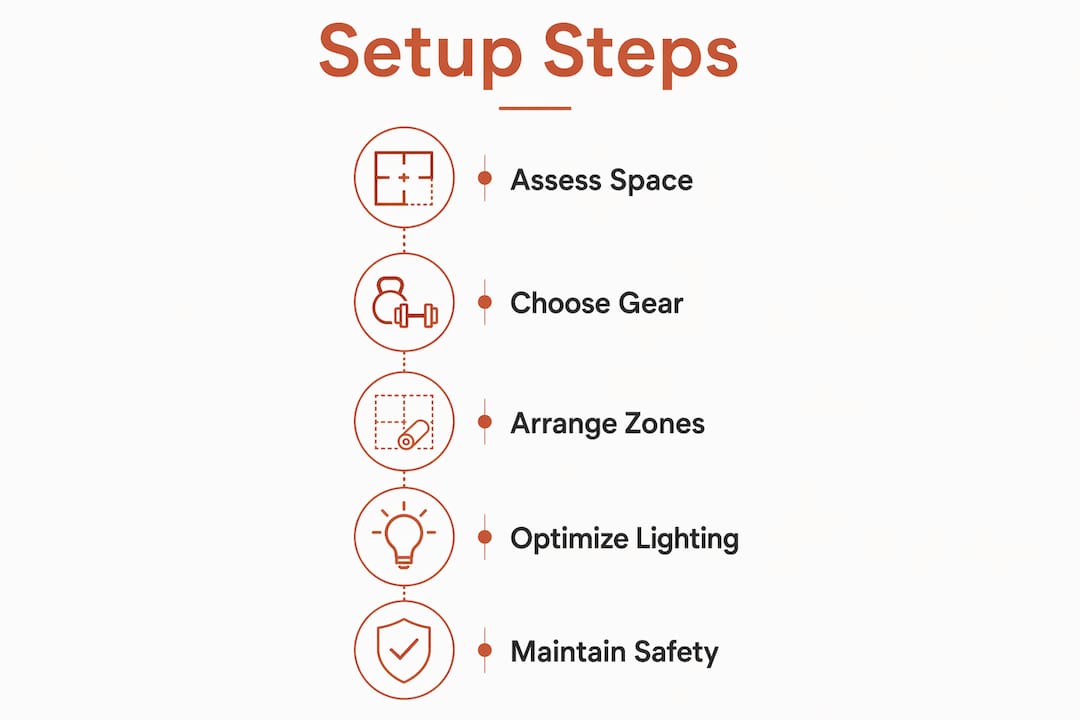
Getting the setup right from the start saves you from buying equipment you cannot use and arranging furniture you will need to move again. Follow these steps in order:
- Measure your room and sketch a floor plan. Note ceiling height, door swing radius, and window placement. Mark your intended workout zone in the sketch before touching any furniture.
- Declutter first. Remove items that serve no purpose in a multi-use living room. Less furniture means more floor clearance and fewer trip hazards.
- Prioritize multi-use gear. Buy one piece of equipment that covers multiple movement patterns before adding anything else. Adjustable dumbbells or a set of resistance bands are the right starting point for most people. The home gym equipment checklist from Couchanddumbells walks through this selection process clearly.
- Set up storage before your first workout. Decide where every item lives before you use it. This habit keeps the room tidy long-term.
- Test the space with a full workout session. Move through your actual routine and note any clearance issues, lighting problems, or storage gaps.
Pro Tip: Home gym startup costs typically range from $500 to $2,000 for a comprehensive small-space setup. You can start well under $500 by choosing resistance bands, a quality mat, and adjustable dumbbells as your first three purchases.
Three common mistakes derail most living room gym setups. The first is ignoring ceiling height, which leads directly to injury risk during overhead movements. The second is over-filling the room with equipment before testing the layout. The third is poor lighting, which reduces motivation and makes the space feel uninviting. Avoid all three by planning before purchasing.
What safety and ergonomic practices protect you when exercising in a living room?
Safety in a small workout zone comes down to clearance, flooring, and storage habits. Each one is non-negotiable.
- Clearance: Keep at least 3 feet of open space on all sides of your workout mat. This prevents collisions with furniture during lateral movements or dynamic exercises.
- Flooring: Place a thick exercise mat over hardwood floors to protect both the floor and your joints. Carpet provides some cushioning but can shift during lateral moves, so anchor your mat with a non-slip pad underneath.
- Storage: Return every piece of equipment to its designated spot after each session. Dumbbells left on the floor are a trip hazard, especially in low-light conditions.
- Workout adaptation: Modify exercises to fit your space. Swap jump rope for high knees if your ceiling is under 8 feet. Replace wide lateral lunges with narrow step-side movements if your mat zone is tight.
Ceiling height determines possible exercise types more than floor space alone. This is the most overlooked factor in living room gym planning. A room with 7-foot ceilings rules out jump rope, overhead barbell work, and some yoga inversions entirely. Know your ceiling before you plan your workouts, not after.
For small space workouts, bodyweight circuits, resistance band training, and dumbbell complexes deliver full-body results within a 6’x6’ zone. You do not need a large room to build real fitness. You need a well-organized one.
Key Takeaways
A well-planned living room workout space requires the right floor area, ceiling clearance, multi-use equipment, and consistent storage habits to stay both functional and visually appealing.
| Point | Details |
|---|---|
| Minimum space needed | A 36 sq ft zone works; 50–80 sq ft is ideal for equipment variety. |
| Ceiling height is critical | Aim for 8–9 feet of clearance to safely perform dynamic movements. |
| Choose multi-use equipment | Adjustable dumbbells and resistance bands replace bulky gear and store easily. |
| Zone with rugs or mats | A dedicated mat creates a psychological workout trigger without physical dividers. |
| Store before you sweat | Setting up storage first keeps the room tidy and the routine sustainable. |
Why I think most living room gym advice misses the point
Most guides focus on equipment lists. The real challenge is psychological, not physical. When I first set up a workout zone in my own living room, I bought a foldable bench and a set of adjustable dumbbells and assumed the hard part was done. It was not. The hard part was convincing my brain that the same room where I watched TV at night was also a place for serious movement in the morning.
The fix was a roll-out mat in a specific color. That sounds almost too simple, but it worked. Rolling it out became the ritual that signaled a shift in mindset. Rolling it back up ended the session cleanly. The room never felt like a permanent gym, which meant it never felt like an obligation.
Blending fitness equipment with home decor is worth taking seriously, not just for aesthetics but for motivation. When your workout space looks good, you want to use it. When it looks like a cluttered storage room, you avoid it. Visual neutrality is not a design preference. It is a consistency strategy.
Start smaller than you think you need to. One mat, one set of dumbbells, and one storage solution is enough to build a real habit. Add equipment only when your current setup genuinely limits your training. The room that grows with your fitness is far more sustainable than the room you fill on day one.
— Brian Dunn, Couch & Dumbbells
How Couchanddumbells supports your living room fitness setup
Couchanddumbells brings together stylish home furnishings and quality fitness gear in one place, which makes it a practical resource when you are building a multi-use living room.
The home and interior collection includes storage-friendly furniture designed to keep fitness gear out of sight without sacrificing style. For equipment, the fitness and gear shop carries compact and foldable options built for living room environments. Whether you are starting with a single mat and a set of bands or building out a full corner gym, Couchanddumbells offers products that fit the space and the aesthetic you already have. Both collections are worth browsing before your first purchase.
FAQ
How much space do I need for a living room workout zone?
A minimum of 36 square feet (6’x6’) supports floor-based exercises, while 50–80 square feet is ideal for using equipment like a foldable bench and adjustable dumbbells.
What is the best equipment for exercising in a living room?
Adjustable dumbbells, resistance bands, and a quality exercise mat are the top three choices. They cover a wide range of movements, store compactly, and blend with most home decor styles.
How do I keep my living room looking like a living room and not a gym?
Use storage ottomans, wall-mounted racks, and neutral-colored equipment to hide gear after each session. Visual neutrality through minimalist choices keeps the room feeling like a living space first.
Does ceiling height matter for a home workout area?
Yes. Safe overhead clearance is 8–9 feet for dynamic movements like overhead presses and jump rope. Rooms under 8 feet require workout modifications to avoid injury.
How do I mentally separate my workout zone from my relaxation space?
Roll-out mats or rugs create a psychological boundary that signals workout mode without physical dividers. This zoning technique builds consistency more effectively than storage habits alone.