

Modular furniture design is a system of standardized, interchangeable units that combine, separate, and reconfigure to fit your space and lifestyle. Unlike traditional furniture, which locks you into a fixed layout, modular design partitions function into discrete, reusable modules with defined interfaces that allow independent modification or exchange. The result is furniture that grows with you, adapts to new rooms, and replaces only what needs replacing. Whether you are furnishing a studio apartment or a sprawling open-plan home, understanding modular furniture design gives you a practical framework for making smarter, longer-lasting choices.
What is modular furniture design and how does it work?
Modular furniture design is the practice of building furniture from self-contained units that connect through standardized interfaces. Each module serves a specific function, such as seating, storage, or surface space, and locks into adjacent units through hardware like cam locks, dowels, or screws. The system works because every module shares the same dimensional language, meaning any piece from the same collection fits with any other.
The core principle comes directly from engineering. Modular design subdivides a system into smaller parts with well-defined interfaces, enabling variability and scalability without redesigning the whole. Applied to furniture, this means you can add a chaise to a sectional sofa, stack another cube onto a shelving unit, or swap a closed cabinet for an open shelf without touching the rest of the setup.
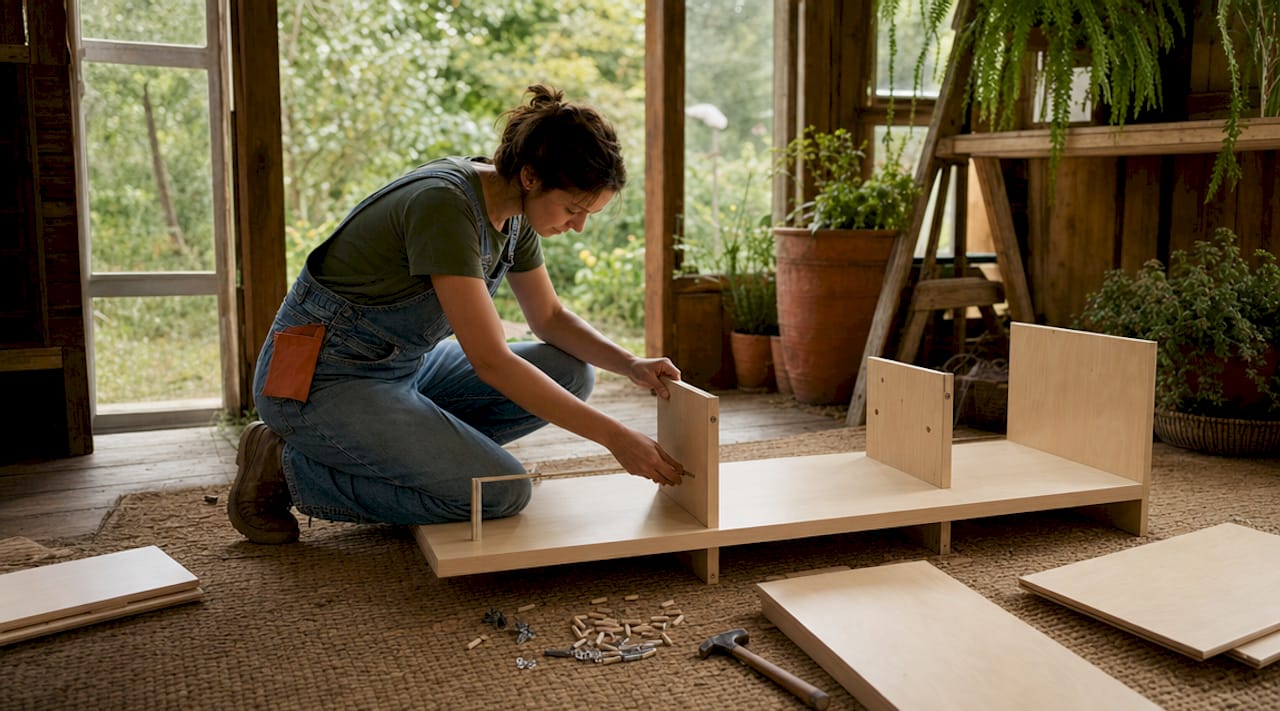
This approach differs from custom-built furniture, which is designed once for a single configuration. It also differs from flat-pack furniture, which assembles into one fixed form. Modular furniture is designed for repeated reconfiguration. That distinction matters because it directly affects how long the furniture stays useful and how much value you get from your investment.
How modular furniture benefits your living space
The most immediate advantage of modular furniture is adaptability. Modular furniture allows rearrangement, addition, or replacement of individual modules without replacing the entire set. That means when your needs change, your furniture changes with them rather than heading to a landfill.
Here is what that looks like in practice:
- Reconfiguration on demand. A modular sectional can shift from an L-shape to a U-shape when you move to a larger living room, or reduce to a loveseat when you downsize.
- Space efficiency. Modular storage cubes stack vertically in tight rooms, freeing floor space while maximizing wall height. This is one of the clearest modular furniture benefits for small spaces.
- Selective replacement. If one cushion module wears out, you replace that unit alone. The cost savings over replacing an entire sofa are significant.
- Style flexibility. Many modular systems offer interchangeable covers, finishes, and configurations, so the same structural frame can look completely different across rooms or seasons.
- Scalability. Modular furniture scales by reconfiguring modules to fit diverse room sizes and aesthetic preferences, which contradicts the common assumption that it only suits compact spaces.
One underappreciated benefit is how well modular furniture supports multi-use rooms. A home office that doubles as a guest room benefits enormously from a modular desk-and-shelving system that can shift to accommodate a fold-out bed module. For anyone designing a home gym storage setup, modular shelving and cube units offer the same reconfigurable logic applied to equipment and accessories.
Pro Tip: Before purchasing any modular system, sketch your room to scale and identify the two or three configurations you are most likely to use. This prevents buying modules you will never actually deploy.
What are the key design principles behind modular furniture systems?
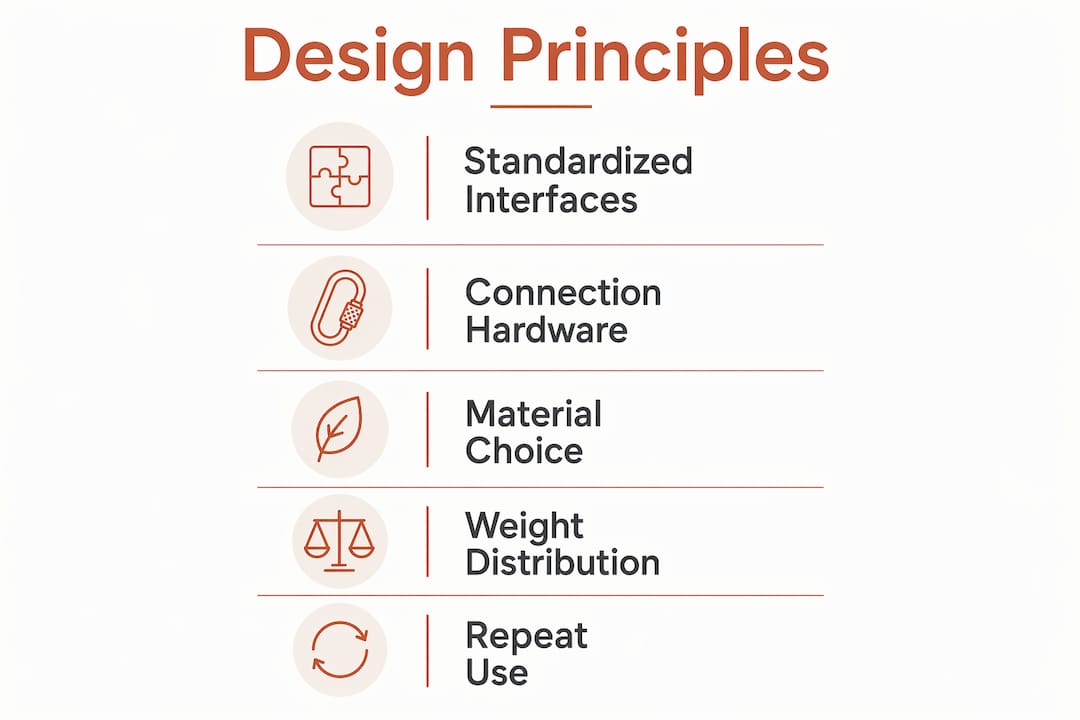
Understanding how modular furniture is built helps you evaluate quality and make smarter purchases. The engineering behind a reliable modular system comes down to three areas: interfaces, joinery, and materials.
1. Standardized interfaces
The interface is the connection point between modules. Without well-defined interfaces, modules cannot be reliably swapped or reconfigured. Every quality modular system defines these connection points precisely, so modules from the same collection always align, regardless of when they were manufactured.
2. Connection hardware
The hardware you choose determines how easy reconfiguration is and how long the system holds up.
- Cam lock fittings provide quick-release connections, making them ideal for furniture you expect to reconfigure frequently.
- Dowels offer alignment and moderate holding strength, often used alongside other fasteners.
- Screws give the most straightforward assembly but require tools and add time to each reconfiguration.
- Mortise and tenon joinery delivers superior durability for modules that remain in a fixed configuration, though it limits flexibility.
Cam lock fittings and dowels offer efficient connections for modular wooden furniture, enabling quick assembly and disassembly. This makes them the preferred choice for most consumer modular systems.
3. Material selection
Hardwoods like oak and walnut hold fasteners better than softwoods and resist wear across repeated assembly cycles. Plywood, particularly Baltic birch, offers a strong and stable alternative at a lower cost. MDF works for fixed shelving but degrades quickly at connection points under repeated use.
4. Weight distribution and reinforcement
Weight distribution and metal bracket reinforcement are critical for larger modular pieces to maintain stability and longevity. A tall modular shelving unit loaded with books needs lateral bracing, not just vertical stacking.
5. Design for repeated use
Modular furniture requires engineering modules for repeated assembly and using standardized connection points to maintain system integrity. Connection holes that strip after two or three cycles defeat the purpose of the modular format entirely.
Pro Tip: When evaluating a modular furniture system, pull out one module and inspect the connection hardware. If the fittings feel flimsy or the holes show wear from the showroom floor, the system will not hold up to real-world reconfiguration.
Comparing types of modular furniture for different spaces
Modular furniture types vary widely, including sectionals, shelving units, storage cubes, and seating. Each serves distinct spatial and functional roles. The table below maps the most common types to their best use cases.
| Type | Best for | Key advantage | Typical limitation |
|---|---|---|---|
| Modular sectionals | Living rooms, media spaces | Reconfigurable seating for any layout | Requires significant floor space |
| Storage cubes | Bedrooms, offices, entryways | Stackable, scalable, multi-function | Limited weight capacity per cube |
| Shelving units | Living rooms, home offices | Vertical space use, open or closed options | Needs wall anchoring at height |
| Modular seating | Offices, studios, flex rooms | Mix of ottomans, chairs, and benches | Style cohesion requires same collection |
| Modular tables | Dining rooms, conference spaces | Expandable surface area | Joints visible in extended configurations |
Sectionals are the most recognizable form of modular furniture in residential settings. A well-chosen modular sectional from brands like IKEA’s SÖDERHAMN or Pottery Barn’s Sectional Collection can serve a studio apartment today and a larger living room five years from now. Storage cubes, popularized by systems like IKEA’s KALLAX, are particularly effective for apartment living where every square foot counts.
The multi-functionality angle is worth emphasizing. A modular storage unit in a home gym can hold weights, resistance bands, and foam rollers in one configuration, then shift to hold media equipment and books when the room’s purpose changes.
Practical tips for designing and maintaining your modular setup
Getting the most from a modular furniture system requires intentional planning from the start and consistent upkeep over time.
Planning your layout
Start with your room’s dimensions and your lifestyle needs. Identify whether the space needs to serve multiple functions, such as a living room that also functions as a workspace or workout area. Knowing this upfront determines how many modules you need and which connection types make sense. For anyone blending fitness equipment with home decor, modular storage and shelving units offer a clean way to keep gear accessible without visual clutter.
Ensuring compatibility
Always buy from the same product line when adding modules. Manufacturers update dimensions and hardware across generations, and a module from a newer collection may not connect cleanly with an older one. Check the product specifications for connection type and module dimensions before purchasing additions.
Maintenance best practices
Regular maintenance involves cleaning, tightening loose fittings, and troubleshooting wobbling or squeaking to maintain modular furniture longevity. A quarterly check of all connection points takes less than ten minutes and prevents the gradual loosening that leads to structural failure.
- Tighten cam locks and screws every three to six months, especially on high-use pieces.
- Clean connection hardware with a dry cloth to prevent dust buildup that accelerates wear.
- For wooden modules, use a furniture wax or oil appropriate to the finish to prevent drying and cracking at joint edges.
- If a module wobbles, check the connection hardware first before assuming structural damage.
Pro Tip: Keep a small bag of spare cam locks and dowels from your modular system’s manufacturer. Hardware stores rarely carry exact replacements, and having spares on hand means a quick fix instead of a long wait for shipping.
Key takeaways
Modular furniture design delivers lasting value because it separates function from form, letting you reconfigure, expand, or replace individual units as your life and space evolve.
| Point | Details |
|---|---|
| Core definition | Modular furniture uses standardized, interchangeable units with defined interfaces for flexible reconfiguration. |
| Primary benefit | You replace only worn or unwanted modules, not entire furniture sets, saving money over time. |
| Design foundation | Reliable interfaces, quality hardware like cam locks and dowels, and appropriate materials determine system longevity. |
| Space adaptability | Modular furniture suits both small and large spaces by scaling up or down through module addition or removal. |
| Maintenance matters | Quarterly tightening of connections and proper cleaning of hardware prevents wobbling and extends furniture life. |
Why modular furniture is the smartest long-term investment I’ve seen in home design
I have spent years watching people buy beautiful furniture that becomes a burden within three years. A sofa that does not fit the new apartment. A shelving unit that cannot grow with a book collection. A dining table that seats six but the household has two. The pattern is always the same: the furniture was chosen for a moment, not a life.
Modular furniture breaks that cycle. What I find genuinely compelling about it is not the flexibility in the abstract but the sustainability it creates in practice. When you can replace one worn cushion module instead of an entire sofa, you are making a choice that is better for your wallet and better for the planet. The furniture industry generates enormous waste, and modular systems are one of the clearest structural solutions available to individual consumers.
The misconception I hear most often is that modular means minimal or cold. That is simply not accurate. Some of the most warm, layered, and personal living spaces I have seen are built entirely from modular pieces. The key is choosing a system with genuine material quality and then personalizing the configuration to your actual habits rather than a showroom ideal.
My honest advice is this: do not buy modular furniture because it is trendy. Buy it because you know your life will change and you want your home to change with it, without starting over every time.
— Brian Dunn, Couch & Dumbbells
Transform your space with the right modular furniture
Ready to put these principles into practice? At Couchanddumbells, you will find a curated selection of home furnishings designed for real life, including modular-friendly pieces that work as hard as you do.
Whether you are furnishing a compact apartment or redesigning a full living space, the home and interior collection at Couchanddumbells offers storage solutions, seating, and decor that prioritize both function and aesthetics. Every piece is chosen with intentional living in mind, so your space supports your routines, your rest, and your style. Browse the collection and find the configuration that fits your life today and adapts to wherever you go next.
FAQ
What is modular furniture design in simple terms?
Modular furniture design is a system where furniture is built from standardized, interchangeable units that connect through defined interfaces. You can rearrange, add, or replace individual modules without changing the entire piece.
Is modular furniture only good for small spaces?
No. Modular furniture adapts to both small and large rooms by scaling the number of modules up or down. A modular sectional, for example, works equally well in a studio apartment and a large open-plan living room.
What types of modular furniture are most common?
The most common types include modular sectionals, storage cubes, shelving units, modular seating, and expandable tables. Each type suits different room sizes and functional needs.
How do I maintain modular furniture to keep it lasting longer?
Tighten connection hardware every three to six months, clean joints with a dry cloth, and address wobbling immediately by checking cam locks or dowels. Consistent maintenance prevents gradual loosening and structural wear.
Can I mix modules from different brands or collections?
Mixing modules from different brands is rarely reliable because connection hardware and dimensions vary. Always buy additions from the same product line to guarantee compatibility and structural integrity.