
A dedicated 6-by-6-foot training zone, vertical storage, and versatile gear are the three pillars of effective small space workout organization. Fitness industry guidance defines this 36-square-foot clear zone as the minimum needed for key strength exercises without obstruction. Most home workout enthusiasts skip this foundation and wonder why their space feels chaotic. Getting it right means separating where you train from where you store, choosing gear that earns its square footage, and building habits that keep the system working. This guide covers all three, with practical steps you can act on today.
How to organize fitness equipment in a small training space
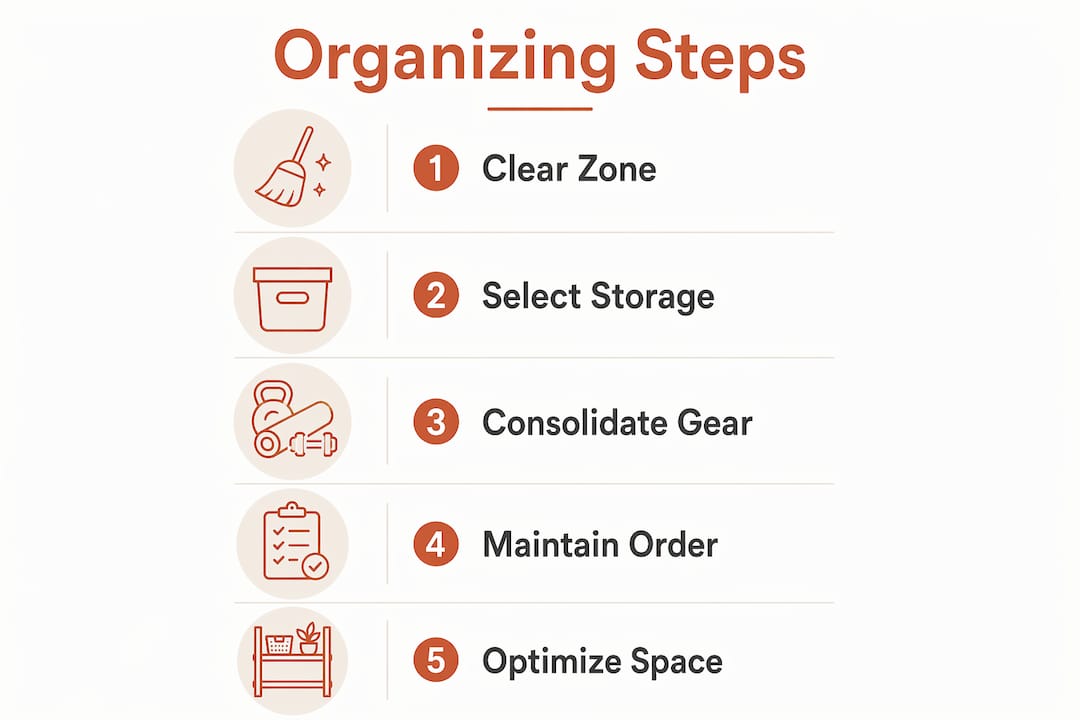
The first step is defining your workout zone before you touch a single piece of equipment. Pick the clearest area of the room and commit to it. Measure a 6-by-6-foot square and mark it mentally or with tape. This zone is for movement only. Nothing gets stored inside it.
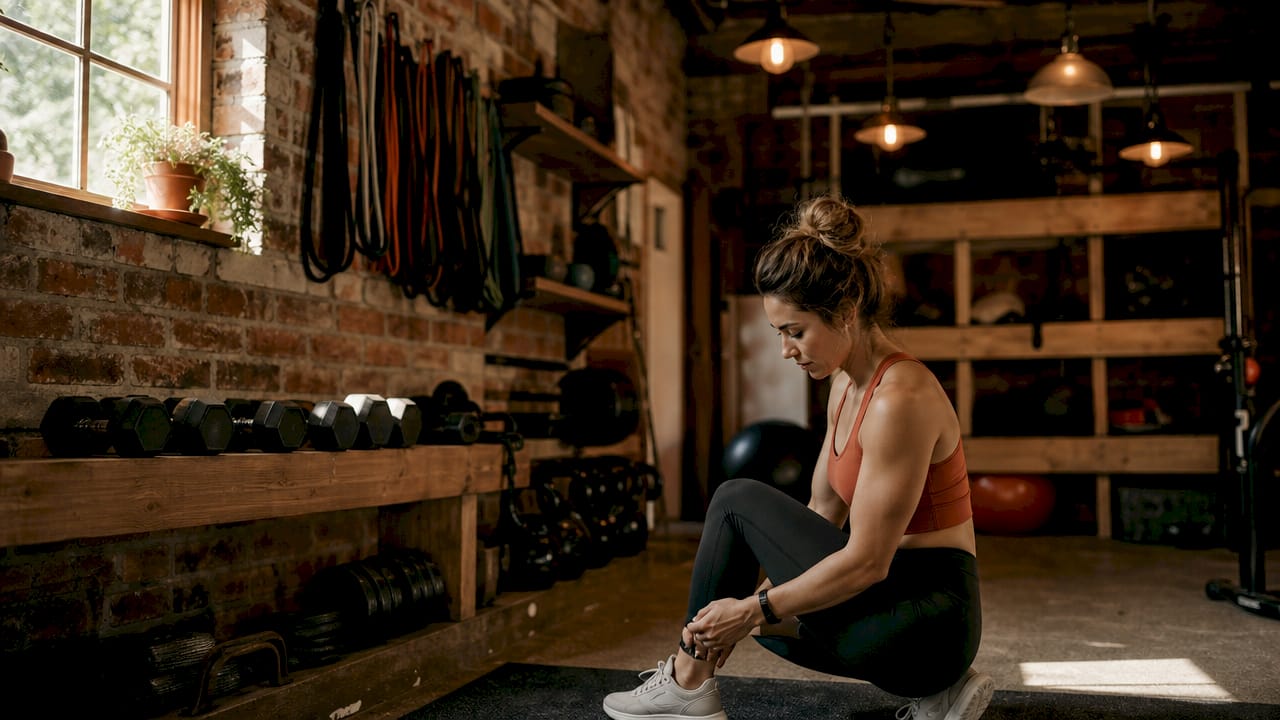
Once you have your zone, clear it completely. Remove furniture, bags, and any gear that has drifted in over time. Lay down protective rubber or foam mats to define the boundary and protect your floor. Mats also signal to your brain that this space has a purpose, which builds consistency over time.
Heavy equipment belongs on the floor, but outside the training zone. Dumbbells, kettlebells, and loaded stands stay low to reduce tipping hazards and make the room safer to reset after each session. Placing heavy items at floor level also lowers the center of gravity of your storage setup, which matters in tight rooms where a falling rack could cause real damage.
- Measure and mark your 6-by-6-foot training zone.
- Remove everything from the zone, including items stored temporarily.
- Lay rubber or foam mats across the full zone.
- Place heavy gear (dumbbells, kettlebells) on the floor outside the zone.
- Leave the zone completely free of storage at all times.
Pro Tip: A functional gym reorganization can be completed in about 30 minutes by clearing an 8-by-10-foot area and installing mats, a mirror, and basic shelving. Start there before buying anything new.
What are the best vertical and mobile storage solutions for small home gyms?
Vertical storage is the single biggest upgrade you can make in a compact training area. Your walls hold far more than your floor does, and using them correctly keeps your workout zone open and your gear visible.
Wall-mounted options
Wall-mounted shelves and pegboards are the most space-efficient storage tools available. Metal pegboards like Wall Control can support up to 100 lbs steadily, far beyond what wooden pegboards handle. That load capacity matters when you are hanging resistance bands, jump ropes, foam rollers, and light accessories. Wooden pegboards sag and break under repeated use. Metal pegboards expand with modular hooks and bins as your gear collection grows.
Sturdy metal pegboards offer a flexible, durable vertical storage option that avoids the sagging and breaks common with wooden versions. Mount them at shoulder height so gear stays accessible without requiring you to crouch or stretch. Group items by workout type: mobility tools on one section, cardio accessories on another.
Mobile storage for weights
Portable plate trees with wide bases and wheels are safer than A-frame racks that tip or wobble when plates are rearranged. The wide base distributes weight evenly. The wheels let you roll the tree out of the way during workouts and back against the wall when you are done. This flexibility is especially valuable in multipurpose rooms where the space serves more than one function.
Selecting storage racks with wide bases and wheels prevents tip-over accidents when removing multiple weight plates. That is not a minor safety note. A tipping rack in a small room can damage walls, flooring, and equipment in one fall.
| Storage type | Best for | Key advantage |
|---|---|---|
| Metal pegboard | Bands, ropes, light accessories | Holds up to 100 lbs, modular |
| Wide-base plate tree | Weight plates | Stable, mobile, wall-safe |
| Wall-mounted shelf | Foam rollers, water bottles | Fixed, clutter-free |
| Rolling rack | Dumbbells, kettlebells | Flexible placement |
Pro Tip: Categorize resistance bands by length and resistance level rather than by color. This prevents tangling and helps you spot wear before a band snaps mid-workout.
Group all storage along a single wall. Consolidating storage on one wall keeps setup times under five minutes and prevents gear from spreading across the room. Label each storage spot so every item has a home it returns to after use.
Which equipment choices work best for compact training areas?
The right gear for a small space does more than one job. Adjustable dumbbells, resistance bands, and sliders let you perform dozens of exercises without stacking multiple single-purpose tools. Each piece replaces several others, which directly reduces storage demand.
Here is what works best for a compact training area setup:
- Adjustable dumbbells: Replace a full rack of fixed weights. One pair covers a wide resistance range and stores in a single footprint.
- Resistance bands: Flat, light, and hangable on a pegboard hook. They add progressive resistance to bodyweight movements and take up almost no space.
- Sliders: Two small discs that fit in a drawer. They turn any smooth floor into a core and stability training surface.
- Folding exercise mat: Rolls or folds flat against the wall when not in use. Non-negotiable for floor work and stretching.
- Foldable bench: Vertical parking with transport wheels pointing outward lets you store a foldable bench upright without dragging it across your floor. This protects both the bench frame and your mats.
- Compact cardio machine: A folding rowing machine or compact stationary bike fits against a wall when stored. Check the folded dimensions before buying, not just the in-use footprint.
Over-investing in equipment not suited to the room reduces usability. A full cable machine or a power rack in a 10-by-10-foot room leaves no room to actually move. Focus on adaptability and daily practicality rather than quantity. You can browse compact cardio alternatives that fit real apartment dimensions if you are weighing cardio options.
Avoid bulky or noisy equipment that disrupts other household members or requires more clearance than your zone allows. A jump rope, for example, needs ceiling height. Measure before you commit.
How to maintain an organized small gym over time
Organization is a habit, not a one-time project. The layout you set up today only stays functional if you maintain it daily. The good news is that the right system makes maintenance nearly automatic.
“The most common mistake is allowing storage to invade the training zone, resulting in clutter rather than organization.” — Fitness Volt
Follow these four habits to keep your compact training area working long term:
- Return gear immediately after use. Do not set a dumbbell on the floor “just for now.” It stays there, then another joins it, and the zone shrinks.
- Keep setup and cleanup under five minutes. If your system requires more than five minutes to prepare or reset, it is too complex. Simplify until it is not.
- Audit your gear every month. Remove anything you have not used in 30 days. Unused equipment is just stored clutter with a fitness label.
- Never let storage creep into the training zone. This is the rule that protects every other rule. The zone is for movement. Storage lives on the wall and floor outside it.
A clear and accessible training zone with storage consolidated along a single wall enables workout setup times under five minutes. That speed matters because a slow setup is a skipped workout. Your system should make starting easier, not harder.
Unstable racks and cluttered floor space are the two most common physical hazards in small home gyms. Check your racks monthly for wobble. Tighten bolts. Replace worn rubber feet. A rack that felt stable six months ago may not be stable today if it has been moved repeatedly. You can find guidance on building a complete gym accessories storage system that stays safe and functional over time.
Key takeaways
Effective small space workout organization requires a protected training zone, vertical storage along a single wall, and versatile gear that replaces multiple single-purpose items.
| Point | Details |
|---|---|
| Protect the training zone | Keep a clear 6-by-6-foot area free of storage at all times. |
| Go vertical with storage | Use metal pegboards and wide-base rolling racks to free up floor space. |
| Choose versatile gear | Adjustable dumbbells, bands, and sliders replace multiple single-use tools. |
| Return gear immediately | Putting equipment back after every use prevents clutter from building. |
| Audit monthly | Remove unused gear every 30 days to keep the space functional. |
What I have learned from organizing small training spaces
Belle here. After spending years helping people set up home gyms in spare bedrooms, garage corners, and living room nooks, the pattern I see most often is this: people buy equipment before they define their space. They end up with a great collection of gear and nowhere comfortable to actually use it.
The fix is always the same. Clear the zone first. Commit to its boundaries. Then choose equipment that fits what you have, not what you wish you had. A single pair of adjustable dumbbells and a set of resistance bands will serve you better than a half-assembled cable machine pushed into a corner.
Aesthetics matter more than most fitness content admits. A space that looks good makes you want to be in it. That means matching your storage to your room’s style, not just its function. A well-mounted metal pegboard with organized hooks looks intentional. A pile of bands on the floor does not. Couchanddumbells covers this balance well in their guide on blending fitness gear with home decor, and it is worth reading if aesthetics are part of your goal.
My honest advice: resist the urge to fill every inch. The open floor space in your training zone is not wasted. It is the whole point.
— Brian Dunn, Couch & Dumbbells
Couchanddumbells has what your small training space needs
Your training space deserves gear that fits the room and looks good doing it. Couchanddumbells curates space-saving fitness equipment selected for home use, from compact machines to portable tools that store flat against a wall.
The home and interior collection includes storage furniture and accessories designed to keep small spaces functional without sacrificing style. Whether you are setting up a dedicated gym corner or carving out space in a multipurpose room, the right storage piece makes the whole system work. Browse the full range and find what fits your setup.
FAQ
What is the ideal size for a small home training zone?
The fitness industry recommends a clear 6-by-6-foot zone, or 36 square feet, as the minimum for key strength exercises without obstruction. Keep this area completely free of storage.
What storage works best for a compact home gym?
Metal pegboards and wide-base rolling plate trees are the most effective options. Metal pegboards support up to 100 lbs and expand with modular hooks, while rolling racks allow flexible placement without tipping hazards.
Which equipment is best for a small workout space?
Adjustable dumbbells, resistance bands, sliders, and a folding mat cover the widest range of exercises in the smallest footprint. A foldable bench stored vertically adds pressing options without permanent floor space loss.
How do I keep a small gym organized over time?
Return every piece of gear to its designated spot immediately after use. Consolidating storage along a single wall and auditing unused equipment monthly keeps the system functional and the training zone clear.
How long does it take to reorganize a small home gym?
A functional reorganization, including clearing the area, laying mats, and installing basic shelving, takes about 30 minutes. Starting with that reset is more effective than buying new storage before the existing layout is addressed.