
Stylish shelving units for a home gym area are defined as wall-mounted or freestanding storage systems that combine load-bearing function with intentional design to keep fitness gear organized and the space visually motivating. The right shelving does more than hold your dumbbells. It shapes how the room feels, how quickly you can reset after a workout, and whether you actually want to spend time in that space. Whether you are working with a spare bedroom, a garage, or a living room corner, the way you style your gym shelves determines how functional and inspiring your space becomes.
What types of shelving units fit best in a home gym area?
The two main categories of gym shelving are wall-mounted systems and freestanding units. Each serves a different purpose, and the best home gyms often use both.
Wall-mounted shelving keeps floor space open, which matters in smaller rooms. Systems like StoreWALL slatwall panels are built for heavy-duty use. Professional slatwall systems support up to 300 lbs per square foot. That capacity means you can safely store kettlebells, weight plates, and resistance bands on the same wall without worrying about structural failure.
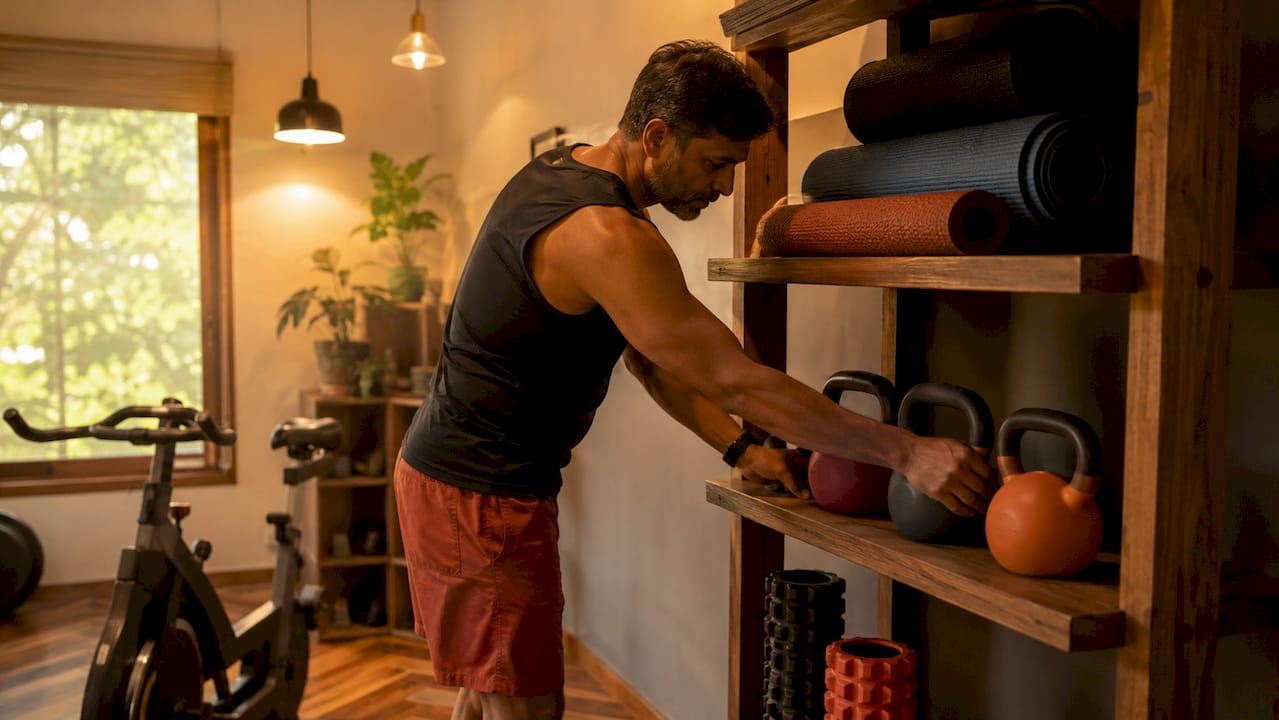
Freestanding shelving offers flexibility. You can reposition it as your equipment collection grows. Metal shelving from brands like Titan Fitness or Gorilla Rack holds heavy loads and resists moisture, which matters in garage gyms. Wood shelving, including reclaimed or decorative options, adds warmth and works well for lighter items like foam rollers, towels, and fitness accessories.
Here is a quick comparison to help you choose:
| Shelving Type | Best For | Load Capacity | Style Potential |
|---|---|---|---|
| Wall-mounted slatwall | Heavy gear, small spaces | Very high (300 lbs/sq ft) | Moderate to high |
| Floating wood shelves | Display, light storage | Low to moderate | Very high |
| Freestanding metal rack | Flexible, heavy storage | High | Moderate |
| Pegboard panels | Tools, bands, small gear | Low to moderate | High with accessories |
When choosing materials, consider the gym’s environment. Metal resists humidity and is easy to wipe down. Reclaimed wood adds character but needs sealing in damp spaces. PVC slatwall panels work well in garages because they do not warp or rust. For a gym that doubles as a living space, decorative shelving for the gym in wood or mixed materials creates a more residential feel.
- Metal: Durable, moisture-resistant, industrial look
- Wood (reclaimed or solid): Warm aesthetic, best for dry spaces
- PVC slatwall: Weatherproof, modular, easy to reconfigure
- Pegboard: Affordable, highly customizable, great for small gear
How to plan and install shelving for maximum style and function
Good installation starts before you buy a single shelf. Planning your layout carefully saves money and prevents safety issues down the line.
-
Measure your equipment first. Bumper plates require more depth than standard iron plates. Check the diameter and depth of your heaviest gear before purchasing any rack or shelf. A shelf that is too shallow forces you to stack items awkwardly, which creates a tipping risk.
-
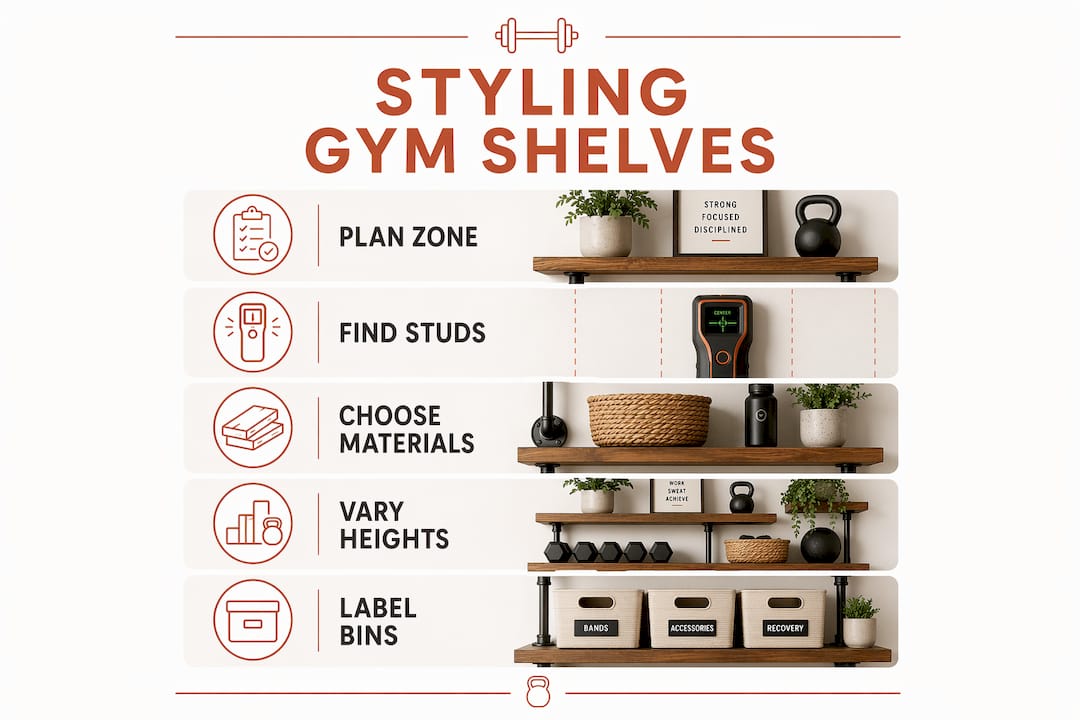
Zone your gym space into three areas. Effective zoning divides your gym into an active training zone, a frequent-use storage zone, and an overflow zone. This setup allows cleanup in under 5 minutes. Gear you use every session lives closest to your workout area. Seasonal or rarely used items go in overflow.
-
Mount directly into wall studs. Drywall anchors fail under the weight of gym equipment. Use 1-inch standoff spacers and drive fasteners into studs. If your stud layout does not align with your shelf plan, install a horizontal backing board across multiple studs first, then attach your shelving to that.
-
Store heavy gear low. Heavy equipment stored low reduces tipping risk and makes resetting your gym faster and safer. Kettlebells, weight plates, and medicine balls belong on the bottom shelf or on floor-level racks.
-
Vary shelf heights intentionally. Place display items and frequently grabbed gear at eye level. Utility storage goes lower. This creates visual interest and keeps the most-used items within easy reach.
-
Budget for quality hardware. Wall-mounted storage systems typically cost $200–$500 for a quality setup, with assembly taking 2–4 hours. That investment pays off in safety and longevity compared to budget options that flex under load.
Pro Tip: Before drilling, use a stud finder and mark every stud in your planned shelf zone with painter’s tape. Then dry-fit your brackets against the wall to confirm spacing before committing to holes.
For a detailed walkthrough of mounting gym storage safely, Couchanddumbells has a practical guide on designing a gym storage system that covers wall prep and bracket selection.
How to style gym shelves to elevate your home gym’s aesthetic
Functional shelving becomes gym decor when you apply a few intentional design principles. The goal is a space that feels personal and motivating, not clinical or cluttered.
Aesthetic shelving prevents a clinical atmosphere and directly supports long-term workout motivation. A gym that looks good makes you want to show up. Reclaimed wood floating shelves, for example, add texture and warmth that metal racks simply cannot replicate. Mixing materials, such as a metal slatwall for heavy gear paired with a wood floating shelf for display items, gives the space depth and personality.
Negative space is the most underused design tool in home gym shelving. Leaving gaps between items prevents visual clutter and keeps the room feeling open. A shelf packed edge to edge with gear looks chaotic. A shelf with intentional spacing looks curated.
“Combining shelf heights to place display items at eye level and utility items lower improves both aesthetics and function.” — HerFitCorner
Here are practical ways to style your gym shelves without sacrificing function:
- Mix fitness gear with motivational decor. A small plant, a framed quote, or a Bluetooth speaker on the top shelf adds personality without taking up workout space.
- Use color consistently. If your gym has a color theme, carry it into your storage. Black metal brackets with dark wood shelves create a modern, cohesive look.
- Display your best gear. A clean set of adjustable dumbbells or a neatly rolled yoga mat on an open shelf looks intentional, not messy.
- Add tech thoughtfully. A fitness smartwatch or a compact fitness tablet mounted or placed on a dedicated shelf keeps your tech accessible and adds a modern edge to the space.
- Use baskets or bins for small items. Resistance bands, jump ropes, and chalk bags disappear into labeled bins. The shelf looks clean; the gear stays accessible.
Varying shelf heights creates visual rhythm. Think of it like arranging a bookshelf: a mix of tall and short items at different levels draws the eye across the wall rather than letting it settle on one flat row. For more ideas on blending fitness gear with your home’s interior style, Couchanddumbells covers this well in their guide on blending fitness with home decor.
How to keep your gym shelving organized and stylish long term
A well-designed gym shelf stays that way only with consistent habits. The setup does the heavy lifting, but a few routines lock in the results.
-
Assign every item a fixed position. When each piece of gear has a defined spot, putting it back takes no thought. Label bins and shelf zones if needed. This is especially useful for households where multiple people use the gym.
-
Do a 5-minute reset after every session. Returning gear to its assigned spot immediately after training prevents the slow creep of clutter. Zoned storage makes this fast because you always know where things belong.
-
Store seasonal gear off the main shelves. Foam rollers, jump ropes, and agility ladders used only occasionally can move to ceiling storage or a high overflow shelf. This keeps prime shelf real estate for daily-use equipment.
-
Refresh your shelving layout every few months. Your training evolves. A shelf layout that worked when you were focused on cardio may not suit a strength-focused program. Reassess your zones and adjust as your home gym equipment changes.
-
Check mounting hardware twice a year. Bolts loosen over time, especially in high-vibration environments. A quick check of all brackets and anchors prevents accidents before they happen.
Pro Tip: Use a label maker on the front edge of each shelf or bin. When you are mid-workout and need to grab something fast, clear labels mean zero hesitation and a faster reset afterward.
The most common long-term mistake is overloading shelves beyond their rated capacity. Every shelf has a weight limit. Exceeding it does not just risk the shelf collapsing. It stresses the wall anchors and can pull studs loose over time. Respect the limits and redistribute gear across multiple shelves if needed.
Key takeaways
Stylish and functional gym shelving requires the right materials, safe installation into wall studs, intentional design choices, and consistent maintenance habits to stay effective long term.
| Point | Details |
|---|---|
| Choose materials by environment | Use metal or PVC in humid garages; wood works best in dry, interior gym spaces. |
| Mount into studs, not drywall | Use 1-inch standoffs and stud anchors to safely support heavy gym gear. |
| Zone your storage | Divide space into active, frequent-use, and overflow zones for fast cleanup. |
| Use negative space intentionally | Leave gaps between shelf items to reduce visual clutter and keep the gym feeling open. |
| Refresh your layout regularly | Reassess shelf zones every few months as your training program and equipment change. |
What I have learned from styling gym shelves at home
I used to think the shelving in a home gym was purely a logistics problem. Buy something sturdy, bolt it to the wall, stack your gear. Done. What I did not expect was how much the shelving choice would affect whether I actually used the space.
The turning point for me was swapping out a plain wire rack for a combination of a slatwall panel and two reclaimed wood floating shelves. The wire rack held more. The new setup looked like it belonged in the room. That shift in how the space felt changed how often I showed up to train. It sounds minor. The effect was not.
The mistake I see most often is treating the gym as a separate category from the rest of the home. People spend real effort on their living room or bedroom aesthetic and then throw mismatched gear into a spare room and call it a gym. The shelving is where that gap shows up most clearly. A few intentional choices, a consistent color palette, and some negative space between items can make a functional gym feel like a space you designed on purpose.
My honest advice: do not wait until your equipment collection is “complete” before thinking about shelving design. Start with one good wall-mounted system and one decorative shelf. Build from there. The space will motivate you to keep going, and the organization will make every session feel easier to start and finish.
— Brian Dunn, Couch & Dumbbells
Stylish gym storage at Couchanddumbells
Your gym shelving should work as hard as you do and look good doing it. Couchanddumbells curates home and interior pieces that bring real design intention to functional spaces, including storage solutions that fit naturally into a home gym without looking out of place.

The collection covers everything from decorative shelving options to fitness gear that stores cleanly and looks great on display. If you are building out your gym space or refreshing what you already have, browsing the full range gives you a clear picture of what is possible when style and function share the same shelf.
FAQ
What is the best shelving type for a small home gym?
Wall-mounted slatwall systems are the best choice for small home gyms because they keep floor space clear and support heavy loads. Systems like StoreWALL handle up to 300 lbs per square foot.
How do I mount gym shelves safely?
Mount gym shelves directly into wall studs using 1-inch standoff spacers. Drywall anchors alone are not strong enough to hold gym equipment and will fail under load.
How can I make my gym shelves look stylish, not cluttered?
Leave negative space between items, vary shelf heights, and use labeled bins for small gear. Mixing a decorative floating shelf with a functional slatwall panel adds visual depth without sacrificing storage.
How much does a quality wall-mounted gym storage setup cost?
A quality wall-mounted gym storage system typically costs $200–$500, with installation taking 2–4 hours for most homeowners.
Should I store heavy equipment on upper or lower shelves?
Store heavy equipment on lower shelves. Keeping heavy gear low reduces tipping risk and makes resetting your gym faster and safer after each session.