

Most designers think the client experience lives in the final reveal. It doesn’t. The real role of studio design client experience is built long before any concept presentation, in the way you respond to a first inquiry, how clearly you explain your process, and whether clients feel guided or confused at every step. Client experience is an end-to-end system that spans discovery through post-project follow-up, and studios that treat it as a system rather than a feeling grow faster, retain more clients, and generate more referrals. This article covers the practical, operational, and emotional layers that make that system work.
Table of Contents
- Key takeaways
- Defining client experience in studio design
- Onboarding: your first real client experience test
- Communication and process design
- Designing the full client journey
- Best practices that actually move the needle
- My perspective on client experience design
- Build a studio that clients remember
- FAQ
Key takeaways
| Point | Details |
|---|---|
| Client experience is a full system | It spans every touchpoint from first contact to post-project follow-up, not just the final delivery. |
| Communication signals competence | Clients judge your skill through your clarity and tone long before they see your work. |
| Onboarding is a 30-day process | Structured onboarding spanning the first month reduces misunderstandings and builds lasting confidence. |
| Backstage alignment prevents breakdowns | Mapping internal workflows to client-facing touchpoints stops friction before clients ever feel it. |
| Consistent practices double retention | Studios using proactive response habits and follow-up systems see repeat booking rates significantly increase. |
Defining client experience in studio design
Client experience is not a feeling you manufacture at the reveal. It is the emotional and operational arc a client travels through from the moment they find your studio to the day they refer you to someone else. 60% of consumers purchase based on expected service quality, which means your reputation precedes your portfolio.
In a studio context, this translates directly. A client’s first email exchange shapes whether they trust you before a contract is signed. The way you handle a revision request mid-project tells them whether you respect their input. These micro-interactions compound, building or eroding confidence throughout the project life cycle.
Clients interpret competence through clarity and communication tone, not just final design aesthetics. This is the insight most studios miss. You can deliver breathtaking work and still lose the client relationship because the process felt chaotic, the emails felt slow, or the expectations were never clear. The emotional arc matters as much as the output.
This is where the importance of studio design becomes operational, not decorative. When you intentionally design how your studio communicates, sequences feedback, and manages expectations, you create psychological safety. Clients who feel safe are less anxious, ask fewer reactive questions, and engage more constructively with your creative direction.
Great client experience is built from memorable touchpoints plus systematically removing the friction that erodes trust.
The two sides of that equation matter equally. Adding warmth without removing confusion leaves clients feeling pleasant but unsupported. Removing friction without warmth leaves them feeling processed, not valued.
Onboarding: your first real client experience test
Onboarding is where the client experience in design either locks in or starts to fray. Most studios send a welcome email and call it done. That’s a missed opportunity. Structured onboarding reduces project misunderstandings and improves client confidence by establishing clear expectations before any work begins.
Here’s what a complete studio onboarding process actually covers:
- Collect detailed project information upfront. Scope, goals, budget range, approval authorities, and timeline preferences should be documented before the kickoff call, not discovered during it.
- Clarify communication channels. Tell clients which platform you use for what. Email for formal decisions, a project dashboard for updates, and a phone call only for urgent matters. Ambiguity here creates unnecessary back-and-forth.
- Define feedback formats and review cycles. Clients who don’t know how to give feedback tend to give it poorly. A one-page guide explaining how to review work and what kind of input is most useful saves hours of revision rounds.
- Send a welcome packet. Include your process timeline, key milestones, your response time commitment, and what you need from them at each phase.
- Schedule the kickoff meeting with an agenda. A structured kickoff signals professionalism and gives the client a chance to voice priorities before assumptions solidify.
Onboarding is not a one-time email but a 30-day process that determines whether clients stay calm and engaged or become anxious and reactive. Clients who understand your process and boundaries show less churn and far greater satisfaction.
Pro Tip: Send a short check-in message two weeks into a new project asking if the communication rhythm is working for the client. This small gesture surfaces friction points early, before they quietly build into dissatisfaction.
Communication and process design
The operational side of the studio client relationship is where most experience breakdowns actually happen. A client rarely complains about a design decision. They complain about not hearing from you for a week. They get nervous when milestones slip past without a word. Proactive, structured communication is the fix.

Service blueprinting links client-facing touchpoints to backstage processes, helping identify bottlenecks before they affect the client. Think of it as mapping what the client sees alongside what your team is doing internally at the same time. When those two tracks fall out of sync, the client feels it first.
| Communication Approach | Impact on Client Experience |
|---|---|
| Reactive (respond when asked) | Creates anxiety; client feels uninformed and undervalued |
| Proactive milestone updates | Builds confidence; client feels guided and respected |
| Inconsistent tone across team | Signals disorganization; erodes trust in studio competence |
| Single point of contact with briefed team | Creates consistency; client feels supported at every touchpoint |
Mapping both frontstage and backstage processes makes internal dependencies visible so project managers can solve the root causes of delays rather than apologizing for them after the fact. If your copywriter is late, and that delay cascades into a design delay, and the client only hears about it in the third week, the trust damage is disproportionate to the actual delay.
Pro Tip: Build a standing weekly update message into your project workflow, even when there’s nothing major to report. A brief “here’s where we are and what’s coming next” message takes three minutes to write and dramatically reduces client anxiety between milestones.
Coordinating your internal team to deliver consistent messaging is just as critical as what you say. When a client gets different tones, different levels of detail, or conflicting information from different team members, the perceived competence of your studio drops. Studio design best practices at this level are about building shared communication standards, not just good intentions.
Designing the full client journey
The user-centered design approach that most studios apply to their client work should also apply to how they manage their client relationships. You wouldn’t design a product without mapping the user journey. Your client experience deserves the same rigor.
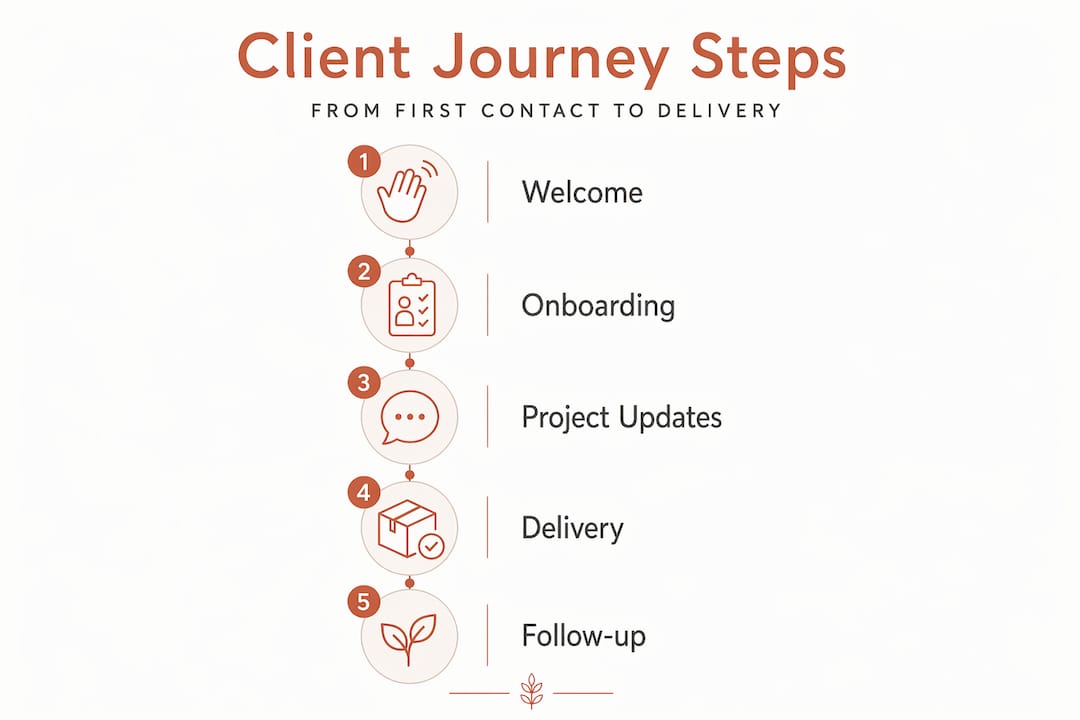
A well-designed client journey looks like this:
- First contact: A prompt, warm, and clear response that answers the client’s unspoken question: “Are these people organized and worth my time?”
- Proposal and contract phase: Documentation that is easy to read, transparent on scope, and leaves no room for misinterpretation.
- Active project phase: Regular updates, clear feedback cycles, and a reliable point of contact for questions.
- Delivery and handoff: A structured reveal with context, not just a file drop. Explain the decisions made and walk the client through the outcome.
- Post-project follow-up: A check-in 30 days after delivery to ask how things are going and whether they have any questions. This is where referrals are earned.
Technology tools like CRMs and project dashboards raise client confidence when they’re used well, but they need to complement human warmth rather than replace it. Automated updates are useful for logistics. Personal notes at key moments show care.
How design impacts clients at the physical level also matters. The layout of your studio, the accessibility of your meeting space, and the quality of your presentation environment all signal intentionality. A well-organized, thoughtfully arranged studio communicates the same values you apply to your work. If you’re looking at gym accessories storage as an analogy, the principle holds: when every element has a place and a purpose, the space communicates competence before a word is spoken.
Best practices that actually move the needle
Enhancing client satisfaction doesn’t require overhauling your entire operation. Five high-impact practices, done consistently, produce measurable results in referrals and retention.
- Respond within two hours during business hours. Repeat booking rates double for studios that maintain this habit alongside other consistent communication practices. Speed of response signals that you take the relationship seriously.
- Put all expectations in writing. Clear written expectations give clients a sense of leadership and control, which reduces anxiety and the reactive behavior that comes with it.
- Send proactive milestone updates. Don’t wait for clients to ask where things stand. Brief, regular updates build trust incrementally.
- Follow up within 48 hours of every delivery. Ask if the client has questions, confirm receipt, and give them a clear next step. This alone separates studios that feel professional from those that feel transactional.
- Track retention metrics. Know which clients come back, which don’t, and what pattern separates them. That data tells you where the friction in your process actually lives.
Client segmentation allows studios to allocate resources proportionally, giving high-value clients more personalized attention while maintaining efficient service for others. Not every client needs the same level of touch. Knowing the difference lets you invest your energy where it compounds.
Pro Tip: Create a simple client review cycle every 90 days. Pull your last quarter of projects, note where communication stalled or feedback rounds ran long, and identify one process adjustment. Small, steady improvements accumulate into a noticeably stronger client experience over a year.
My perspective on client experience design
I’ve watched studios obsess over their portfolio and almost completely ignore their process. The irony is that the portfolio gets you the inquiry, but the process determines whether the client stays, refers others, and comes back. Those outcomes are worth far more over time.
In my experience, the single biggest mistake studios make is treating communication as reactive rather than designed. There’s no system, no standard, no rhythm. Every client interaction depends on whoever picked up that particular day. The result is inconsistency, and inconsistency reads as incompetence regardless of how strong the actual work is.
What I’ve found is that when you build even a basic rhythm of structured updates, clear onboarding, and post-project follow-up, the emotional tone of the client relationship shifts. Clients stop chasing you for information. They start bringing you ideas instead. That shift in dynamic changes everything: the feedback quality improves, the revision rounds get shorter, and the referrals start coming in.
The studios I’ve seen grow most sustainably aren’t the ones with the most impressive aesthetics. They’re the ones where clients feel genuinely guided from start to finish. That’s a design problem, and it has a design solution.
— Brian Dunn, Couch & Dumbbells
Build a studio that clients remember
If this article got you thinking about the gaps between your current client process and what it could be, that’s the right place to start. Couchanddumbells believes that the spaces you design and the tools you choose to work with both shape the experience you deliver. A thoughtfully arranged studio sends a message to every client who walks through the door before you say a word.
Whether you’re refreshing a client-facing space or looking for equipment that balances function with aesthetics, the Couchanddumbells home and interior collection offers curated options that bring intention into your environment. You can also explore the full fitness and gear range for studio setups that communicate both energy and professionalism. Your space is part of your brand. Make it work for you.
FAQ
What is the role of studio design in client experience?
Studio design shapes every touchpoint in the client journey, from first impressions to project delivery. Thoughtful design of physical spaces, communication processes, and operational workflows signals competence and builds trust at every stage.
How does onboarding affect client retention?
Structured onboarding spanning the first 30 days significantly reduces project misunderstandings and gives clients the confidence to engage constructively. Studios that treat onboarding as a sustained process see lower churn and higher satisfaction.
Why does communication style matter more than design quality?
Clients measure competence through clarity and tone before they evaluate your final output. A slow or inconsistent response pattern signals disorganization, which can undermine even outstanding work.
What are the most impactful client management practices for studios?
Responding within two hours, putting expectations in writing, sending proactive updates, following up after delivery, and tracking client retention metrics are the five practices most directly linked to repeat bookings and referrals.
How can service blueprinting improve client experience?
Service blueprinting maps client-facing touchpoints to internal processes, making bottlenecks visible before they affect the client. This helps project managers address root causes rather than reacting to symptoms.