

Most homeowners focus on floor plans, furniture placement, and color palettes, but the role of vertical space interiors is the dimension that quietly shapes how every room actually feels to live in. The walls stretching above your sofa, the ceiling above your dining table, the gap between your bookcase top and the ceiling — these are not empty areas. They are design opportunities that affect your perception, your mood, and how efficiently your home functions. This guide breaks down the psychology, the design principles, and the practical applications so you can start seeing your home from the ground up, and all the way to the ceiling.
Table of Contents
- Key Takeaways
- How vertical space shapes your interior experience
- Visual strategies to maximize vertical interior space
- Functional uses of vertical space at home
- Applying vertical design across different rooms
- My take on what vertical space actually teaches you
- Bring your vertical vision to life with Couchanddumbells
- FAQ
Key Takeaways
| Point | Details |
|---|---|
| Vertical space shapes perception | Height changes affect how spacious and open a room feels, often more than floor area does. |
| Visual lines guide the eye | Tall furniture, vertical stripes, and ceiling-height curtains all pull the gaze upward to add perceived height. |
| Storage can go vertical | A three-zone shelving strategy puts everyday, secondary, and seasonal items at optimal heights to reduce floor clutter. |
| Ceiling height affects thinking | Higher ceilings promote abstract, creative thinking, while lower ceilings support focused, detail-oriented tasks. |
| Every room type benefits | Living rooms, bedrooms, kitchens, and bathrooms each have specific vertical strategies that improve both aesthetics and function. |
How vertical space shapes your interior experience
Before you can use vertical space well, you need to understand what it actually does to the people inside a room. The answer is more interesting than you might expect.
Research shows that ceiling height changes influence cognitive and emotional states in measurable ways. Higher ceilings favor abstract, open-ended thinking. Lower ceilings encourage detail-oriented, focused concentration. This means the ceiling height in your home office versus your reading nook is not just an aesthetic detail. It is a functional one that shapes how well you work or unwind in that space.
“Interior design’s fundamental goal with vertical space is guiding gaze and framing perceived boundaries to optimize spatial experience.” — The Interior Design Institute
The way you arrive at a space matters too. Sequential spatial context affects how vertical features are perceived. Walking from a low-ceiling hallway into a double-height living room amplifies the sense of expansion far more than if you had entered directly from outside. Designers who understand this plan “arrival sequences” intentionally, using compression and release to make rooms feel more dramatic and generous.
What makes this especially worth knowing is that our perception of height is not symmetric. Studies show that people underestimate height reductions by about 33%, but overestimate height increases by about 12%. In practical terms, that means adding visual height to a room produces a noticeably positive effect, and that effect is easier to create than most people assume.
Vertical elements are not just optical illusions. They influence how comfortable and functional a home feels across every room you spend time in.
Visual strategies to maximize vertical interior space
Knowing that vertical space matters is step one. Knowing how to work with it is where the real design skill comes in. The good news: most of these strategies are approachable and cost far less than a renovation.
Using vertical lines to add height
Vertical lines in interior design pull the eye upward, creating an impression of height and structure. Tall bookcases, floor-to-ceiling shelving units, vertical paneling on walls, and narrow lighting fixtures all perform this function. Even the pattern on a wallpaper can shift how tall a room feels.
Compare the effect of vertical versus horizontal design lines:
| Design Element | Vertical Effect | Horizontal Effect |
|---|---|---|
| Wall stripes | Room feels taller | Room feels wider |
| Shelving orientation | Draws gaze upward | Expands lateral perception |
| Window treatments | Elongates wall height | Adds breadth and weight |
| Paneling direction | Creates column-like height | Grounds and widens space |
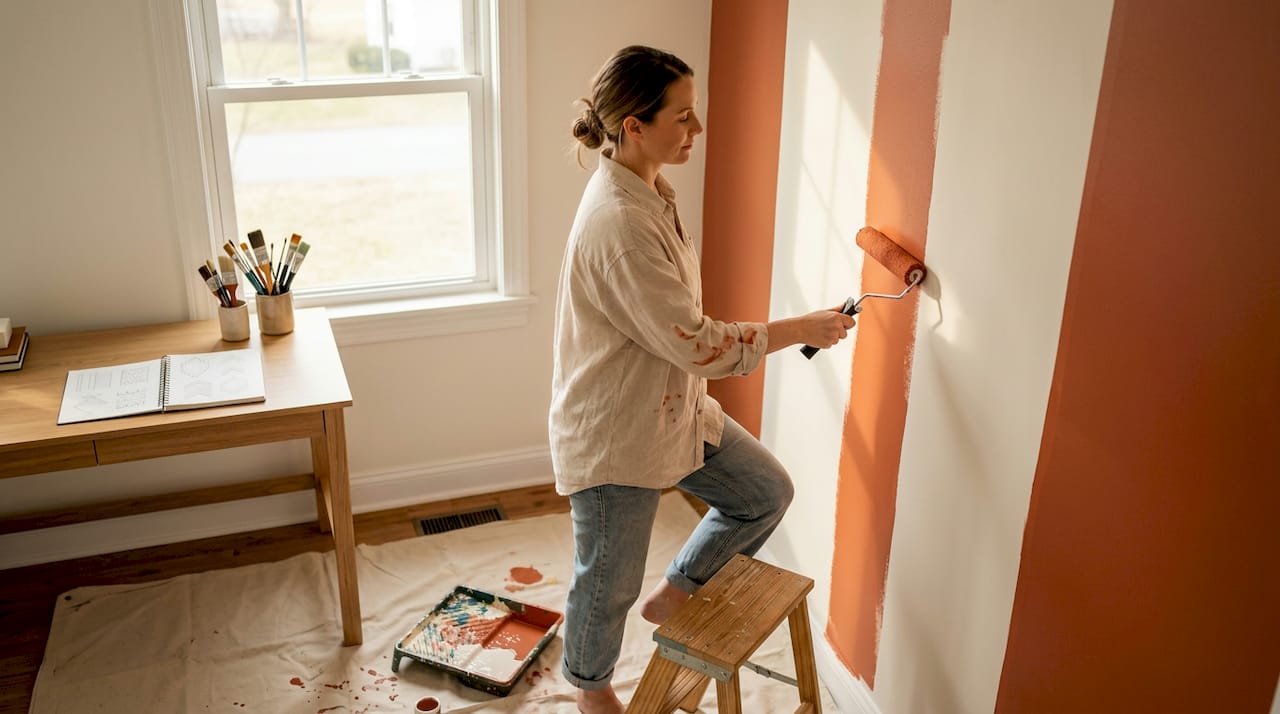
Vertical stripes act as a ceiling-lifting strategy, making low ceilings feel less oppressive by increasing perceived volume. Horizontal stripes, by contrast, are best used in narrow rooms where you want to add a sense of width. Knowing which tool to reach for depends on what correction a space needs.
Getting curtains right
Curtain installation is one of the most underrated vertical space tools available. The mistake most people make is hanging curtain rods at window frame height. The far more effective approach: mount rods 4 to 6 inches below crown molding, allowing the curtain fabric to cascade from near the ceiling to the floor. This visually extends the wall and makes the ceiling feel farther away.
For rooms with 10 to 12-foot ceilings, curtain lengths of 120 to 132 inches are recommended. For 12 to 15-foot ceilings, 144 to 160-inch lengths work best. Getting this specific detail right is the difference between curtains that look like an afterthought and ones that make the room feel intentionally designed.
Pro Tip: When hanging ceiling-height curtains, choose a fabric with a subtle vertical texture or pattern, like linen with a slight weave variation. The texture amplifies the vertical pull without adding visual noise.
Here are the core visual strategies to keep in your toolkit:
- Hang art in vertical groupings rather than wide horizontal spreads
- Choose tall, narrow furniture pieces over wide, low ones when height is needed
- Use floor-to-ceiling bookshelves to anchor and heighten a wall
- Install pendant lighting that draws the eye both up and down
- Add vertical molding or shiplap to bare walls for architectural height
One caution: balance is necessary. Overfilling vertical zones causes visual fatigue. Mixing closed storage with open, curated display sections keeps the aesthetic clear and the space feeling ordered.
Functional uses of vertical space at home
Good vertical space design is not just about how a room looks. It is about how it works. Used well, vertical space can dramatically increase your home’s storage capacity without sacrificing a single square foot of floor area.
- Establish a three-zone shelving system. Ceiling-height shelving works best when organized by access frequency. Lower zones (waist height and below) hold everyday items. Middle zones (eye level) display curated pieces or frequently used books. Upper zones store seasonal or rarely accessed items. This system reduces floor clutter and keeps rooms feeling organized.
- Treat stairs and landings as micro-spaces. Many homes waste the areas beside, below, and on stair landings. Mid-level landings can bring light deeper into a floor plan and create usable pause points. A landing wide enough for a small chair and a reading lamp becomes a functional nook without taking any primary room space.
- Integrate natural light into vertical planning. Skylights, clerestory windows, and tall narrow windows all pull natural light deeper into a space while reinforcing verticality. Light that enters from high on a wall makes ceilings feel further away and rooms feel more open.
- Use vertical storage in kitchens. Cabinet height that stops a foot below the ceiling is a missed opportunity. Extending upper cabinets to ceiling height adds meaningful storage and eliminates the dust-collecting shelf gap that looks unfinished in most kitchens.
- Avoid overloading tall storage towers. Overfilled storage towers undermine the visual benefit of going vertical. Use closed bins on upper shelves to mask clutter and reserve open sections for items you want to display. The goal is visual clarity, not just maximum capacity.
Pro Tip: If you design a gym accessories storage system at home, apply the same three-zone logic. Keep resistance bands and daily-use equipment at easy-reach height, and move seasonal or bulky gear to upper shelves.
Applying vertical design across different rooms
Every room in your home has its own set of vertical design opportunities, and the strategies shift depending on the ceiling height, the natural light, and how the room is used.
Living rooms benefit most from tall furniture anchors, like floor-to-ceiling bookshelves or a gallery wall arranged in a vertical column rather than a wide horizontal spread. A fireplace with a tall surround or a large-format vertical artwork above a sofa visually stretches the room upward.
Bedrooms respond well to vertical fabric treatments. A tall upholstered headboard reaching toward the ceiling, ceiling-height drapes on either side of the bed, and pendant bedside lighting all reinforce height without adding visual weight to the floor level. In a bedroom, the goal is calm and openness, and verticality supports both.
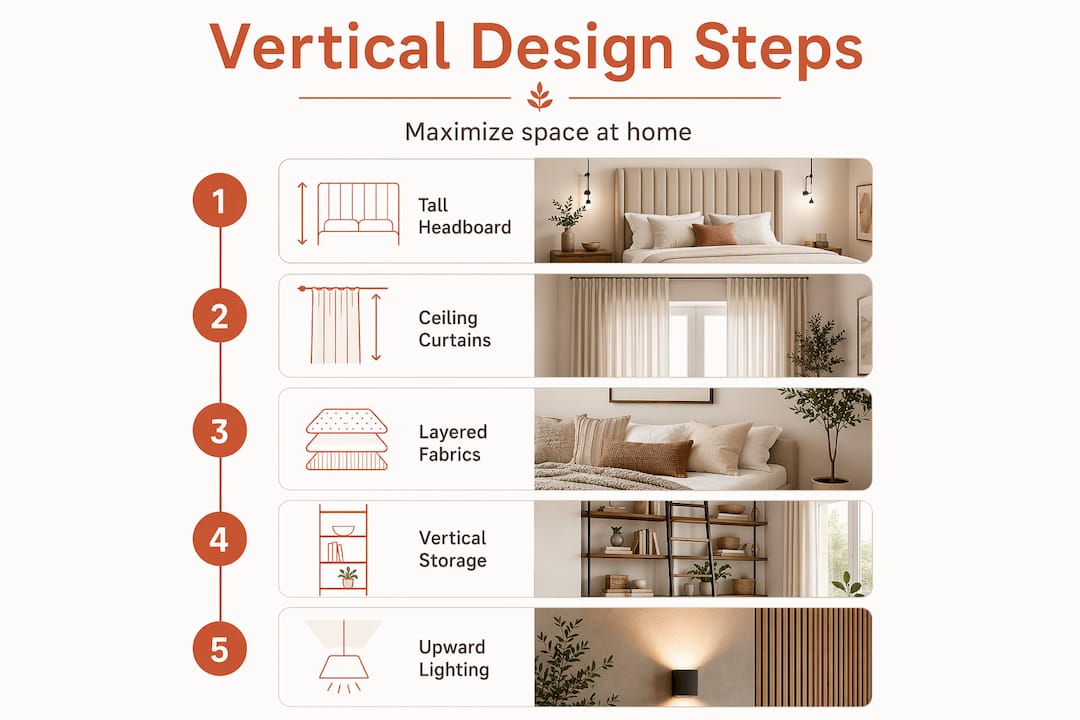
Kitchens gain the most from structural vertical changes like extended cabinetry and open shelving that reaches upward. Even in rentals, a tall freestanding pantry unit or a vertical pegboard for utensils adds both function and intentional design.
Bathrooms with low ceilings can use vertical tile arrangements, a tall mirror, or a narrow floor-to-ceiling storage cabinet to add height. A vertical stack of open shelves beside a vanity is practical and adds structure to an otherwise flat wall.
For renters or those working with older homes, apartment interior design principles apply directly. Removable wallpaper with vertical patterns, tall freestanding furniture, and tension-mounted ceiling-height curtain rods all deliver meaningful vertical impact without permanent changes.
Evaluate your vertical space with these questions:
- Do your curtains hang from the window frame or near the ceiling?
- Is there unused wall space above your furniture line?
- Does your storage reach toward the ceiling or stop at shoulder height?
- Are your vertical lines consistent throughout a room, or do they compete?
- Does each room feel taller or more open than its actual ceiling height?
My take on what vertical space actually teaches you
I’ve spent enough time thinking about home interiors to notice a pattern: most people treat vertical space like a bonus rather than a foundation. They get the furniture right, the rug right, the lighting right, and then they wonder why a room still feels off. What I’ve found again and again is that the vertical dimension is the missing piece.
What I’ve learned is that height perception is not just visual. It shifts how you think and feel in a space, which means vertical design is not decoration. It is environment shaping. A home office with a low, heavy ceiling promotes focused work, while an open living room with tall walls invites relaxation and expansive thinking. Once you understand that, you start seeing vertical choices as decisions about how you want to feel in your home, not just how it looks.
The lesson that surprised me most was about stairs and landings. Most people walk through them without thought. But a landing with good light and a single comfortable chair becomes a genuine part of your home’s livable space. Treating connective spaces as destinations is one of the highest-return vertical design choices you can make.
My honest advice: start with one room. Pick the wall with the most unused vertical territory, and decide deliberately what to do with it. That single decision builds the habit of seeing your whole home differently.
— Brian Dunn, Couch & Dumbbells
Bring your vertical vision to life with Couchanddumbells
Understanding vertical space principles is a meaningful first step. The next is choosing pieces that actually put those principles to work in your home.
At Couchanddumbells, you will find a curated selection of home and interior products specifically chosen to support intentional, design-forward living. From tall freestanding shelving units and ceiling-height storage solutions to vertical accent furniture and thoughtfully designed decor, the collection is built around the idea that beautiful spaces and well-organized lives go hand in hand. Browse the full home and interior shop to discover pieces that work with your ceiling height, your room layout, and your personal style. Whether you are working with a compact apartment or a multi-level home, the right vertical elements make every room feel more considered, more functional, and more you.
FAQ
What is the role of vertical space in interiors?
Vertical space in interior design shapes how large, open, and comfortable a room feels. It also influences cognitive and emotional states, with ceiling height affecting whether a space promotes focused or abstract thinking.
How can you maximize vertical space in a small room?
Use ceiling-height curtains, floor-to-ceiling shelving, and vertical stripe patterns on walls or upholstery. These elements draw the eye upward and increase perceived room volume without changing the actual footprint.
Where should curtain rods be placed to enhance vertical space?
Curtain rods should be mounted 4 to 6 inches below crown molding rather than at window frame height. This placement allows fabric to cascade from near the ceiling to the floor, visually extending the wall and making ceilings feel higher.
How does vertical storage improve home organization?
A three-zone vertical storage system places everyday items at lower and mid-shelf heights, while seasonal or rarely used items go on upper shelves near the ceiling. This approach maximizes storage capacity while keeping floors and primary spaces clear.
Can vertical design principles work in rental spaces?
Yes. Removable wallpaper with vertical patterns, tall freestanding furniture, and tension-mounted curtain rods all deliver strong vertical impact without permanent modifications to walls or ceilings.