

The most effective way to shift your home office into a calming evening space comes down to four things: clear physical zones, a brief transition ritual, intentional lighting changes, and sensory cues that tell your brain work is done. You don’t need a bigger apartment or a complete redesign. You need intention, a few smart choices, and consistency.
Here’s what that looks like in practice:
- Clear a physical boundary between your work surface and your relaxation spot, even if they share the same room
- Run a brief transition ritual of several minutes each evening to protect your nervous system from work stress bleeding into rest time
- Shift your lighting from cool, bright tones used for focus to warm amber tones that signal wind-down
- Add sensory cues like a diffuser, a soft throw, or a candle to anchor the shift in your body, not just your mind
- Keep one screen-free zone dedicated to rest, separate from where you work
Table of Contents
- How do you mentally separate work from your home office in the evening?
- What design strategies help your home office disappear at night?
- What evening habits actually support a restful wind-down?
- Couchanddumbells has what your evening routine is missing
- Key Takeaways
- FAQ
How do you mentally separate work from your home office in the evening?
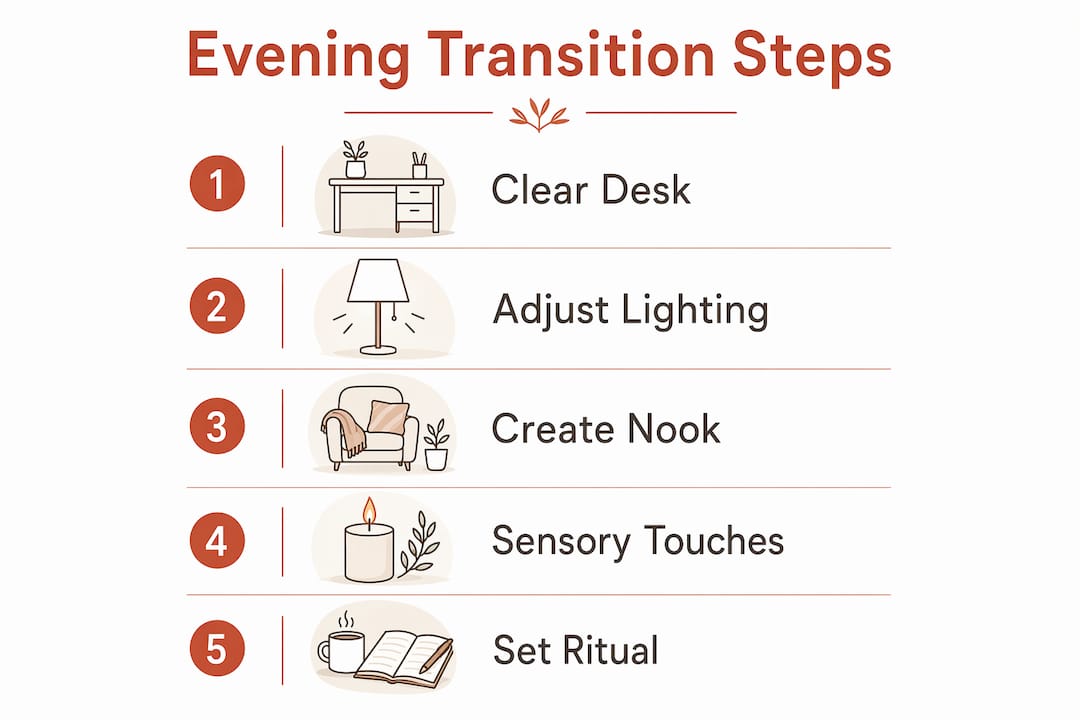
The brain doesn’t automatically clock out when you close your laptop. Visual noise from an active workspace, a visible monitor, stacked papers, open notebooks, keeps your nervous system in alert mode long after your last meeting ends. Clearing even a single desk corner acts as a psychological cue that the workday is complete.
Transition rituals of 10–20 minutes act as protective boundaries for the nervous system, creating a firm stop between productivity mode and genuine recovery. The ritual doesn’t need to be elaborate. What matters is that it’s consistent, physical, and tied to a specific space.
A practical starting point is the 3-box method for clearing your desk each evening:
- Keep Here: items you use daily for work, returned to their exact spot
- Relocate: anything that drifted in from another room
- Donate/Recycle: papers, packaging, or clutter with no purpose
Pair that with a 10-minute surface sweep, setting a timer and clearing only what you can see. The physical act of organizing your workspace is itself a key psychological trigger that marks the day’s end. After the sweep, move to a different area of your home. That physical journey reinforces the mental one.
Pro Tip: Treat your transition ritual as a scheduled, fixed-time event. Scheduling it prevents the blurring of work and personal time far more reliably than willpower alone.
What design strategies help your home office disappear at night?
Lifestyle identity conflict arises when your home office stays visible and active after hours. The good news is that flexible furniture and lighting shifts can make a workspace visually disappear by evening, without a renovation.
Lighting: the fastest mood shift you can make
Lighting is the most accessible and highest-return change in any home office evening setup. Color temperature layering moves from 5000–6500K cool daylight tones for focused work down to 2700–3000K warm amber tones for relaxation. Table or floor lamps placed at eye level create soft light pools that feel safe and restful rather than stimulating.
| Time of Day | Light Temperature | Source Type |
|---|---|---|
| Work hours | 5000–6500K (cool white) | Overhead or desk lamp |
| Wind-down | 2700–3000K (warm amber) | Floor lamp, table lamp |
| Pre-sleep | Candlelight or dim lamp | Single warm source |
Furniture and layout choices that support both modes
- Foldable or wall-mounted desks pack away at day’s end so the workspace literally disappears
- Modular shelving reconfigures from a work zone in the morning to a display or reading nook by evening
- Room dividers or bookshelves create distinct zones without construction, separating your desk area from a relaxation corner
- Soft textiles and rugs absorb sound and shift the sensory feel of a room from functional to calm
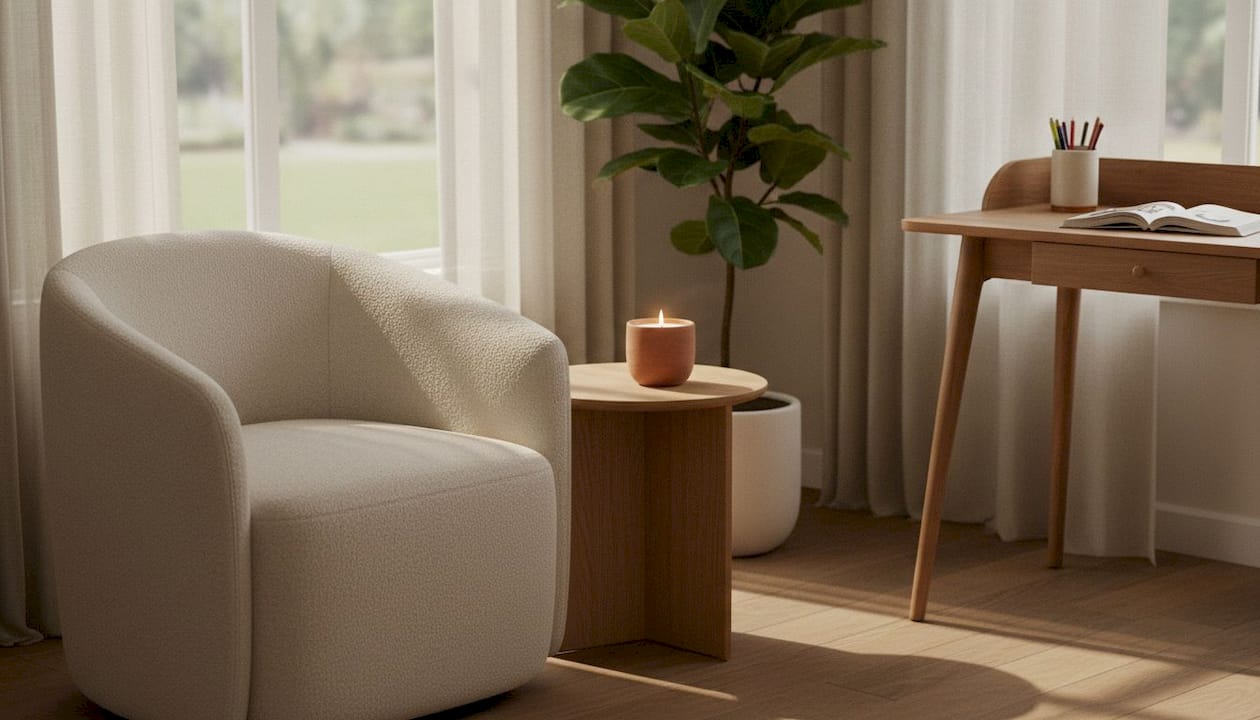
Sensory elements matter more than most people expect. A small plant at eye level, a diffuser with lavender or eucalyptus, and a soft throw draped over a reading chair all signal to your body that this corner belongs to rest. The home office aesthetics you choose during the day can double as calming decor in the evening when the right pieces are selected from the start.
Pro Tip: Position your relaxation spot as far from your desk as your space allows. Even in a studio apartment, the physical distance of the walk reinforces the psychological shift.
What evening habits actually support a restful wind-down?
The most effective evening routine combines one habit from each of four categories in the 90 minutes before bed: wind-down, screen-down, body, and mind. Research shows using four habit categories delivers the most complete transition to rest.
Wind-down and screen-down habits
- Dim your overhead lights and switch to warm lamps around 9 PM. The melatonin response is sensitive to indoor lighting levels, and this single change delivers more return than almost any other habit.
- Put your phone in another room at least 60 minutes before sleep. The content argument matters more than the blue light argument: anything you see in that final hour tends to resurface as wakefulness later.
- Change into comfortable clothes as part of your transition. The physical act of changing signals a shift in identity from “worker” to “person at rest.”
Body and mind habits
- Gentle yoga and stretching before bed lower cortisol levels and activate the parasympathetic nervous system, which promotes relaxation and readiness for sleep
- Writing down thoughts or tasks before turning off the lights clears mental clutter and reduces bedtime anxiety
- Ten minutes of reading a physical book, not a screen, settles the brain faster than most explicit relaxation techniques
- Meditation or mindfulness practice helps release the day’s tension and prepares the mind for genuine rest
If you wear a fitness smartwatch or similar device, your evening routine is a good time to check your recovery metrics and set a sleep target. Pairing that data with consistent habits gives you a feedback loop that actually motivates change. Comfortable, breathable fitness apparel, the kind you’d wear for a gentle stretch or a short walk, makes the body habit easier to start and easier to keep.
Couchanddumbells has what your evening routine is missing
Your space sets the tone for how well you actually unwind. Couchanddumbells curates home furnishings, fitness apparel, and smart wellness devices specifically for people who want their home to support both an active day and a genuinely restful evening.
The home and interior collection includes furniture and decor pieces designed for flexible, multifunctional spaces: the kind that look polished during work hours and feel calm by night. For your wind-down body habit, the fitness and gear collection covers breathable apparel and smart devices that track your wellness without adding friction to your evening. Whether you’re building your first transition ritual or refining one that already works, Couchanddumbells gives you the pieces to make it feel intentional and beautiful. Browse the collections and find the one upgrade that changes how your evenings feel.
Key Takeaways
Shifting your home office into a calming evening space requires consistent rituals, intentional lighting, and sensory design choices that signal rest to your brain and body.
| Point | Details |
|---|---|
| Transition ritual length | A 10–20 minute ritual each evening protects the nervous system and prevents work stress from carrying into rest time. |
| Lighting shift | Moving from cool white light to warm amber light signals wind-down and supports melatonin production. |
| Evening habit structure | Combine one wind-down, one screen-down, one body, and one mind habit in the 90 minutes before bed. |
| Physical decluttering | A surface sweep and the 3-box method clear visual noise that keeps the brain in alert mode after work. |
| Couchanddumbells | Curated home furnishings, breathable fitness apparel, and smart wellness devices support both the aesthetic and active sides of your evening transition. |
FAQ
How long should an evening transition ritual take?
A 10–20 minute ritual is enough to create a firm psychological boundary between work and rest. Consistency matters more than duration.
What lighting change makes the biggest difference for evening relaxation?
Switching from cool white light (5000–6500K) to warm amber tones (2700–3000K) around 9 PM is the single highest-return change you can make, because melatonin production is sensitive to indoor light levels.
How do you stop work stress from following you into the evening?
Clearing visible work materials and moving to a physically separate spot in your home after your ritual are the two most effective steps. Visual cues from an active workspace keep the brain in alert mode even when you’re not actively working.
What are the four categories of evening wind-down habits?
The four categories are wind-down (lighting, bath, change of clothes), screen-down (phone away), body (stretching, skincare), and mind (journaling, reading). Combining one habit from each produces a more complete shift into rest than any single habit alone.
Does fitness apparel matter for an evening routine?
Changing into comfortable, breathable clothing is a recognized wind-down cue that signals a shift in identity from work mode to rest mode. Apparel designed for gentle movement makes it easier to follow through on body habits like stretching or a short walk.