

Visual weight in furniture is defined as the perceived heaviness or lightness a piece projects in a room, independent of its actual physical mass. Your eye reads a dark, solid sofa as “heavy” and a slim, glass-topped table as “light,” even when their real weights are similar. This perception shapes how balanced, comfortable, and intentional a space feels. Understanding visual weight is the foundation of good furniture arrangement. Six core factors drive it: color, material, base design, silhouette, size, and isolation. Master these, and you can make any room feel exactly the way you want it to.
What is visual weight in furniture, and why does it matter?
Visual weight is a visual force of attraction on the eye. Designers manage this force to create rhythm and flow across a room. When visual weight is distributed well, a space feels calm and purposeful. When it is off, rooms feel either suffocating or unsettled, even if you cannot immediately name why.
The practical importance of visual weight shows up every time you walk into a room and feel something is “not quite right.” That feeling usually traces back to imbalance. One corner of the room pulls all the visual attention, while the rest feels empty. Or every piece competes for dominance, and the eye has nowhere to rest.
Rooms with deliberate visual weight feel emotionally rich and comfortable when balanced with lighting and texture. That emotional depth is not accidental. It is the result of intentional choices about which pieces carry weight and which ones let the eye breathe.
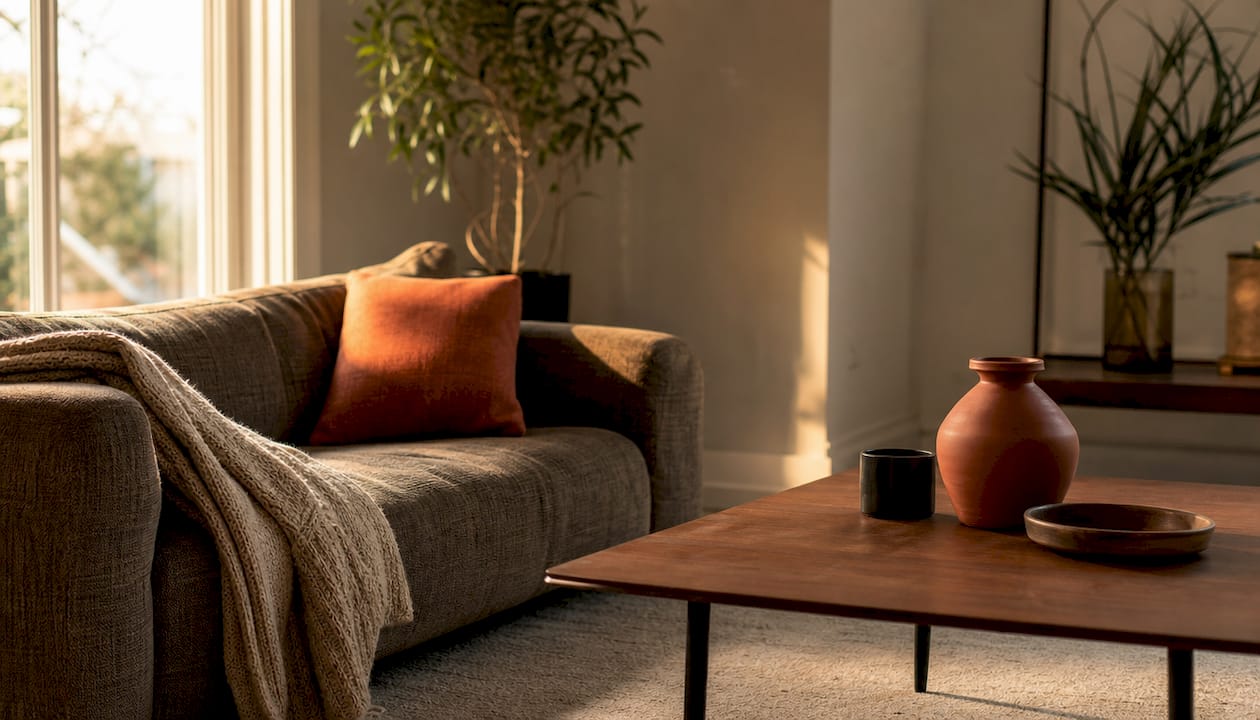
Understanding visual weight also saves you money. You can adjust the feel of a room by repositioning furniture, changing lighting, or swapping accessories, without buying anything new.
What factors determine the visual weight of furniture?
Six primary factors shape how heavy or light a piece of furniture appears: color, material, base design, silhouette, size, and isolation. Each one works independently, but they combine to create the total visual impression.
- Color: Dark, saturated hues read as heavy. A charcoal velvet sectional carries far more visual weight than the same sectional in cream linen. Warm tones like rust and forest green also feel denser than cool, pale shades.
- Material: Solid, opaque materials add heaviness. A chunky oak dining table feels grounded and substantial. Transparent or reflective materials, like glass, acrylic, or polished metal, feel lighter because the eye passes through or around them.
- Base design: Furniture with raised legs reads as lighter than pieces sitting directly on the floor. A sofa with exposed tapered legs appears to float slightly, which reduces its visual mass. A skirted sofa or a cabinet with a solid plinth base feels anchored and heavy.
- Silhouette and bulk: Chunky arms, thick cushions, and wide frames carry more visual weight than slim, delicate outlines. A mid-century chair with thin legs and a narrow back reads as light even if it is physically large.
- Size and volume: Larger pieces demand more visual attention. A king-sized upholstered bed will always anchor a bedroom, regardless of its color or material.
- Isolation: Furniture surrounded by empty space appears heavier than pieces clustered together. A single armchair in the center of a room draws the eye completely. The same chair tucked into a reading nook with a side table and lamp feels integrated and lighter.
Pro Tip: When you want to reduce the visual weight of a large piece without replacing it, try adding a leggy side table or a glass coffee table nearby. The contrast makes the heavier piece feel more intentional and less dominant.
How do you balance visual weight using furniture types and ratios?
Interior designers classify furniture into two broad categories: chunky and leggy. Chunky pieces sit low, have solid bases, and carry high visual weight. Think tufted sofas, upholstered ottomans, and solid wood credenzas. Leggy pieces have thin frames, raised bases, and carry low visual weight. Think wire dining chairs, acrylic stools, and slim console tables.
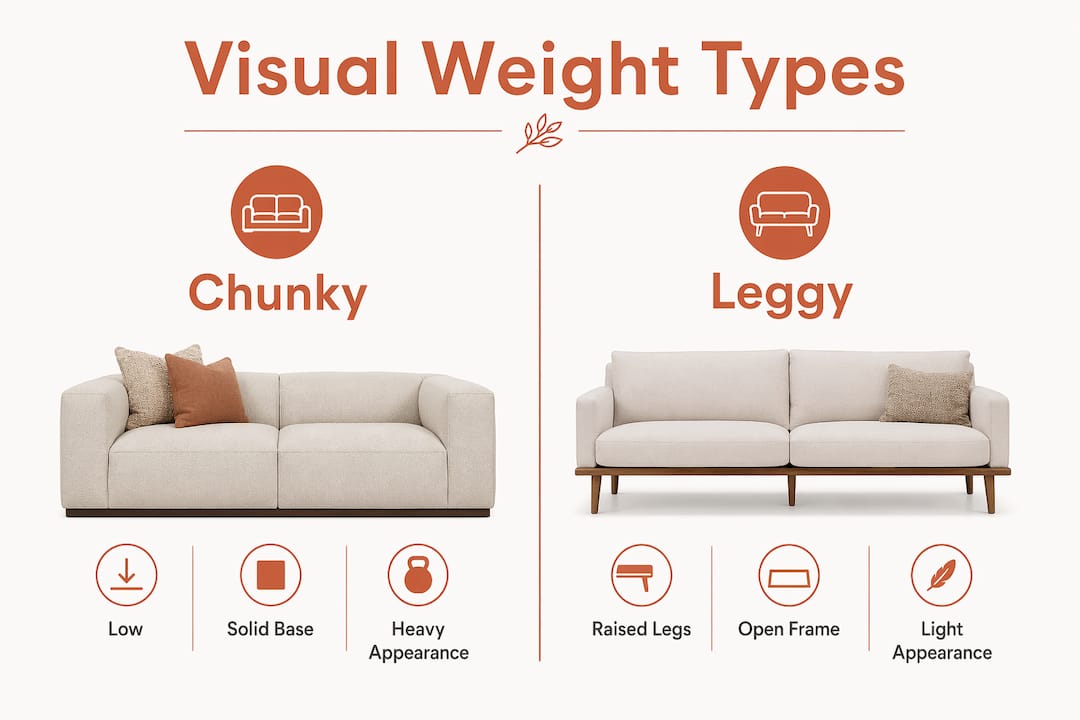
The key to a balanced room is mixing both types deliberately. A 60/40 or 50/50 ratio of chunky to leggy furniture prevents a room from feeling overly dense or too airy. This ratio is not a rigid rule, but it gives you a reliable starting point.
Here is how to apply this in practice:
- Identify your anchor piece. Every room needs one sizable, high-visual-weight piece to ground the space. In a living room, this is usually the sofa. In a bedroom, it is the bed frame.
- Balance around the anchor. Pair your anchor with at least one or two leggy pieces. If your sofa is a chunky, low-profile sectional, choose a glass or wire-frame coffee table to offset it.
- Place chunky pieces near walls and corners. Solid, heavy furniture feels more stable when it has a wall behind it. Floating a heavy piece in the middle of a room makes it feel awkward and dominant.
- Move leggy pieces toward the center. Slim, raised-leg furniture works well in open areas because it does not block sightlines. A pair of leggy accent chairs in the center of a seating area keeps the space feeling open.
- Check the result from the doorway. Stand at the entrance of the room and scan it. If your eye gets stuck in one spot, that area has too much visual weight. If the room feels empty, it needs a heavier anchor.
Pro Tip: Mixing chunky and leggy silhouettes helps the eye travel across a room naturally. If every piece is the same visual weight, the room reads as flat and monotonous, even if the individual pieces are beautiful.
What role does room size and lighting play in managing visual weight?
Room size directly affects how much visual weight a space can hold. Small rooms, generally under 200 square feet, benefit from lighter visual weight to avoid feeling compressed. Crowding multiple heavy, dark pieces into a small room can reduce the perceived space by 20–30%. That is a significant emotional impact from purely visual choices.
For compact spaces, these approaches keep the room feeling open:
- Choose furniture with raised legs and open bases to let light pass underneath.
- Use light, reflective materials like glass, polished metal, or light-toned wood.
- Limit the number of high-visual-weight pieces to one anchor per zone.
- Keep walls and floors as light as possible to push the visual weight into the furniture rather than the architecture.
If you are working with a small training or living space, these same principles apply to every piece you bring in, including storage and equipment.
Lighting changes visual weight perception throughout the day. A dark leather armchair may anchor a room beautifully in afternoon sunlight. After sunset, without proper lighting, that same chair can become a visual “black hole” that absorbs light and makes the room feel smaller and heavier. Designers recommend planning furniture visual weight with day-to-night transitions in mind. Place a floor lamp or table lamp near your heaviest pieces to keep them from becoming oppressive after dark.
Large rooms carry the opposite challenge. Without enough visual weight, a big space feels cold and unfinished. In a large living room, you can afford a sectional, a solid coffee table, and a substantial media console without the room feeling crowded. The key is distributing that weight evenly so no single wall or corner dominates.
What practical tips help homeowners apply visual weight principles?
Applying visual weight principles does not require a full redesign. Small, deliberate adjustments create real change.
- Give furniture breathing room. Spacing pieces away from each other resets the eye and reduces perceived heaviness in dense rooms. Even a few extra inches between a sofa and a side table can lighten the composition.
- Use the grounding effect intentionally. Swapping a skirted sofa for one with exposed legs instantly increases the perceived lightness of a room. You do not need a new sofa. Raising the existing one on furniture legs or choosing a different base style achieves the same result.
- Balance heavy textures with airy accessories. A chunky wool throw and a solid wood coffee table together create a lot of visual weight. Add a clear glass vase, a light-colored tray, or a reflective mirror nearby to offset the density.
- Consider scale and proportion, not just size. A tall, narrow bookcase carries less visual weight than a wide, low credenza of the same volume. Vertical pieces draw the eye up and feel lighter. Horizontal pieces spread weight across the floor plane and feel heavier.
- Shift furniture before buying new pieces. Moving a heavy armchair from the center of a room to a corner can resolve a balance issue without spending anything. Test placement changes first.
- Include lighting and textiles in your visual weight calculation. A dark area rug adds significant visual weight to a floor. A sheer curtain adds almost none. Both are part of the room’s total composition.
If you are blending fitness equipment with home decor, the same visual weight logic applies. Heavy equipment benefits from placement near walls, paired with lighter, open-framed storage to keep the space feeling balanced.
Key Takeaways
Visual weight in furniture is the single most underused tool homeowners have for creating rooms that feel intentional, comfortable, and well-composed.
| Point | Details |
|---|---|
| Visual weight is perceived, not physical | Color, material, base design, silhouette, size, and isolation all shape how heavy a piece appears. |
| The 60/40 ratio creates balance | Mixing chunky and leggy furniture at roughly 60/40 prevents rooms from feeling too dense or too empty. |
| Small rooms need lighter visual weight | Keeping heavy, dark pieces to a minimum in compact spaces preserves the sense of openness. |
| Lighting shifts visual weight after dark | Place lamps near heavy pieces so they anchor rather than overwhelm the room at night. |
| Breathing room reduces perceived heaviness | Spacing furniture apart resets the eye and lightens a dense composition without replacing anything. |
Why I think most homeowners get visual weight completely backward
Most people approach furniture shopping by focusing on individual pieces. They fall in love with a sofa, buy it, bring it home, and then wonder why the room feels off. The problem is almost never the sofa. The problem is that no one thought about what the sofa would be doing to the rest of the room’s visual composition.
The parts of a room that attract your gaze first are always the highest visual weight. That is not a design opinion. It is how human perception works. When you walk into a room and your eye immediately locks onto one dark, heavy corner, that corner is dominating the space. Everything else becomes secondary, and the room loses its sense of flow.
What I have found works better is starting with the room’s visual weight map before buying anything. Walk into the empty space and notice where your eye naturally goes. That tells you where the anchor should live. Then you build outward from there, alternating between heavier and lighter pieces to guide the eye around the room rather than trapping it in one spot.
The other mistake I see constantly is treating visual weight as a fixed property of a piece. It is not. A dark sofa in a bright, well-lit room with leggy chairs and a glass table reads very differently from the same sofa in a dim room surrounded by heavy wood furniture. Context changes everything. That is actually good news. It means you have more control than you think, and you do not need to replace your furniture to fix the balance.
— Brian Dunn, Couch & Dumbbells
Furniture that works with your visual weight goals
Knowing the principles is one thing. Finding pieces that actually fit your composition is another.
Couchanddumbells curates furniture designed with both visual balance and lifestyle in mind. Whether you need a solid anchor piece to ground your living room or a leggy, open-framed accent to lighten a dense corner, the home and interior collection covers both ends of the visual weight spectrum. Each piece is selected for quality, proportion, and the way it works within a real home. If you are ready to put these principles into practice, browsing by silhouette and base style is the most direct way to find what your room actually needs.
FAQ
What is visual weight in furniture?
Visual weight is the perceived heaviness or lightness a furniture piece projects in a room, shaped by its color, material, size, silhouette, base design, and surrounding space. It has nothing to do with physical mass.
What affects visual weight the most?
Color and base design have the strongest immediate impact. Dark, saturated colors read as heavy, while raised legs and transparent materials make pieces appear lighter and less dominant.
How do I balance visual weight in a small room?
Choose furniture with raised legs, light colors, and reflective or transparent materials. Limit high-visual-weight pieces to one anchor per zone and keep spacing generous between pieces.
What is the 60/40 rule for furniture?
The 60/40 ratio refers to balancing chunky, solid-based furniture with leggy, open-framed pieces at roughly 60% to 40%. This mix prevents a room from feeling either too heavy or too sparse.
Does lighting change visual weight?
Yes. Dark furniture can become visually oppressive in low light after sunset. Adding a lamp near heavy pieces keeps them anchored without overwhelming the room.