

A curated home is defined as a living space where every object is carefully chosen and thoughtfully organized to reflect personal meaning, functional purpose, and a cohesive aesthetic. The term “curated” comes directly from museum and gallery practice, where curators select and arrange works to tell a specific story. Interior designers now use the same standard vocabulary: intentional design or curated interiors. Understanding what does curated home mean separates purposeful styling from random decoration, and the difference shows up in how a space feels the moment you walk in.
What does a curated home mean, exactly?
A curated home is not about owning expensive things. It is about selecting objects that serve your life and reflect who you are, then arranging them so the space feels both personal and composed. The Merriam-Webster definition of curated centers on careful choice and thoughtful presentation, and that precision applies directly to interior design. Every chair, lamp, shelf, and piece of art earns its place.
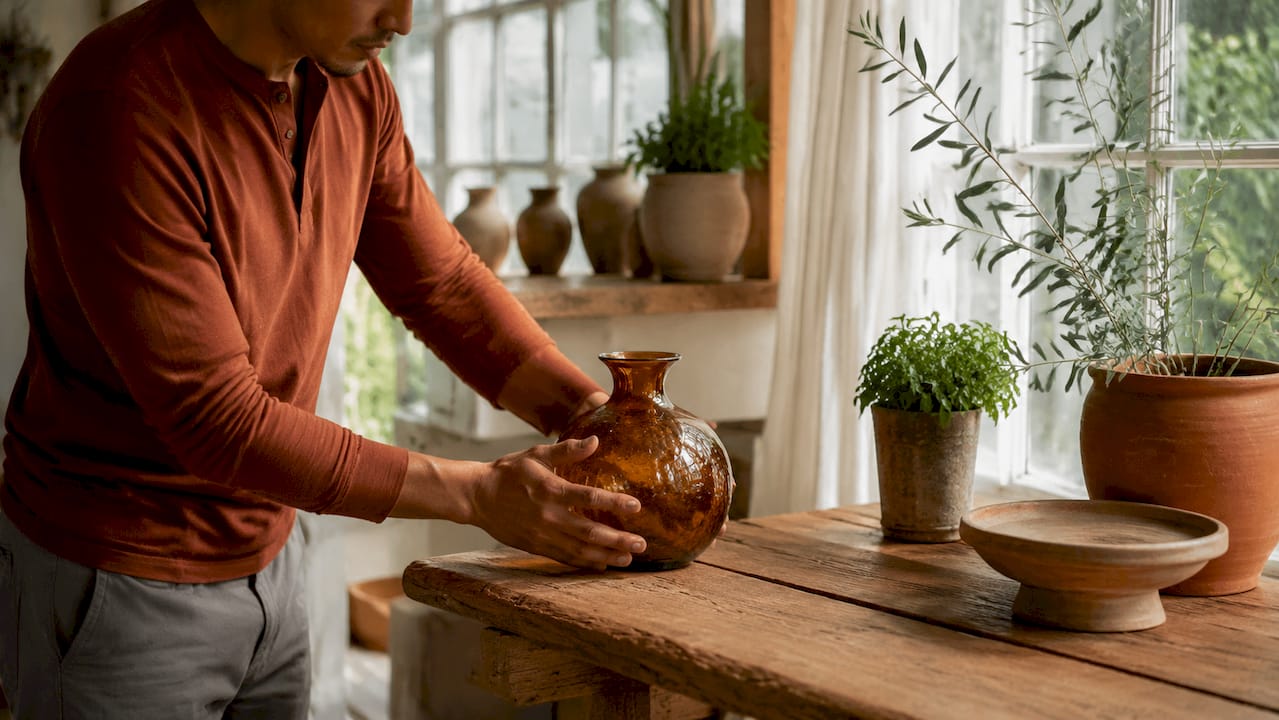
The concept goes well beyond trend-driven decoration. A curated space holds a narrative. A vintage ceramic bowl from a trip to New Mexico, a mid-century reading chair inherited from a grandparent, and a modern floor lamp chosen for its warm light can all coexist because they share a common thread: they mean something to you, and they work together visually. That shared thread is what separates curated interiors from a room that simply looks full.
Intentionality is the foundation. You are not filling space. You are editing it. The result is a home that feels calm, personal, and alive rather than staged or cluttered.
What are the key elements that define a curated home?
Six core elements consistently appear in well-curated spaces, and understanding each one gives you a practical framework for your own home.
- Intentional object selection. Every item has either a functional role, a personal story, or both. Objects without purpose get edited out. This is the most direct application of the curated interiors principle of depth over clutter.
- Balanced layering of textures, colors, and materials. A curated room invites discovery through the interplay of a linen sofa, a wool throw, a ceramic vase, and a raw wood side table. Each material adds a layer without competing for attention.
- Cohesive aesthetic tied to your personality. The palette, the scale of furniture, and the style of objects should feel like they belong to the same visual language. That language is yours, not a Pinterest board’s.
- Strategic use of negative space. Empty wall sections, clear countertops, and breathing room between objects are not signs of an unfinished room. They are deliberate choices that let key pieces stand out.
- Lighting as a compositional tool. Designers in 2026 consistently point to layered lighting as one of the most overlooked moves for a calmer home. A single overhead fixture flattens a room. Combining ambient, task, and accent lighting creates depth and draws the eye to the pieces you want noticed.
- Function before aesthetics. The most beautiful curated spaces are also livable ones. A coffee table that holds books, a lamp that actually lights your reading chair, and storage that keeps surfaces clear all serve the aesthetic by keeping the space honest.
Pro Tip: Before buying anything new, walk through your home and ask whether each item you own serves your current lifestyle or your past one. Editing what you already have is the first and most powerful curation move.
How does a curated home differ from styled or decorated interiors?
The distinction matters because it changes how you make decisions. Styled interiors are often assembled for visual impact, photography, or staging. They look polished but can feel impersonal because the objects were chosen for appearance rather than meaning. Decorated spaces, by contrast, often accumulate over time without a guiding narrative, resulting in rooms that feel busy or disconnected.
A curated home sits in a specific position between those two approaches. It has the visual coherence of a styled space and the personal warmth of a lived-in one.
| Approach | Primary purpose | Object selection | Feel |
|---|---|---|---|
| Curated | Personal meaning and cohesion | Intentional, story-driven | Warm, composed, authentic |
| Styled | Visual impact or staging | Trend-driven or photogenic | Polished but impersonal |
| Decorated | Filling and personalizing space | Accumulated over time | Comfortable but potentially cluttered |
| Collected | Reflecting personal history | Gradual, evolving, varied | Lived-in, layered, sometimes inconsistent |
The collected interior deserves its own note. Collected interiors evolve with life, introducing variation and subtle inconsistencies that curated spaces sometimes lack. A collected home feels like it grew with its owner. A curated home feels like it was shaped by its owner. The best spaces often blend both qualities. You can apply curation principles to a collection of objects you have gathered over years, and the result is a home that feels both intentional and deeply personal.
The key distinction is narrative control. In a curated space, you decide what story the room tells. In a styled or randomly decorated space, the room tells no story at all, or someone else’s.
Why intentionality and authenticity matter in curated home design
Curated home design works best when it is grounded in self-awareness rather than external approval. Designer Olga Naiman makes this point directly: homes should be congruent with personal desires and values, not designed to perform for guests or social media. That distinction between authentic curation and performative display is where many people go wrong.
“Interiors are spaces for identity construction; curated designs work best when grounded in self-awareness and support authentic living, not just appearance.” — AD Middle East
A home designed for how it looks in photos will feel hollow to live in. A home designed for how you actually live, where you read, exercise, cook, and rest, will feel right every day. The authenticity principle also means accepting signs of use. Wear on a leather chair, a stack of books on a side table, a child’s drawing framed alongside gallery prints: these are not flaws. They are evidence that the space is genuinely lived in.
The psychological impact of a thoughtfully curated space is real. Calm, order, and personal resonance in a home environment support mental clarity and reduce the low-level stress that cluttered or impersonal spaces create. When your home reflects your values, it becomes a place you want to return to rather than escape from.
Pro Tip: Avoid what designers call “preciousness.” If you are afraid to use something or sit on it, it does not belong in your home. Curated spaces are meant to be lived in, not preserved.
How to create a curated home: practical steps for personal styling
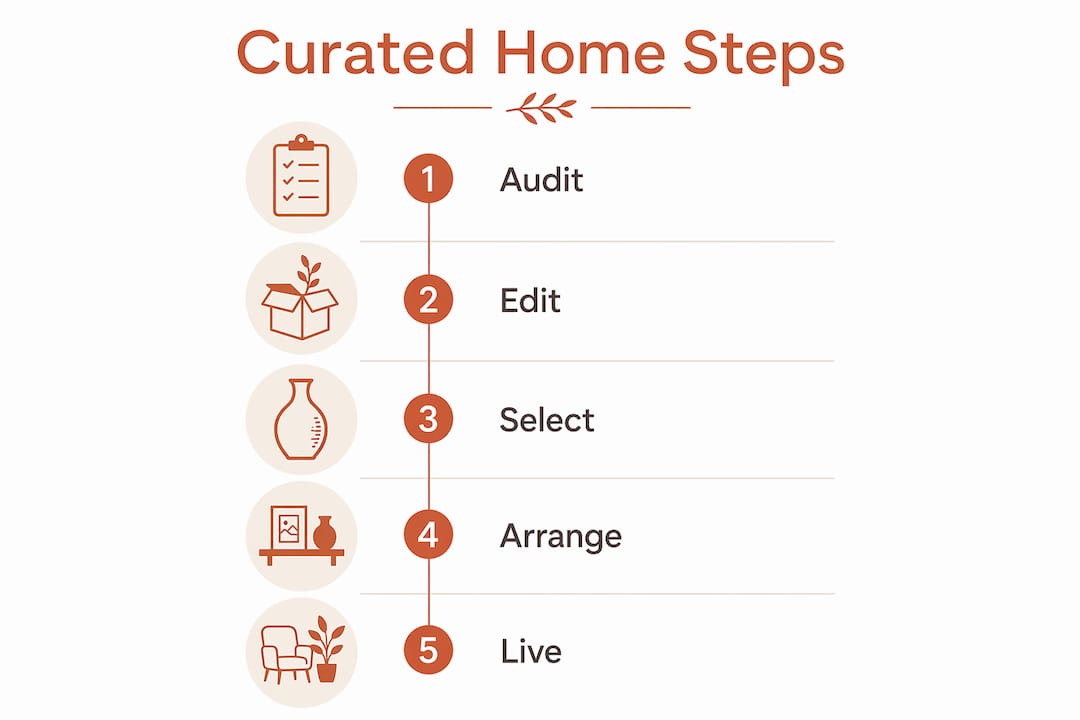
Creating a curated home is a process, not a single purchase. These steps give you a clear path from where you are now to a space that feels genuinely yours.
- Audit what you already own. Walk through every room and separate objects into three groups: things you love and use, things you keep out of habit, and things that no longer fit your life. The intentional living approach starts with letting go of duplicates and items that do not serve your current lifestyle.
- Define your visual language. Choose a palette of two to four colors that appear across your textiles, walls, and objects. Decide on one or two dominant materials, such as natural wood and matte ceramic, and let those anchor the room.
- Choose quality over quantity. One well-made linen cushion reads better than four synthetic ones in competing patterns. Professional curated dealer processes filter out lower-quality options to maintain design coherence across categories like flooring, hardware, and lighting. You can apply the same filter yourself.
- Incorporate personal stories. Heirlooms, travel souvenirs, handmade objects, and photographs all carry meaning. Place them deliberately rather than grouping everything on one shelf. A single meaningful object on a cleared surface has far more presence than a crowded collection.
- Use lighting and negative space with purpose. Add a floor lamp to a reading corner, use a picture light above a key piece of art, and leave at least one surface in each room completely clear. These moves cost very little and change how the entire room reads.
- Balance aesthetic goals with functional needs. A home that looks curated but does not work for daily life will feel like a burden. If you work from home, your home design in 2026 needs to account for that reality. Storage, desk placement, and lighting all serve both function and aesthetic when chosen carefully.
- Avoid the two most common pitfalls. The first is buying too much at once, which creates a room that looks assembled rather than evolved. The second is mismatching themes, such as combining rustic farmhouse objects with sleek minimalist furniture without a clear connecting thread.
Pro Tip: Shop your own home before buying anything new. Rearranging objects you already own, moving a lamp from one room to another or grouping smaller items on a tray, often produces a more curated result than any new purchase.
Key takeaways
A curated home is defined by intentional selection, personal meaning, and cohesive arrangement rather than trend-following or accumulation.
| Point | Details |
|---|---|
| Definition of curated | Merriam-Webster defines curated as carefully chosen and thoughtfully organized, which applies directly to home design. |
| Core elements | Intentional object selection, layered textures, cohesive palette, negative space, and purposeful lighting define a curated space. |
| Curated vs. styled | Styled spaces prioritize appearance; curated spaces prioritize personal meaning and cohesion, making them more livable. |
| Authenticity over perfection | Signs of use and imperfection strengthen a curated home by making it feel genuinely lived in rather than staged. |
| Practical starting point | Auditing and editing what you already own is the most effective first step toward a curated home. |
The word “curated” is overused, and that is actually useful information
I have watched the word “curated” get applied to everything from grocery boxes to hotel lobbies, and I understand why it frustrates people who care about interior design. But the overuse points to something real: people genuinely want spaces that feel chosen rather than random. That desire is worth taking seriously.
What I have noticed, both in reading widely on this topic and in thinking about how people actually live, is that the biggest mistake is treating curation as a destination. You do not arrive at a curated home. You practice it. You bring something in, live with it, and decide whether it earns its place. You move things around. You let some rooms evolve faster than others.
The homes that feel most genuinely curated are rarely the ones that look like a design magazine spread. They are the ones where you can see the owner’s personality in every corner, where the indoor and outdoor spaces feel connected by the same sensibility, and where nothing feels like it was placed there to impress you. That is the standard worth aiming for. Not perfection. Presence.
— Brian Dunn, Couch & Dumbbells
Bring your curated vision to life with Couchanddumbells
Couchanddumbells carries a selection of home and interior pieces chosen for quality, design coherence, and everyday function. Whether you are starting your curation process from scratch or refining a space that already has good bones, the right foundational pieces make the editing process easier. Browse the home and interior collection for furniture, decor, and storage solutions that work together rather than compete. If you are extending your curated aesthetic outdoors, the outdoor furniture set brings the same intentional design sensibility to your exterior spaces. Every piece is selected to support a home that looks good and feels even better to live in.
FAQ
What does curated home mean in interior design?
A curated home is a space where every object is intentionally selected and arranged to reflect personal meaning, functional purpose, and a cohesive aesthetic. The term draws from museum curation, where objects are chosen to tell a specific story rather than simply fill space.
How is a curated home different from a decorated one?
A decorated home accumulates objects over time without a guiding narrative, while a curated home applies deliberate editing and a consistent visual language. The result is a space that feels composed and personal rather than busy or random.
Do you need a big budget to create a curated home?
No. Curation is about selection and arrangement, not spending. Auditing what you already own, editing out items that no longer fit, and rearranging objects with intention produces a more curated result than buying new furniture.
What is the role of negative space in a curated home?
Negative space, meaning cleared surfaces and breathing room between objects, allows key pieces to stand out and gives the eye a place to rest. It is a deliberate design choice, not a sign that a room is unfinished.
Can a curated home still feel lived in and comfortable?
Yes. The authenticity principle in curated design holds that signs of use, wear, and personal history strengthen a space rather than diminish it. A curated home is meant to be lived in fully, not preserved like a showroom.