

Artisanal home décor is defined as decorative home items crafted by hand using traditional techniques and skilled craftsmanship, producing pieces with authentic texture, visible human touch, and personal stories that mass-produced goods cannot replicate. The category spans ceramics, textiles, and woodcarving to metalwork, macramé, and hand-blown glass. Each piece carries the maker’s fingerprints, literally and figuratively, making it a living record of human skill. If you want your home to feel genuinely personal rather than catalog-perfect, understanding what defines artisanal décor is the clearest place to start.
What is artisanal home décor, and why does it matter?
Artisanal home décor means decorative home items made primarily by skilled makers using hands-on, traditional techniques rather than mass production. The key differentiators are the maker’s skill, visible human touch, and the use of natural or traditional materials across object types like ceramics, woven textiles, and carved wood. This is not simply about being handmade. It is about the depth of craft knowledge behind the object and the cultural or personal story embedded in its making.
The significance is practical as well as emotional. A hand-thrown ceramic bowl from a studio potter in Oaxaca, Mexico, or a block-printed linen cushion from Jaipur, India, brings a specific cultural narrative into your living room. That narrative is something a factory in any country cannot manufacture. When you place an artisanal piece in your home, you are choosing intention over convenience, and that choice shapes how the entire space feels to everyone who enters it.
How does artisanal décor differ from handmade or mass-produced pieces?
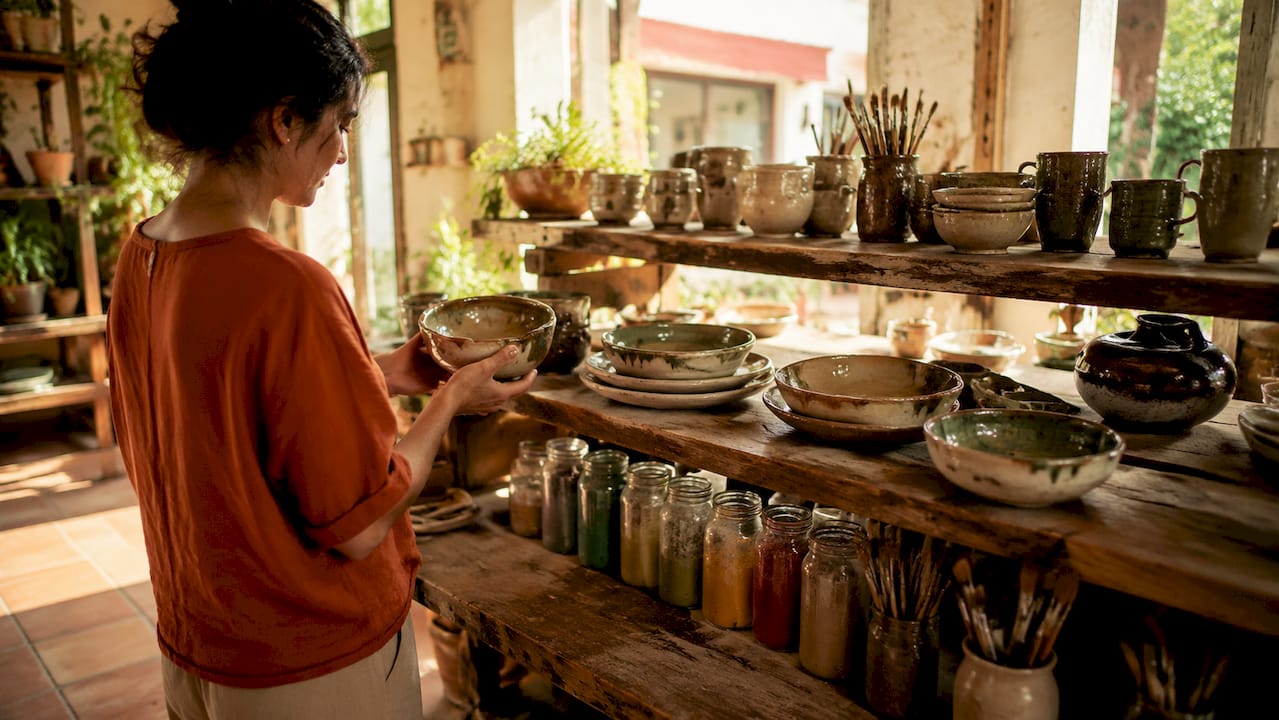
The distinction between artisanal and handmade is one most shoppers overlook, and it costs them. Artisan décor sets a higher standard than handmade, requiring documented craft skill, culturally rooted techniques, and often a traceable maker story. A child’s painted clay pot is handmade. A ceramicist who trained for years in the Japanese raku tradition and fires each piece individually is an artisan. Both are made by hand, but only one carries the depth of knowledge that defines true artisanship.
Mass-produced décor sits at the opposite end entirely. Factory items are designed for consistency and volume. Every unit is identical, which is efficient but strips away the sensory richness that makes a space feel alive. Handmade objects carry visible process evidence, including small irregularities that provide a different sensory and emotional experience than machine-perfect uniformity. Those irregularities are not flaws. They are proof of a human being at work.
Watch out for marketing language that blurs these lines. Terms like “artisan-inspired” or “handcrafted style” are not the same as genuine artisanship. A product labeled “artisan-inspired” may have been designed to look handmade while being produced entirely by machine. Vague “handcrafted” marketing often lacks any detail about process, materials, or maker. If a product description cannot tell you who made it or how, treat that as a signal.
| Category | Skill level | Production method | Maker story |
|---|---|---|---|
| Artisanal décor | High, culturally rooted craft | Fully hands-on, traditional tools | Traceable, documented |
| Handmade décor | Variable, often self-taught | Hand-produced, may use machines | Sometimes present |
| Mass-produced décor | Machine-operated | Factory automated | None |
| Artisan-inspired décor | Design mimicry | Machine-made to look handmade | Absent or fabricated |
Pro Tip: When shopping online, search for product descriptions that name the specific technique used, such as “wheel-thrown,” “hand-loomed,” or “cold-forged.” If a listing only says “handcrafted” without any process detail, ask the seller directly before purchasing.
Which materials and techniques define handcrafted home décor?
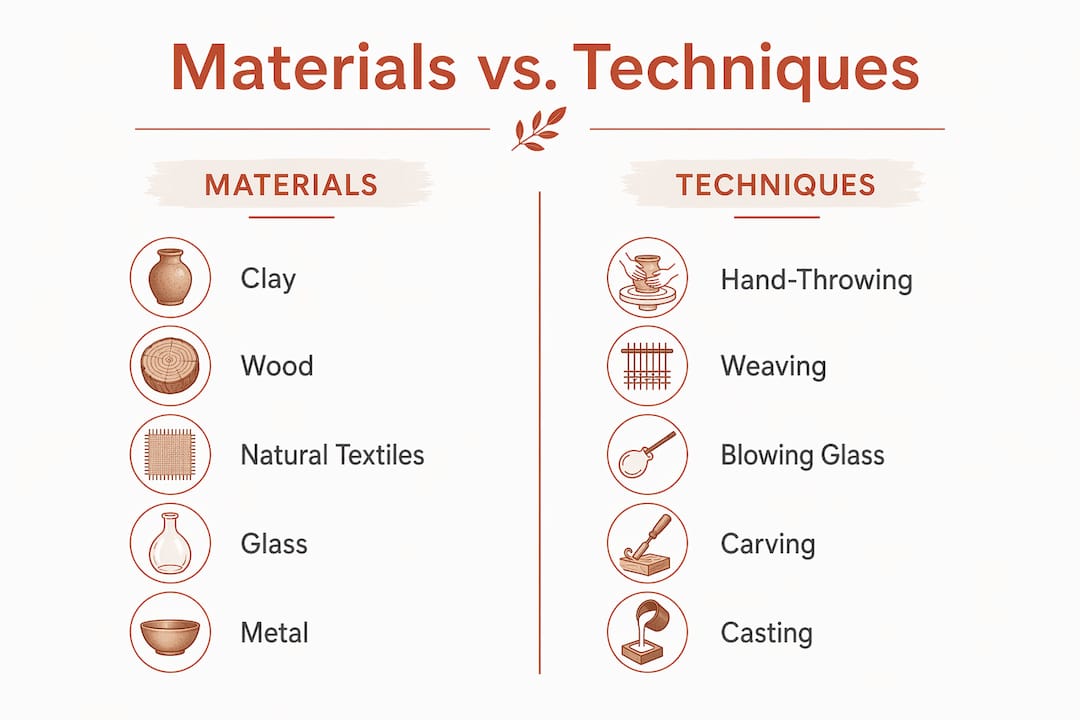
Artisanal décor relies on natural materials such as wood, clay, textiles, and metal, selected for their tactile and narrative qualities rather than their cost efficiency. These materials age gracefully, develop patina over time, and respond to light and touch in ways synthetic materials do not. That dynamic quality is a core part of what makes artisanal pieces feel alive in a room.
The most common crafting techniques you will encounter include:
- Hand-thrown ceramics and pottery: Shaped on a wheel or by hand, fired in a kiln, and often glazed with mineral-based finishes that produce unique color variations in every piece.
- Hand-woven textiles: Rugs, wall hangings, and baskets produced on traditional looms or by hand, with patterns that reflect regional weaving traditions from Morocco, Guatemala, or Scandinavia.
- Hand-carved wood: Furniture accents, bowls, and decorative panels shaped with chisels and gouges, showing tool marks that give each piece its character.
- Hand-blown glass: Vases and vessels shaped by a glassblower’s breath and skill, producing organic forms impossible to replicate by machine.
- Hand-forged metalwork: Candleholders, hooks, and frames shaped by a blacksmith using heat and hammer, with surface textures that reflect the forging process.
- Embroidery, block printing, and macramé: Textile arts that apply pattern and texture through repetitive hand techniques, each unit slightly different from the last.
Sustainability is a natural byproduct of these practices. Natural materials sourced responsibly and crafted without industrial machinery carry a lower environmental footprint than factory-produced synthetic décor. For anyone building an eco-friendly home, artisanal pieces align with that goal without requiring any compromise on beauty or quality.
How does artisanal décor enhance modern interior design?
Modern interiors often favor clean lines, neutral palettes, and minimal clutter. That aesthetic is calming, but it can also feel cold or impersonal when taken too far. Artisan pieces soften sleek, minimal interiors with organic textures and irregularities, creating a lived-in, story-rich ambiance that anchors rooms emotionally. A single hand-thrown vase on a concrete shelf does more for a room’s warmth than a dozen matching factory accessories.
Here is how artisanal décor works within a modern space, step by step:
- It introduces organic texture. Natural materials like raw linen, unglazed clay, and rough-hewn wood create tactile contrast against smooth surfaces like polished concrete, glass, or lacquered furniture.
- It creates focal points. Because each artisanal piece is visually distinct, placing one in a key spot, such as a mantelpiece or dining table centerpiece, draws the eye and anchors the room’s identity.
- It invites touch and engagement. Visible handwork invites touch and creates a connection with the maker. Guests reach for a hand-thrown bowl or run their fingers along a woven wall hanging in a way they never would with a mass-produced item.
- It adds narrative depth. Knowing that a piece was made by a specific artisan using a centuries-old technique gives it conversational weight. Your home becomes a collection of stories, not just objects.
- It performs better with fewer pieces. Fewer, meaningful artisan pieces create stronger impressions than many uniform décor objects. Restraint is a feature, not a limitation.
Pro Tip: If your home has a predominantly neutral palette of whites, grays, and natural wood tones, introduce artisanal pieces in earthy colors like terracotta, ochre, or deep indigo. These tones are common in traditional craft traditions and feel immediately at home in modern interiors.
How to incorporate artisanal pieces into your living space
Selecting and placing artisanal décor well requires a slightly different mindset than standard decorating. You are not filling space. You are curating meaning. Balancing artisanal items with modern furniture and neutral palettes is the most reliable starting point, letting each piece speak without competing for attention.
Follow these principles when building your artisanal collection:
- Verify the maker’s story before buying. True artisanship is evident when sellers share process details, materials, and techniques. If a listing describes the kiln temperature, the weaving region, or the specific wood species used, that is a strong signal of genuine craft.
- Start with one statement piece per room. A hand-woven Moroccan rug in the living room or a hand-blown glass pendant light in the kitchen sets the tone without overwhelming the space.
- Mix scales deliberately. Pair a large hand-carved wooden bowl with smaller ceramic vessels nearby. Scale variation creates visual rhythm and prevents a collection from feeling flat.
- Honor color harmony. Artisanal pieces often use natural dyes and mineral glazes that produce muted, complex tones. These tend to harmonize naturally, but check that your selections share a consistent warmth or coolness in their undertones.
- Embrace imperfection as the point. Genuine artisanal pieces show subtle texture variations such as glaze inconsistencies, weave irregularities, or carving nuances. These are not defects. They are the signature of a human hand.
- Shop from sources that verify artisanship. Platforms and retailers that provide maker profiles, workshop locations, and technique descriptions are far more trustworthy than generic marketplaces with no provenance information. A handcrafted wall clock from a verified maker, for example, carries a different weight than an identical-looking piece with no origin story.
Pro Tip: When mixing artisanal pieces from different cultural traditions, look for a shared material palette rather than a shared style. A Japanese ceramic bowl and a West African woven basket can coexist beautifully if both use natural, earthy tones.
Key takeaways
Artisanal home décor is defined by skilled craftsmanship, traceable maker stories, and natural materials that create sensory richness and emotional depth no mass-produced item can match.
| Point | Details |
|---|---|
| Definition of artisanal décor | Handcrafted by skilled makers using traditional techniques, with visible human touch and natural materials. |
| Artisanal vs. handmade | Artisanal requires higher craft skill and a traceable cultural or personal story; handmade does not. |
| Key materials and techniques | Clay, wood, textiles, glass, and metal shaped by hand-throwing, weaving, carving, blowing, and forging. |
| Design impact | Fewer artisanal pieces create stronger emotional and visual impact than many mass-produced items. |
| How to buy well | Look for detailed maker and process information; avoid vague “handcrafted” labels with no supporting detail. |
Why artisanal décor is worth the investment, from my perspective
I have spent years paying attention to how spaces feel, not just how they look. The homes that stay with me are never the ones with the most expensive furniture or the most on-trend color palettes. They are the ones where something made by a human hand stops you mid-step and makes you want to look closer.
The first time I held a hand-thrown bowl with an uneven rim and a glaze that pooled differently on each side, I understood something that no design article had fully explained to me before. The object was not trying to be perfect. It was trying to be honest. That honesty is what artisanal design philosophy is actually about: material integrity, making processes, and form over surface aesthetics.
What I have also learned is that spotting genuine artisan work takes practice. The knockoffs have gotten better. But the tell is almost always in the description. A real artisan or a retailer who genuinely sources from artisans will tell you exactly how something was made. They are proud of the process. If a product page goes quiet on that question, so should your wallet.
My practical advice: buy one piece at a time, live with it, and let it teach you what you respond to. You will develop an eye faster than you think. And if you are looking to blend that sensory richness into a space that also supports an active, intentional lifestyle, consider how artisanal pieces work in every room, including spaces designed for movement and recovery. A hand-woven wall hanging in a home gym, for instance, transforms a functional room into one you actually want to spend time in. Couchanddumbells has written about exactly this in their guide on blending fitness and décor.
— Brian Dunn, Couch & Dumbbells
Bring artisanal style home with Couchanddumbells
If this guide has you thinking about the pieces your home is missing, Couchanddumbells makes it straightforward to act on that instinct. The platform curates home décor and furniture with the same intentionality this article describes: quality over quantity, style that serves your daily life, and pieces that feel as good as they look.

Browse the full home and interior collection to find décor that complements artisanal styles, from textured accents to statement furniture pieces designed to anchor any room. If you want to extend that same considered aesthetic outdoors, the outdoor furniture set pairs beautifully with handcrafted decorative elements to create a cohesive living environment inside and out. Every piece on the platform is selected to support a home that looks intentional and feels genuinely lived in.
FAQ
What is artisanal home décor in simple terms?
Artisanal home décor refers to decorative items crafted by hand using traditional techniques and skilled craftsmanship, producing pieces with visible human touch and natural materials. Unlike mass-produced goods, each artisanal piece is unique and carries a traceable maker story.
How is artisanal décor different from just “handmade”?
Artisanal décor requires a higher level of craft skill, culturally rooted techniques, and a documented maker story, while handmade simply means produced by hand without those standards. A product can be handmade without qualifying as artisanal.
What materials are most common in artisanal home decoration?
The most common materials are clay, wood, natural textiles, glass, and metal, shaped through techniques like hand-throwing, weaving, carving, hand-blowing, and forging. These natural materials are chosen for their tactile qualities and the way they age and respond to light over time.
How can I tell if a piece is genuinely artisanal?
Look for product descriptions that name the specific technique, materials, and maker behind the piece. Genuine artisanship is almost always accompanied by process detail; vague labels like “handcrafted” with no supporting information are a warning sign.
How many artisanal pieces does a room need?
One or two well-chosen artisanal pieces per room are enough to create impact. Because each piece is visually rich and unique, fewer items make a stronger design statement than filling a space with many similar objects.