

Most homeowners have heard the word “bespoke” tossed around in design magazines and luxury real estate listings, but what is bespoke home design, really? It is not simply picking your cabinet color from a catalog or upgrading your countertops. The word “bespoke” means to speak for something in advance, rooted in the tradition of tailoring where every pattern is drafted from scratch for one specific person. Applied to homes, that same principle becomes something far more personal, more intentional, and more transformative than most people realize before they start the process.
Table of Contents
- Key takeaways
- What bespoke home design truly means
- The philosophy behind bespoke interior design
- Bespoke vs. custom, semi-custom, and production homes
- Modern trends in bespoke home design
- Benefits and considerations for homeowners
- My honest take on bespoke home design
- Your bespoke home starts with the right foundation
- FAQ
Key takeaways
| Point | Details |
|---|---|
| True bespoke starts from scratch | Every design element is created specifically for you, your site, and your lifestyle. |
| Bespoke differs from custom builds | Custom homes often modify templates; bespoke has no template at all. |
| Expect a longer timeline | Bespoke projects typically run 9 to 15 months from design start to completion. |
| Collaboration is non-negotiable | Success depends on early, ongoing alignment between architects, builders, and designers. |
| Function matters as much as form | Bespoke interiors are designed around how you actually live, not just how a space looks. |
What bespoke home design truly means
The phrase “bespoke home design” gets used loosely in the market, so it helps to start with a clear definition. A fully personalized premium approach means every design element, from the foundation layout to the door hardware, is created from scratch based on your specific lifestyle, your lot, and your long-term vision. There is no starting template. No floor plan pulled from a library and modified. You are the brief.
This is where bespoke separates itself from what many builders call “custom.” A custom home often begins with a pre-designed plan that gets adjusted. A bedroom added here, a kitchen enlarged there. Bespoke begins with a conversation about how you wake up in the morning, how much natural light you need to feel good, whether you work from home, and whether your grandmother visits every winter. That information shapes the architecture itself.
Here is what bespoke home design typically involves:
- A blank-slate design process where architects draft original plans around your specific site and habits
- Deep client collaboration across every phase, from concept through finishes
- Tailored home building where materials, systems, and proportions are selected for your specific needs
- Personalized house plans that account for your lot’s orientation, climate, and topography
- Bespoke home features like custom millwork, unique ceiling heights, and purpose-built storage
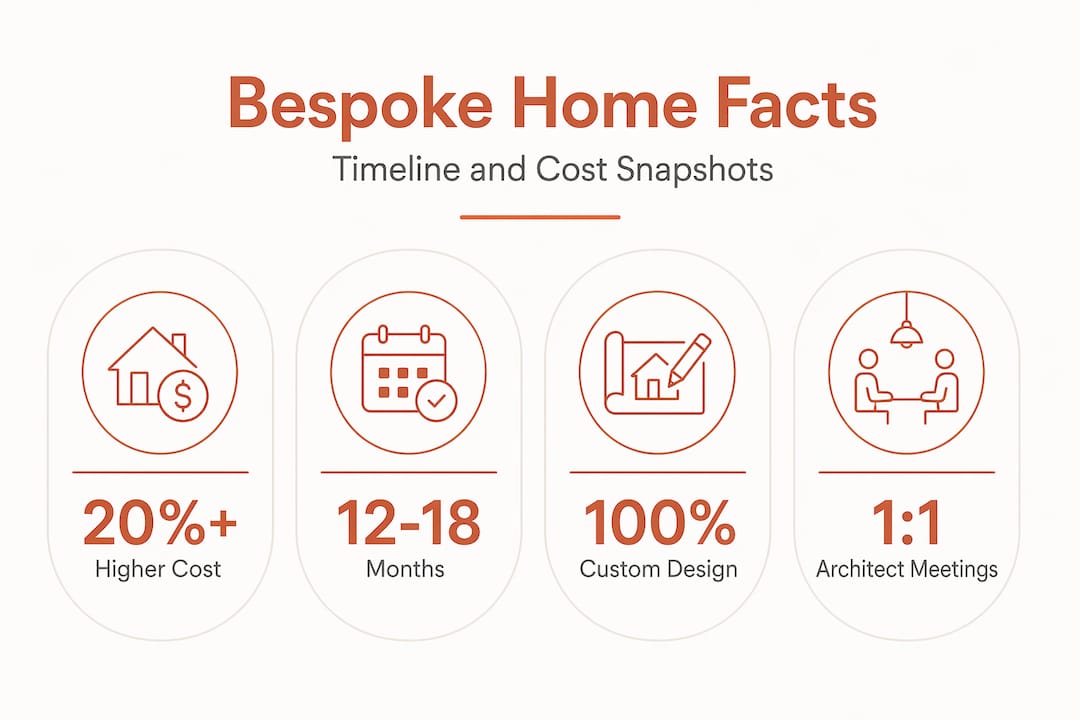
The timeline and cost reflect that depth. Bespoke projects cost 20% or more above semi-custom builds and can run 12 to 18 months from design through completion. That is not a drawback so much as an honest reflection of what true personalization requires.
Pro Tip: Before your first architect meeting, document your daily routines for one week. Note where you feel cramped, where you seek quiet, and what morning light does to your mood. That information is gold during the early design phase.
The philosophy behind bespoke interior design
Bespoke interior design is not about filling a beautiful space with beautiful furniture. It is about designing environments that make your actual daily life function better. The distinction sounds subtle, but it changes everything about how decisions get made.
Think about the difference between a living room that looks great in photos and one where you actually want to spend your evenings. Layouts, storage, and surfaces planned around your real habits create calm, cohesive, effortless environments. A bespoke approach means your reading chair is positioned relative to the window that gets afternoon sun. Your kitchen island height matches your body so cooking does not hurt your back. Your entryway has exactly the storage your family needs, not a generic bench that looks nice but solves nothing.
“Bespoke interiors are not just about luxury. They are about creating calm, cohesive homes designed around how people live, not just how they look.”
This philosophy extends to the materials and craftsmanship involved. True bespoke tailoring requires 50 or more hours of hand work, and bespoke interiors aim for that same standard of craft. Furniture may be built by hand to exact dimensions. Lighting is specified to a color temperature that suits the room’s use. Finishes are chosen for longevity and tactile quality, not trend cycles.
Here is what sets bespoke interiors apart at a practical level:
- Custom-built furniture sized and finished to fit the exact room, not a showroom floor
- Bespoke lighting design with fixtures specified or made for each space
- Exclusive material selection chosen for durability, texture, and visual coherence
- Storage designed around your possessions, not a generic concept of what people own
Pro Tip: When working with a bespoke interior designer, bring photographs of spaces where you have felt genuinely comfortable, including hotel rooms, friends’ homes, or even coffee shops. Comfort is personal and hard to describe in words alone.
Bespoke vs. custom, semi-custom, and production homes
Understanding where bespoke sits among other home-building approaches helps you decide what level of personalization actually fits your goals and your life stage. The differences are real and worth understanding clearly.
| Feature | Bespoke | Custom | Semi-Custom | Production |
|---|---|---|---|---|
| Starting point | Blank slate | Modified template | Pre-designed plan | Set floor plans |
| Design freedom | 100% | High | Moderate | Low |
| Typical timeline | 12 to 18 months | 10 to 14 months | 6 to 8 months | 3 to 6 months |
| Cost relative to production | Highest | High | Moderate | Baseline |
| Client involvement | Very high | High | Moderate | Low |
| Site-specific planning | Always | Often | Rarely | Never |
Semi-custom homes complete in 6 to 8 months with less design freedom than fully bespoke builds. That shorter timeline and lower cost make semi-custom a reasonable choice for younger families who want some personalization but are not yet in a position to invest fully in a from-scratch process.
Bespoke tends to attract homeowners at a different life stage. Empty nesters who finally know exactly how they want to live. People building their last home who want it to reflect 30 years of accumulated preferences. Professionals who work from home and need an environment precisely tuned to focus, rest, and health. What is custom architecture at its best is, at the bespoke level, a home that could only ever belong to you.
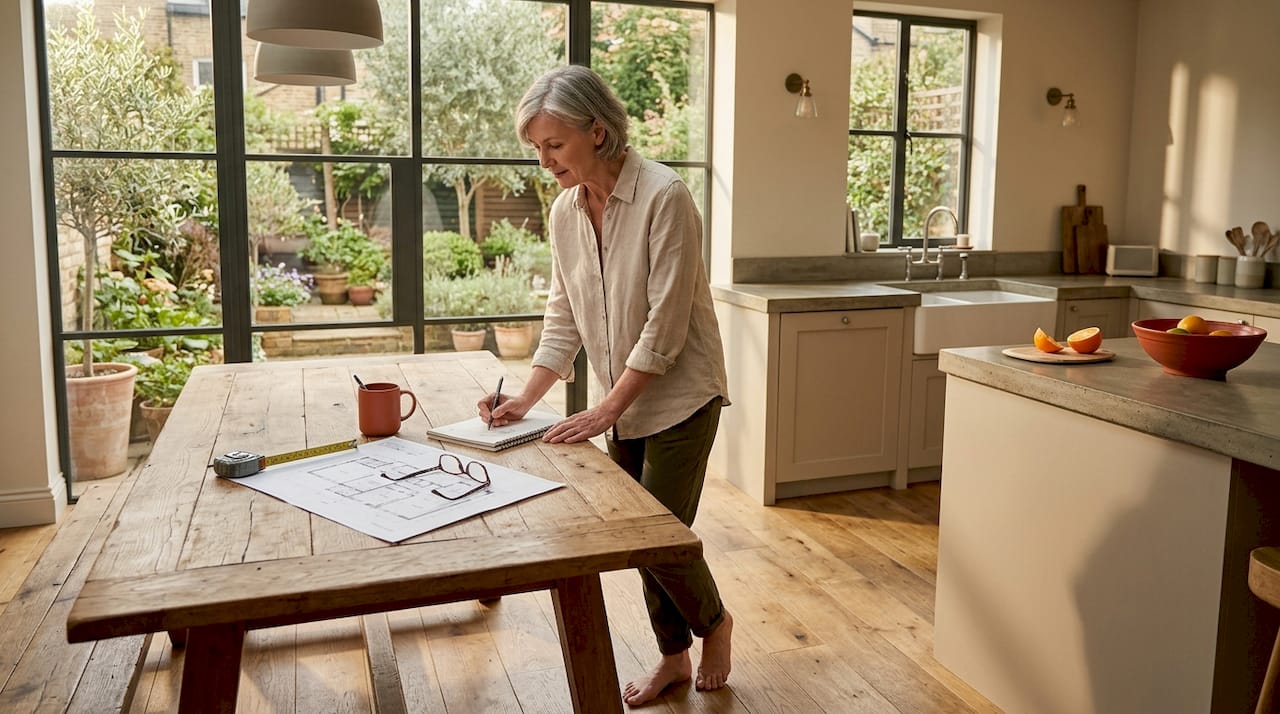
The other major differentiator is site. Bespoke homes allow 100% control over lot selection, home placement, and integration of specialized systems. A production home ignores the hillside view behind your lot. A bespoke home is designed specifically because of it.
Modern trends in bespoke home design
Bespoke home design has always been forward-thinking, and today that means incorporating sustainability, flexible living spaces, and technology that actually fits the way you use your home. These are not add-ons. They are part of the design conversation from day one.
Here is how modern bespoke design integrates these priorities:
- Sustainable materials from the start. Modern bespoke builds use low-impact materials selected during the design phase, not retrofitted later. Reclaimed wood, natural stone, and low-VOC finishes are specified for both performance and environmental impact.
- Flexible, multi-generational layouts. Aging in place, dual-income households, and extended family living are all planned into the structure itself. Wide hallways, adaptable bathrooms, and secondary living suites are built in from the blueprint stage.
- Smart home systems tailored to your routines. Not generic smart lighting, but systems programmed to your morning wake schedule, your preferred working temperature, and your preferred evening wind-down light levels. Bespoke homes allow integration of specialized systems including EV charging designed into the garage from the ground up.
- Wellness-oriented design zones. Dedicated home gym spaces, meditation rooms, or spa-quality bathrooms are planned as core elements of the architecture rather than carved from leftover square footage.
- Energy efficiency by design. Orientation, window placement, and passive solar design reduce energy use structurally. These decisions cannot be made after the foundation is poured.
Failing to align site constraints early can lead to budget overruns and design mismatches that haunt the finished home. Early collaboration between your architect, builder, and interior designer is the single most important factor in getting these integrations right.
Pro Tip: Before finalizing your bespoke design team, ask each professional how they handle conflicts between design intent and site reality. Their answer tells you everything about whether they will protect your vision when problems arise.
Benefits and considerations for homeowners
Choosing bespoke home design is one of the most rewarding decisions you can make for your living environment. It also requires honest self-assessment about what you are prepared to give to the process.
Here is a clear picture of what to expect:
The benefits:
- Perfect personalization. Every room serves your life precisely. There is no adapting your routines to a space that was designed for a hypothetical family.
- Long-term value. Quality materials and thoughtful construction hold their value well. A home built specifically for a site and lifestyle has genuine appeal that resale buyers recognize.
- Emotional satisfaction. Walking into a space designed entirely around you produces a feeling that off-the-shelf solutions simply cannot replicate.
- Wellness integration. You can design active, health-supporting spaces, like dedicated workout zones or recovery areas, into the architecture from the start. Exploring fitness-friendly home design can help you think through these choices before your design process begins.
The challenges:
- Decision fatigue is real. When every single element requires a choice, the volume of decisions accumulates quickly. Good bespoke designers manage this through phased decision-making.
- The timeline demands patience. Eighteen months from first meeting to move-in is not unusual. If you need to be in a home by a specific date, bespoke may not fit that constraint.
- The cost is a genuine premium. You are paying for original thought, skilled craft, and deep collaboration. That investment pays back in longevity and satisfaction, but the upfront cost is real.
The ongoing communication required between client and builder throughout the process is not optional. It is what keeps the project aligned with your original intent as real-world constraints appear.
My honest take on bespoke home design
I have seen bespoke home design described in two very different ways: as the pinnacle of luxury living, and as an intimidating, expensive process best left to people with unlimited time and money. In my experience, both framings miss the point.
What I have learned is that bespoke is fundamentally a functional choice before it is an aesthetic one. The clients who get the most out of it are not the ones chasing prestige. They are the ones who know exactly how they want to move through their day and are unwilling to compromise that for a floor plan designed for someone else.
The thing most people overlook is how much the process asks of you. I have seen clients arrive excited about finishes and leave exhausted by the volume of decisions involved. That is not a failure of the process. It is what depth of personalization actually costs. The reveal moment, when you first walk through a space designed entirely around your life, is genuinely worth it. But you earn it through involvement, not by handing it off.
My advice to anyone considering bespoke: go in prepared to be a real participant. Bring your designer photos, habits, frustrations with past spaces, and genuine opinions. The more clearly you can express how you actually live, the better the result. Bespoke home design works best when it is a conversation, not a commission.
— Brian Dunn, Couch & Dumbbells
Your bespoke home starts with the right foundation
If this exploration of bespoke home design has you thinking seriously about how your living space could better support your life, you are in the right place. At Couchanddumbells, we believe that intentional design and active living go hand in hand. Whether you are planning a dedicated workout room, a calm recovery corner, or a beautifully functional living space, the right pieces make every space feel purposefully yours.
Explore the home interiors and fitness collection at Couchanddumbells to find curated furnishings and wellness solutions that complement a bespoke lifestyle. And when you are ready to go deeper into design ideas and active living inspiration, the Couchanddumbells Journal is where those conversations live. Your intentional home starts with one thoughtful choice at a time.
FAQ
What does bespoke mean in home design?
Bespoke home design means every element of the home is created from scratch, tailored entirely to the client’s lifestyle, site, and preferences. Unlike custom homes that modify existing plans, bespoke begins with no template at all.
How long does a bespoke home take to build?
Most bespoke projects run from 12 to 18 months from initial design through completion, depending on complexity, site conditions, and the level of finish detail involved.
Is bespoke home design only for luxury budgets?
Bespoke home design does cost more than semi-custom or production homes, often 20% or more above semi-custom builds. However, the investment reflects craftsmanship and longevity rather than pure luxury branding.
What is the difference between bespoke and custom home design?
Custom home design typically modifies a pre-existing floor plan, while bespoke design starts from a completely blank slate. Bespoke offers greater creative control, deeper personalization, and a fully site-specific approach that custom builds rarely match.
How do I start designing a bespoke home?
Begin by documenting how you actually live, your routines, priorities, and what has frustrated you about past spaces. Then align your architect, builder, and designer early so your vision is protected from the first planning meeting forward.