

Most people assume that buying furniture made from bamboo or recycled plastic automatically makes it a sustainable choice. That assumption is understandable, but it misses the bigger picture. What is sustainable home furnishing, really? It goes well beyond the material on the label. True sustainability depends on how long a piece lasts, whether it can be repaired, and what happens to it at the end of its life. This guide breaks down every layer of that equation so you can make purchasing decisions that are good for your home, your health, and the planet.
Table of Contents
- Understanding what makes home furnishings sustainable
- Circular design frameworks and certifications for sustainable furnishings
- Materials, durability, and finishes: comparing options for sustainable home furnishing
- Practical guidance: buying, maintaining, and extending the life of sustainable furnishings
- Common misconceptions and expert tips for evaluating sustainable home furnishings
- Why durability and full lifecycle thinking are the real keys to sustainable home furnishing
- Explore sustainable home furnishing options with Couch & Dumbbells
- Frequently asked questions
Key Takeaways
| Point | Details |
|---|---|
| Durability over materials | Furniture longevity and repairability reduce total environmental impact more than just using renewable materials. |
| Design for circularity | Look for products built to cycle materials safely with certifications like Cradle to Cradle and low emissions. |
| Evaluate full lifecycle | Check the materials, finish quality, and end-of-life programs before buying sustainable furnishings. |
| Phase new purchases | Reducing off-gassing and improving indoor air quality involves ventilating and spacing out new furnishings. |
| Cost per year matters | Calculate cost-per-year to find sustainable furniture providing long-term value and lower replacement waste. |
Understanding what makes home furnishings sustainable
To make sustainable choices, you first need to understand what truly defines sustainability in home furnishings. The word gets used so loosely that it has lost some of its meaning. Brands slap “eco-friendly” on products made from renewable materials without addressing whether those products will survive five years of daily use.
The three pillars that actually define sustainable home furnishing are:
- Longevity: A piece that lasts 20 years produces far less waste than one replaced every three years, even if the shorter-lived version uses plant-based materials.
- Repairability: Can a broken leg be replaced? Can the upholstery be reupholstered? Furniture designed for repair stays out of landfills longer.
- End-of-life pathways: Does the brand offer a take-back program? Can the materials be recycled or composted safely?
As sustainability research in 2026 makes clear, a piece that fails in roughly two years is not truly sustainable even if it uses renewable inputs, because early replacement increases total environmental impact. That single insight reframes how you should think about every purchase.
When you are evaluating a piece, ask yourself whether the construction is solid, whether spare parts are available, and whether the brand is transparent about sourcing. You can explore more frameworks for thinking about this in the sustainability insights journal at Couch & Dumbbells.
Circular design frameworks and certifications for sustainable furnishings
Understanding what sustainability means leads naturally to exploring frameworks and certifications that identify truly circular, low-emission furnishings. Two of the most credible are Cradle to Cradle and GREENGUARD Gold.
Cradle to Cradle is a circular design model that ensures materials cycle perpetually with no waste, rejecting the traditional “cradle to grave” approach where products are simply discarded. A C2C-certified sofa, for example, is designed so its components can be separated and fed back into either biological or industrial material cycles. Nothing is destined for a landfill.
“Cradle to Cradle designs products so materials cycle perpetually with no waste, rejecting ‘cradle to grave’ discard behavior.”
GREENGUARD Gold is a different but equally important certification. It targets strict low emissions for indoor air quality, particularly in sensitive environments like homes with children or people with respiratory conditions. This matters because off-gassing from adhesives, finishes, and foam can affect your family’s health long after the furniture is delivered.
When you are shopping, look for certifications combined with design features that support disassembly and repair. A certification alone is a starting point, not a final answer. Dig into the circular design framework analysis to understand how these standards interact in practice.
Key certifications worth recognizing:
- Cradle to Cradle (C2C): Confirms circular material design and low chemical hazard
- GREENGUARD Gold: Confirms low VOC emissions for safer indoor air
- FSC (Forest Stewardship Council): Confirms responsibly sourced wood
- OEKO-TEX Standard 100: Confirms textiles are free from harmful substances
Materials, durability, and finishes: comparing options for sustainable home furnishing
With frameworks in mind, let’s drill down into real materials and finishes to see how they compare for sustainable home furnishings.
| Material | Environmental impact | Expected lifespan | Repairability | Best use |
|---|---|---|---|---|
| FSC-certified solid wood | Low to moderate | 30+ years | High | Frames, tables, shelving |
| Recycled steel or aluminum | Moderate (high energy to recycle) | 20+ years | Moderate | Frames, legs, accents |
| Recycled plastic lumber | Low to moderate | 15-20 years | Low | Outdoor furniture |
| Natural linen or wool upholstery | Low | 10-15 years | High (reupholster) | Seating, cushions |
| Particleboard with low-VOC binders | Moderate | 5-10 years | Low | Budget storage only |
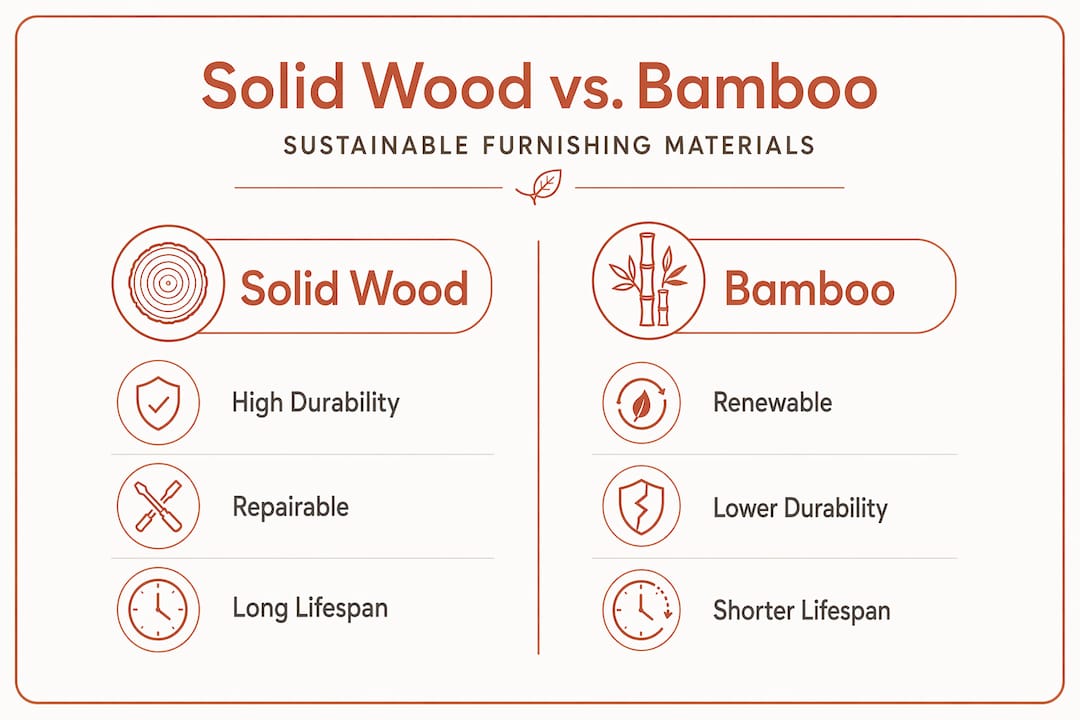
Certified solid wood like FSC-labeled oak or walnut consistently offers the best combination of durability, repairability, and low total impact. It can be sanded, refinished, and repaired repeatedly without losing structural integrity.
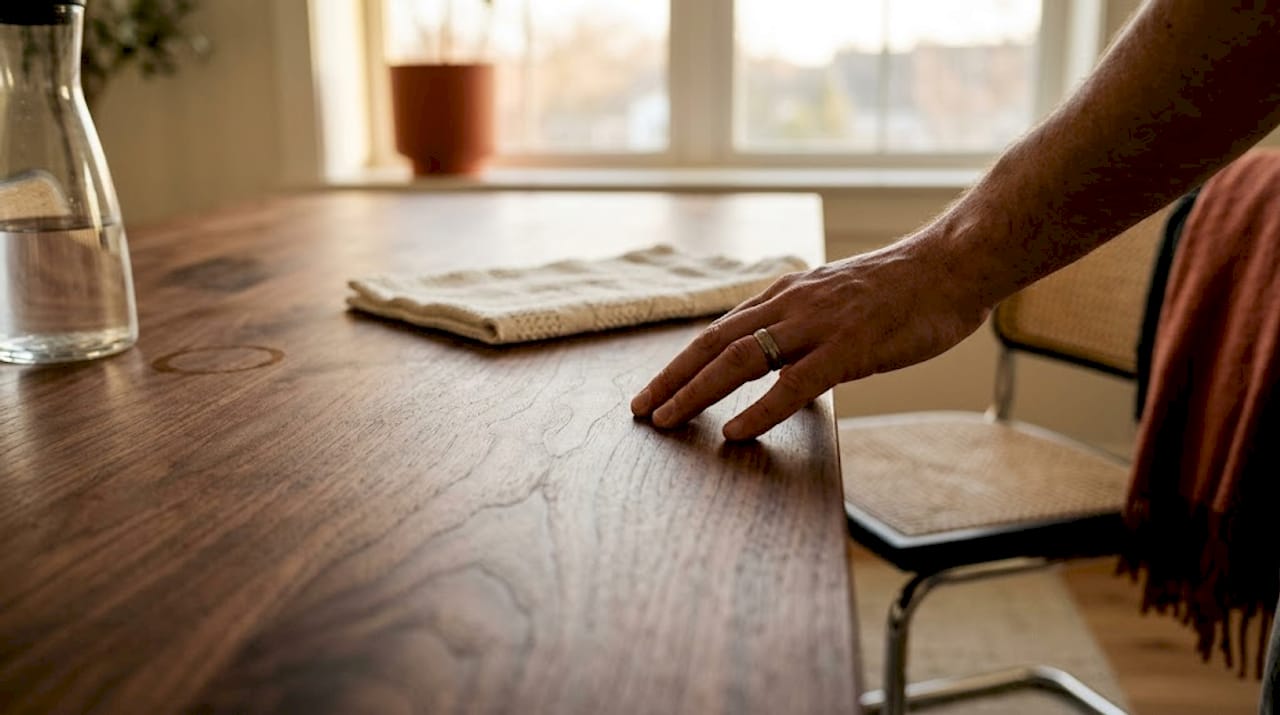
Finishes matter just as much as the base material. Hardwax oils and low-VOC coatings improve both longevity and indoor air quality compared to solvent-based lacquers. They are also easier to spot-repair, which means a scratch does not require refinishing the entire piece.
Pro Tip: When shopping for upholstered pieces, ask specifically whether the fabric can be replaced independently of the frame. Brands that design for reupholstering are signaling a genuine commitment to longevity, not just marketing language.
A few additional material considerations:
- Bamboo: Grows fast and sequesters carbon, but quality varies widely. Look for strand-woven bamboo, which is far more durable than pressed bamboo.
- Cork: Excellent for flooring and accents. Naturally antimicrobial and harvested without cutting the tree.
- Recycled textiles: Upholstery made from post-consumer plastic bottles reduces landfill waste, but check that the fabric is also durable and cleanable.
Browse the sustainable materials guide for curated options that meet these standards.
Practical guidance: buying, maintaining, and extending the life of sustainable furnishings
Knowing what to buy is crucial, but maintaining and planning for the furniture’s full lifecycle ensures you maximize sustainability benefits and value.
Here is a practical step-by-step approach:
- Audit what you already own. Before buying anything new, identify which pieces pose the highest health or waste risk. Old particleboard furniture with peeling laminate, for example, may be off-gassing more than you realize.
- Prioritize replacements strategically. You do not need to replace everything at once. Start with items you use most, like a sofa or bed frame, where quality and air quality impact are highest.
- Evaluate using the materials, durability, and end-of-life framework. A materials and durability evaluation is essential for authentic sustainable furniture purchases. Ask brands directly about take-back or recycling programs.
- Choose products with warranties and replaceable parts. A five-year structural warranty signals that the brand stands behind its construction. Replaceable cushion covers, legs, and hardware extend the useful life significantly.
- Ventilate new pieces on arrival. Off-gassing is strongest right after delivery and declines with ventilation. Open windows, run fans, and consider placing new items in a well-ventilated room for the first few days. Phasing purchases over time rather than furnishing an entire room at once also reduces your total exposure.
- Maintain finishes regularly. Applying a hardwax oil to a wooden table once a year takes ten minutes and can add decades to its life.
- Plan end-of-life before you buy. Research whether the brand has a take-back program or whether local organizations accept the materials for donation or recycling.
Pro Tip: Calculate cost-per-year rather than upfront price. A $1,200 solid wood dining table that lasts 30 years costs $40 per year. A $400 particleboard version replaced every five years costs $80 per year and generates six times the waste. The math makes the case clearly.
Find more actionable guidance in the sustainable furnishings maintenance tips section of our journal.
Common misconceptions and expert tips for evaluating sustainable home furnishings
Let’s clear up some common misunderstandings with practical expert insights to help you avoid costly mistakes.
One of the most persistent myths is that renewable automatically means sustainable. Renewable materials alone do not guarantee sustainability if early failure forces replacement. A bamboo chair that splinters after two years has a worse total environmental footprint than a well-built oak chair that lasts 25 years.
Other common misconceptions include:
- “Recycled content means low impact.” Recycled materials still require energy to process. The real question is whether the finished product is durable enough to justify that energy.
- “Natural materials are always non-toxic.” Some natural finishes and adhesives contain VOCs. Always check for specific certifications rather than assuming “natural” equals safe.
- “Buying second-hand is always the most sustainable option.” Usually true, but not if the piece is structurally compromised or contains materials that are actively off-gassing in your home.
- “Eco-friendly labels are regulated.” Many are not. Terms like “green,” “eco,” and “natural” have no legal definition in the United States. Look for third-party certifications instead.
The expert rule of thumb: evaluate materials, repairability, and certified take-back plans together. No single factor tells the full story.
Brands that are genuinely committed to sustainability will be transparent about sourcing, provide clear care instructions, and offer some form of end-of-life support. Vague claims without documentation are a warning sign. Visit expert sustainability advice to see how thoughtful curation addresses these concerns.
Why durability and full lifecycle thinking are the real keys to sustainable home furnishing
Here is a perspective worth sitting with: most of the conversation around sustainable home furnishing focuses on what goes into a product. Very little attention goes to what comes out of it over time, and what happens when it is no longer useful.
We think that is backwards. The lowest total lifecycle impact is often the real measure of a sustainable choice, not just the recycled content at the point of purchase. A piece built with care, designed for repair, and supported by a take-back program outperforms a “green” piece that falls apart in three years on every meaningful metric.
There is also an emotional dimension that rarely gets discussed. Furniture you genuinely love tends to last longer. You repair it, care for it, and pass it on rather than discarding it. That emotional connection is part of the lifecycle, and it is not trivial. Intentional purchasing, where you choose fewer pieces with more meaning, aligns with both sustainable principles and a calmer, more mindful home environment.
Buying cheap “eco” furniture because it has a bamboo label is a trap. It satisfies the desire to make a responsible choice without delivering one. We encourage you to reframe the question from “Is this made from sustainable materials?” to “Will this still be in my home in 15 years?” That shift in thinking is where real sustainability begins.
Modularity also matters more than most buyers realize. Furniture with replaceable components, like a sofa with swappable cushion covers or a shelving system with interchangeable panels, mirrors the way natural systems work. Nothing is wasted because everything can be adapted. Explore more of this thinking in our lifecycle sustainability perspective.
Explore sustainable home furnishing options with Couch & Dumbbells
Now that you know what makes home furnishings truly sustainable, Couch & Dumbbells is here to help you put those principles into practice.
Our sustainable furnishings collection is curated with durability, repairability, and material quality at the center of every selection. You will not find pieces chosen for their label alone. Every item reflects the lifecycle thinking this guide has outlined. Whether you are starting fresh or upgrading a single room, you can browse with confidence knowing the work of vetting has already been done. For deeper reading, the sustainability insights journal offers expert articles on eco-friendly home decor, circular design, and green home furniture tips to keep you informed at every stage of your journey.
Frequently asked questions
What are the most important factors for furniture to be truly sustainable?
The key factors are materials used, durability and repairability, and end-of-life plans such as recycling or take-back programs. As 2026 sustainability guidance emphasizes, evaluating all three together is what separates genuinely sustainable choices from greenwashing.
Is using renewable materials alone enough to guarantee sustainable furniture?
No. Renewable materials can still lead to higher environmental impact if the furniture fails quickly and requires frequent replacement, so durability and repairability matter just as much as the material itself.
How do certifications like Cradle to Cradle and GREENGUARD Gold help in choosing sustainable furnishings?
These certifications indicate that products are designed for circularity and low emissions. Cradle to Cradle ensures materials can be perpetually reused or safely composted, while GREENGUARD Gold targets stricter emissions for environments where people spend extended periods, protecting indoor air quality.
What should I consider when buying new furniture to minimize indoor air quality risks?
Choose low-VOC certified products and phase purchases over time with good ventilation. Off-gassing is strongest right after delivery and declines as the piece airs out, so spacing out new additions to a room meaningfully reduces your exposure.