

Ambient lighting is defined as the uniform, diffused illumination that fills a room evenly, setting its emotional tone before you notice a single piece of furniture. This foundational layer of light does far more than help you see. It shapes how you feel, how rested you become, and how welcoming a space appears to anyone who walks in. Understanding why ambient lighting transforms rooms gives you a practical edge in designing spaces that genuinely support your wellbeing. The science behind it is clear, and the design strategies are simpler than most homeowners expect.
Why ambient lighting transforms rooms: visual comfort first
Ambient lighting delivers even illumination that eliminates glare and harsh contrast, improving both safety and productivity at home. That matters because your eyes work constantly to adjust when light is uneven. The effort is invisible, but the fatigue is real.
Research confirms that increasing illuminance from 500 lx to 1000 lx decreases psychological fatigue and improves task performance, especially with full-spectrum LED lighting. Higher, better-distributed light reduces the mental load your brain carries just to maintain visual focus. The result is a room that feels easier to be in, not just brighter.
Full-spectrum LEDs take this further. Full-spectrum LEDs better mimic natural daylight, improving visual comfort and metabolic wellbeing compared to conventional LEDs with a limited spectrum. Choosing the right bulb is one of the highest-impact decisions you can make for your home’s lighting.
Key benefits of well-calibrated ambient lighting for visual comfort include:
- Reduced eye strain during reading, cooking, and screen use
- Fewer harsh shadows that distort spatial perception
- A stable visual baseline that lowers mental fatigue over time
- Safer navigation through hallways, stairs, and kitchens at night
Pro Tip: Aim for a color temperature between 2700K and 3000K for living areas. This warm range supports relaxation without making the room feel dim or hard to see in.
How does ambient lighting affect your mood and stress levels?
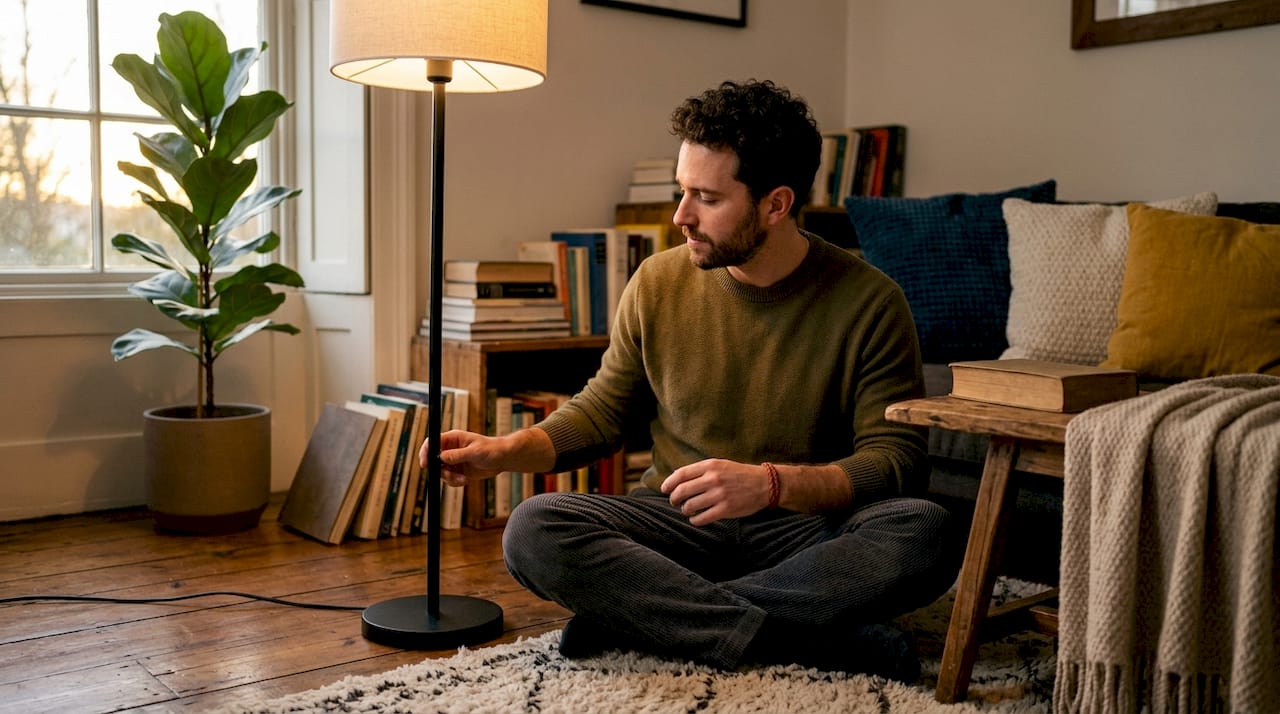
Ambient lighting acts as invisible architecture, shifting your physiology from an active state to a restorative one by lowering cortisol levels before you consciously register the room’s decor. That is a significant finding. Your nervous system responds to light before your mind does.
Warm color temperature ambient light leads to lower tension and anxiety, increasing visual comfort and relaxation in homes. Warm white light, typically in the 2700K–3000K range, signals safety and rest to your brain. Cool, bright white light does the opposite. It sharpens alertness, which is useful in a home office but counterproductive in a bedroom or living room at night.
The connection to sleep is direct. Harsh overhead lighting signals wakefulness to the brain in the evening, while low, layered light sources encourage relaxation by triggering natural biological responses, including melatonin production. Melatonin is the hormone that prepares your body for sleep. Bright overhead lights suppress it. Soft, layered ambient sources support it.
Lighting also shapes how intimate or open a room feels. Pools of soft light at lower heights create a sense of enclosure and safety. A single bright ceiling fixture flattens the room and removes that sense of warmth. The difference is not subtle once you experience it.
Key psychological effects of optimized ambient lighting include:
- Lower cortisol and reduced anxiety in warm-lit spaces
- Improved melatonin production supporting better sleep quality
- Greater sense of psychological safety and intimacy
- Reduced subconscious mental fatigue from visual stress
Pro Tip: Install dimmer switches on your main ambient fixtures. Dropping brightness by 30–40% after 8:00 PM signals your body to wind down and makes the transition to sleep noticeably easier.
What design strategies make ambient lighting most effective?
The most effective ambient lighting uses multiple low-level sources rather than a single overhead fixture to create depth, softness, and a restful atmosphere. This is the single most common mistake homeowners make. One bright ceiling light is not ambient lighting. It is a spotlight on your floor.
Single-source bright light creates harsh shadows and flat aesthetics. Success lies in layering many soft sources for a stable visual baseline and psychological comfort. Think of it the way a good sound system fills a room. You do not want one speaker blasting from the ceiling. You want balanced sound from multiple points.
Practical placement matters as much as fixture choice. Corners are the first place to address. A floor lamp in a dark corner raises the perceived warmth of an entire room. Wall sconces at eye level add horizontal light that overhead fixtures cannot provide. Table lamps on side tables anchor seating areas and create inviting pools of light.
Optimized lighting using natural light combined with modern LED technology reduces residential lighting energy use by 40–70% and improves circadian rhythm regulation. That means smart ambient lighting is not just better for your mood. It is better for your energy bill and your long-term health.
| Fixture type | Best placement | Primary benefit |
|---|---|---|
| Floor lamp | Room corners, beside sofas | Fills dark zones, adds warmth |
| Wall sconce | Eye level on side walls | Horizontal light, reduces ceiling glare |
| Table lamp | Side tables, shelves, desks | Anchors zones, creates intimacy |
| Recessed downlight (dimmed) | Ceiling perimeter, not center | Soft fill light without harsh focal point |
| LED strip (indirect) | Behind furniture, under shelves | Glow effect, adds depth and dimension |
Pro Tip: Never rely on a single ceiling fixture as your only ambient source. Add at least two additional low-level light sources per room to create the layered effect that actually shifts how the space feels.
How does ambient lighting work with task and accent lighting?
Ambient lighting is the base layer of a three-part system. Task lighting handles focused activities like reading or cooking. Accent lighting highlights architectural features, artwork, or plants. All three work together, but ambient light sets the foundation that makes the other two layers feel intentional rather than random.
Without a strong ambient base, task lighting creates jarring contrast. A bright desk lamp in a dark room forces your eyes to constantly readjust between the lit surface and the surrounding darkness. That adjustment is tiring. A well-lit ambient background reduces that contrast and makes task lighting feel comfortable rather than clinical.
The impact of ambient lighting on spatial perception is especially clear in home offices. A room with balanced ambient light feels larger and more organized. The same room with only a desk lamp feels cramped and stressful. The furniture did not change. The light did.
Common layering scenarios and their benefits:
- Living room: Dimmed recessed lights plus two floor lamps plus accent lighting on artwork creates a warm, social atmosphere that shifts easily from active to relaxed
- Kitchen: Ambient ceiling fixtures plus under-cabinet task lighting plus pendant lights over an island balances function and aesthetics without harsh shadows on work surfaces
- Bedroom: Warm wall sconces plus a dimmable overhead fixture plus a low table lamp on each nightstand supports both reading and wind-down routines
- Home gym or fitness space: Bright ambient lighting supports energy and focus during workouts, while a dimmer setting post-workout helps your body shift into recovery mode
Key Takeaways
Ambient lighting is the single most impactful change you can make to a room, because it shapes mood, reduces fatigue, and supports better sleep through layered, warm, and well-distributed light sources.
| Point | Details |
|---|---|
| Ambient light sets emotional tone | It lowers cortisol and shifts physiology toward rest before decor is noticed. |
| Full-spectrum LEDs outperform standard bulbs | They mimic natural daylight, reduce eye strain, and support circadian health. |
| Multiple low-level sources beat one overhead fixture | Layered soft light creates depth, warmth, and psychological comfort. |
| Warm color temperature reduces anxiety | Light in the 2700K–3000K range lowers tension and supports relaxation at home. |
| Layering with task and accent lighting completes the effect | Ambient light as a base makes task and accent layers feel intentional and comfortable. |
What I have learned from living with better light
The shift I noticed most was not visual. It was physical. After replacing a single harsh overhead fixture in my living room with three layered sources at different heights, I stopped feeling restless in the evenings. I had not connected the two things until the change made the difference obvious.
Most homeowners I talk to assume ambient lighting is about aesthetics alone. They think it is a decorating choice, not a health one. The research says otherwise. Light modulates attention and cognition beyond visual perception, impacting alertness and relaxation through brain signaling linked to biological clocks. That is not a soft claim. It is physiology.
The other misconception I see constantly is that good lighting requires expensive fixtures. It does not. A $30 floor lamp with a warm full-spectrum bulb in a dark corner does more for a room’s atmosphere than a $300 ceiling fixture used as the only source. Start with placement and color temperature. Upgrade fixtures later if you want to.
Experimenting with dimmers is the fastest way to feel the difference. Drop the lights in your main living space tonight and notice what happens to your body within 20 minutes. Most people are surprised by how quickly the shift happens.
— Brian Dunn, Couch & Dumbbells
Light up your space with the right home interior pieces
Good ambient lighting starts with the right fixtures and decor to support them. Couchanddumbells carries a curated selection of home interior pieces designed to complement layered lighting setups, from lamps and shelving to furniture that works with light rather than against it.
Whether you are building a cozy living room, a calming bedroom, or a focused home office, the right interior pieces make your lighting choices land the way you intend. Couchanddumbells brings together style and function so your space looks as good as it feels. Browse the full home and interior collection to find pieces that support the warm, layered atmosphere you are working toward.
FAQ
What is ambient lighting in interior design?
Ambient lighting is the primary, uniform layer of illumination in a room that provides overall brightness without glare or harsh shadows. It sets the emotional tone of a space and forms the foundation for task and accent lighting layers.
What color temperature is best for ambient lighting at home?
Warm white light in the 2700K–3000K range is best for living areas and bedrooms. This range reduces tension and anxiety while supporting melatonin production for better sleep quality.
How many light sources do I need for good ambient lighting?
A minimum of three light sources at different heights is the standard recommendation for most rooms. Multiple low-level sources create depth and warmth that a single overhead fixture cannot achieve.
Can ambient lighting really improve sleep quality?
Yes. Harsh overhead lighting suppresses melatonin production in the evening, while soft, layered ambient light supports the biological signals that prepare your body for sleep. Dimming lights after 8:00 PM accelerates this effect.
What is the difference between ambient, task, and accent lighting?
Ambient lighting provides general room illumination. Task lighting focuses on specific work areas like desks or kitchen counters. Accent lighting highlights features like artwork or architectural details. All three layers work together for a complete, comfortable room.