

Curated living spaces reduce stress by signaling safety to your nervous system and lowering physiological stress markers like cortisol. This is not interior design theory. It is neuroscience. Cluttered environments cause dysregulated cortisol patterns, while organized, intentional spaces promote healthier stress rhythms. The field of neuroarchitecture, which studies how built environments shape brain function, confirms that your surroundings communicate safety or threat to your body before you consciously register them. Understanding why curated spaces reduce stress gives you a real framework for building a home that actively supports your mental well-being.
Why curated spaces reduce stress: the nervous system connection
Your brain never stops scanning your environment. This process, called neuroception, runs below conscious awareness and continuously evaluates whether your surroundings are safe or threatening. Neuroarchitecture expert Eryn Oruncak explains that curated spaces signal safety through environmental cues, shifting the autonomic nervous system from a fight-or-flight state into a parasympathetic “rest-and-digest” state. That shift is not subtle. It changes your heart rate, breathing depth, muscle tension, and cortisol output.
Cluttered or chaotic spaces do the opposite. They send low-level threat signals that keep your sympathetic nervous system slightly activated all day. You may not feel acutely stressed, but your body is running a quiet background alarm. Over time, that chronic low-grade activation depletes energy, fragments attention, and raises baseline anxiety.
Curated environments interrupt that cycle. When your brain reads a space as ordered, proportionate, and visually calm, it lowers its threat response. The result is a measurable shift toward relaxation, not just a feeling of preference.

Pro Tip: If you feel inexplicably tense at home, do a slow visual scan of one room. Count how many unresolved objects your eye lands on. Each one is a small cognitive demand. Removing five items from a surface can shift your nervous system state within minutes.
Here is what distinguishes a curated space from a merely tidy one:
- Intentional placement: Every object has a defined location and purpose.
- Visual breathing room: Negative space is treated as a design element, not wasted area.
- Sensory consistency: Colors, textures, and lighting work together rather than compete.
- Reduced decision load: Storage is placed where items are actually used, so nothing piles up.
- Meaningful objects: Items carry personal or aesthetic value, not just habit or default placement.
What design elements make a space calming?
Biophilic design is the practice of incorporating natural materials, light, and forms into built environments to support human well-being. A review of 203 peer-reviewed studies confirms that biophilic design reduces physiological stress and improves cognitive performance. That body of evidence spans two decades and covers materials like wood, stone, and natural fiber textiles, as well as spatial features like views of greenery and natural light. You can read more about applying these principles through this guide to biophilic interior design.
Lighting is one of the most powerful and most underused design tools for stress relief. Layered lighting, which combines ambient, task, and accent sources, positively influences mood and supports circadian rhythms. Overhead fluorescent lighting alone creates a flat, activating environment. Warm-toned lamps, dimmable fixtures, and directed task lighting give you control over the sensory tone of a room at different times of day.
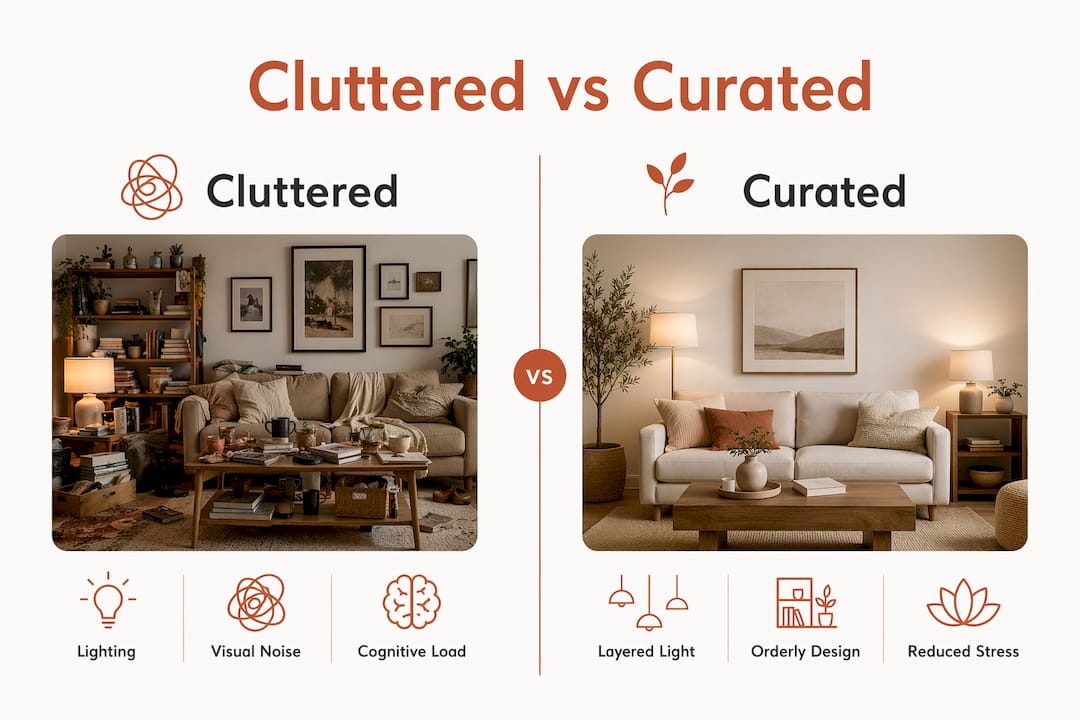
Texture matters more than most people realize. Research advises using materials like wood and wool as grounding elements because they engage the tactile sense and create warmth. Sterile minimalism can be counterproductive. A room stripped of all texture and softness may look clean but feel cold and unsettling. The goal is balance: enough negative space for visual calm, enough tactile warmth for sensory comfort.
Pro Tip: Swap one hard-surface accent for a soft one, such as a wool throw, a jute rug, or a linen cushion. The nervous system responds to tactile warmth even when you are not touching the object directly.
| Design element | Cluttered or unplanned space | Curated space |
|---|---|---|
| Lighting | Single overhead source, flat and activating | Layered ambient, task, and accent lighting |
| Materials | Mixed, no intentional texture | Natural materials: wood, stone, linen, wool |
| Storage | Random or insufficient | Placed at points of use, out of sight |
| Visual load | High, many competing focal points | Low, deliberate focal points with negative space |
| Sensory tone | Inconsistent, stimulating | Consistent, calming |
How do cluttered spaces compare to curated ones in mental health impact?
The cognitive cost of clutter is direct and measurable. Cognitive load increases significantly when you are exposed to cluttered, disorganized environments. Your brain expends energy interpreting and filtering disorganized visual stimuli, leaving less capacity for focus, decision-making, and emotional regulation. That drain accumulates across a full day at home.
Cortisol is the clearest physiological marker. Cluttered environments produce dysregulated cortisol patterns consistent with chronic stress. That means your body’s stress hormone does not follow its natural rise-and-fall rhythm. It stays elevated or spikes unpredictably. Curated spaces support a healthier cortisol rhythm by removing the low-level environmental stressors that disrupt it.
Poorly designed storage is one of the most common contributors to clutter-induced stress. When storage is located away from where items are actually used, objects pile up at usage points. A coat rack near the door, a charging station in the bedroom, and open shelving in the kitchen placed at arm’s reach all reduce the friction that creates clutter.
The mental health gap between cluttered and curated environments is not about perfection. It is about cognitive clarity. A curated space gives your brain permission to stop scanning for threats and start resting.
- Clutter activates threat-detection systems, raising cortisol.
- Visual disorder fragments attention and increases mental fatigue.
- Insufficient or poorly placed storage is a structural cause of clutter.
- Curated spaces create visual breathing room that supports psychological clarity.
- The benefits of curated spaces accumulate over time through reduced baseline stress.
How to create calming spaces at home: practical steps
Active editing is the most effective approach to maintaining a curated space. Active editing means making regular small adjustments rather than pursuing a one-time perfect arrangement. Your needs change with seasons, moods, and life stages. A space that supported you in winter may feel heavy in spring. Treating curation as an ongoing practice rather than a finished project keeps your environment psychologically responsive.
Here is a practical sequence for curating any room at home:
- Audit your surfaces. Walk through the room and remove everything that does not belong there by function or intention. Place items in a holding box rather than another surface.
- Place storage at usage points. Identify where clutter forms and install storage there. A basket by the sofa for remotes and books, hooks near the entry for bags, a tray on the nightstand for small items.
- Layer your lighting. Add at least one warm-toned lamp to any room that relies solely on overhead lighting. Use dimmable bulbs where possible to shift the room’s tone from active to restful.
- Introduce one natural material. A wooden bowl, a stone coaster, a linen pillow cover. Natural textures ground the senses and add warmth without visual noise. For practical ideas, see these biophilic home decor examples.
- Edit seasonally. Every few months, reassess what is on display. Swap heavy textures for lighter ones in warmer months. Add warmth and softness as temperatures drop. This keeps the space feeling intentional rather than static.
Pro Tip: Storage design should focus on “usage pain points” rather than maximizing total storage volume. Ask where clutter forms first, then solve that specific location. One well-placed basket beats three distant cabinets.
Belle’s take: curation is a practice, not a project
I used to think a curated space meant a perfectly styled room that looked like a magazine shoot. What I have learned, both from research and from living in spaces I have intentionally designed, is that the most calming rooms are not the most minimal ones. They are the most considered ones.
The rooms that genuinely lower my stress are the ones where nothing is accidental. The lamp is warm because I chose it for evening wind-down. The shelf holds three objects I actually love, not ten I kept out of habit. The storage is where I need it, not where it was convenient to install. That level of intention does not require a renovation or a large budget. It requires attention.
What the research on neuroarchitecture gets right is that your environment is always communicating with your nervous system. What it sometimes undersells is how personal that communication is. A space that calms one person may feel sparse to another. The goal is not to replicate a design trend. It is to understand what your own nervous system reads as safe, warm, and ordered, and then build toward that deliberately. Curation is not a destination. It is a habit of paying attention to how your space makes you feel, and adjusting accordingly.
— Brian Dunn, Couch & Dumbbells
Couchanddumbells’ curated home collection for calmer living
Couchanddumbells brings together natural material furniture, layered lighting options, and thoughtfully designed storage solutions in one place, so you can apply these principles without searching across dozens of stores.
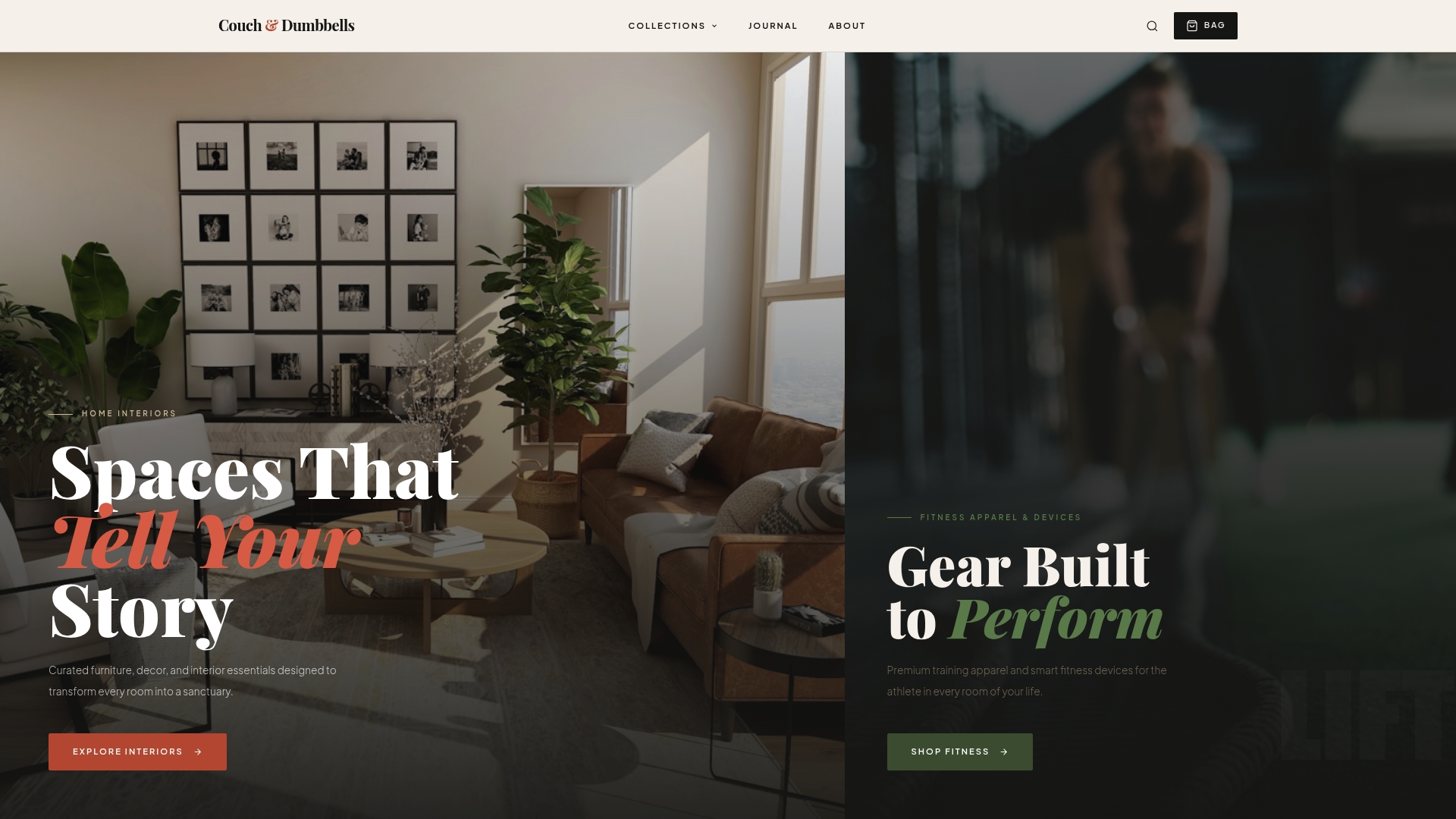
The home and interior collection at Couchanddumbells is selected with intentional living in mind. You will find pieces that use natural textures, warm tones, and functional forms, the exact design elements that environmental psychology research links to lower stress and better well-being. Whether you are starting with one room or refreshing your entire space, the collection gives you a curated starting point that takes the guesswork out of where to begin.
FAQ
Why do curated spaces reduce stress physiologically?
Curated spaces trigger neuroception, the brain’s subconscious safety scan, to register the environment as safe. This shifts the autonomic nervous system from fight-or-flight to a parasympathetic rest state, lowering cortisol and reducing muscle tension.
What is the difference between minimalism and a curated space?
Minimalism focuses on reducing quantity, while curation focuses on intention and sensory balance. A curated space includes warm textures, natural materials, and meaningful objects. Sterile minimalism without tactile warmth can feel cold and increase discomfort rather than reduce it.
How does clutter affect mental health?
Clutter increases cognitive load by forcing the brain to filter disorganized visual stimuli continuously. This leads to mental fatigue, fragmented attention, and dysregulated cortisol patterns consistent with chronic stress.
What is the fastest way to make a room feel calmer?
Add a warm-toned lamp, clear one surface completely, and place one natural material object in the room. These three changes address lighting, visual load, and sensory warmth, the three primary drivers of a calming environment.
How often should I update my curated space?
Active editing every few months keeps a space psychologically supportive as your needs change. Seasonal adjustments to texture, lighting warmth, and displayed objects prevent the space from feeling static or out of sync with your current state.
Key takeaways
Curated spaces reduce stress by removing environmental threat signals, lowering cognitive load, and supporting the nervous system’s shift into a parasympathetic rest state.
| Point | Details |
|---|---|
| Neuroception drives the response | Your brain scans your environment subconsciously; curated spaces signal safety and lower cortisol. |
| Biophilic design has strong evidence | A review of 203 studies confirms natural materials and spatial design reduce physiological stress. |
| Clutter has a measurable cost | Disorganized environments increase cognitive load, fragment attention, and dysregulate cortisol patterns. |
| Storage placement prevents clutter | Placing storage at usage points stops clutter from forming at the source. |
| Active editing sustains the benefit | Regular small adjustments keep a space aligned with your changing needs and moods. |