

Flexible living spaces are rooms or areas purposely designed to serve multiple functions and adapt quickly to changing needs, making them indispensable in contemporary homes. Understanding why flexible living spaces matter starts with a simple truth: your life changes, and your home should change with it. Whether you work from home three days a week, want a dedicated fitness corner, or need a guest room that disappears when company leaves, adaptable design is the answer. Perennial Design Studio and real estate market data both confirm that homes built around flexibility outperform static layouts in comfort, resale value, and daily satisfaction.
Why flexible living spaces matter for daily functionality
The core benefit of adaptable living spaces is that one room can do the work of three. A spare bedroom becomes a home office by day, a yoga studio by evening, and a guest room on weekends. That kind of versatility is no longer a luxury. High-end buyers in 2026 are prioritizing functional lifestyle alignment over pure square footage, choosing adaptable spaces that support work, fitness, and relaxation over traditional fixed rooms. That shift reflects a broader cultural move toward intentional, wellness-focused living.
The benefits of flexible home design extend beyond convenience. Research in environmental psychology shows that psychological comfort increases when people can physically adjust their surroundings. Control over your space reduces stress and supports mental clarity. That is especially relevant if you balance remote work, fitness routines, and family life under one roof.
Here is what adaptable spaces do for your daily life:
- Support hybrid work. A flex room with a pull-down desk and good lighting handles video calls without sacrificing living space.
- Accommodate fitness. A cleared corner with a yoga mat and resistance bands becomes a workout zone in under two minutes. Learn how to blend fitness equipment with your décor so the space looks intentional, not improvised.
- Host guests without a dedicated room. A Murphy bed or a convertible sofa handles overnight visitors without permanently committing a room to that single use.
- Reduce renovation costs. Flexible spaces avoid costly moves and reduce the need for structural changes as your life evolves.
Pro Tip: Before you rearrange any room, write down every activity you want it to support. That list becomes your design brief and prevents you from optimizing for one use at the expense of another.
Design principles that make a space truly adaptable
The most effective approach to flexible home design starts before furniture enters the room. Avoiding permanent room identities is the first principle. Perennial Design Studio calls these “swing spaces,” defined by size, natural light, and access to adjacent rooms rather than by a fixed label like “office” or “gym.” A room designed this way serves multiple life stages without a single wall being moved.
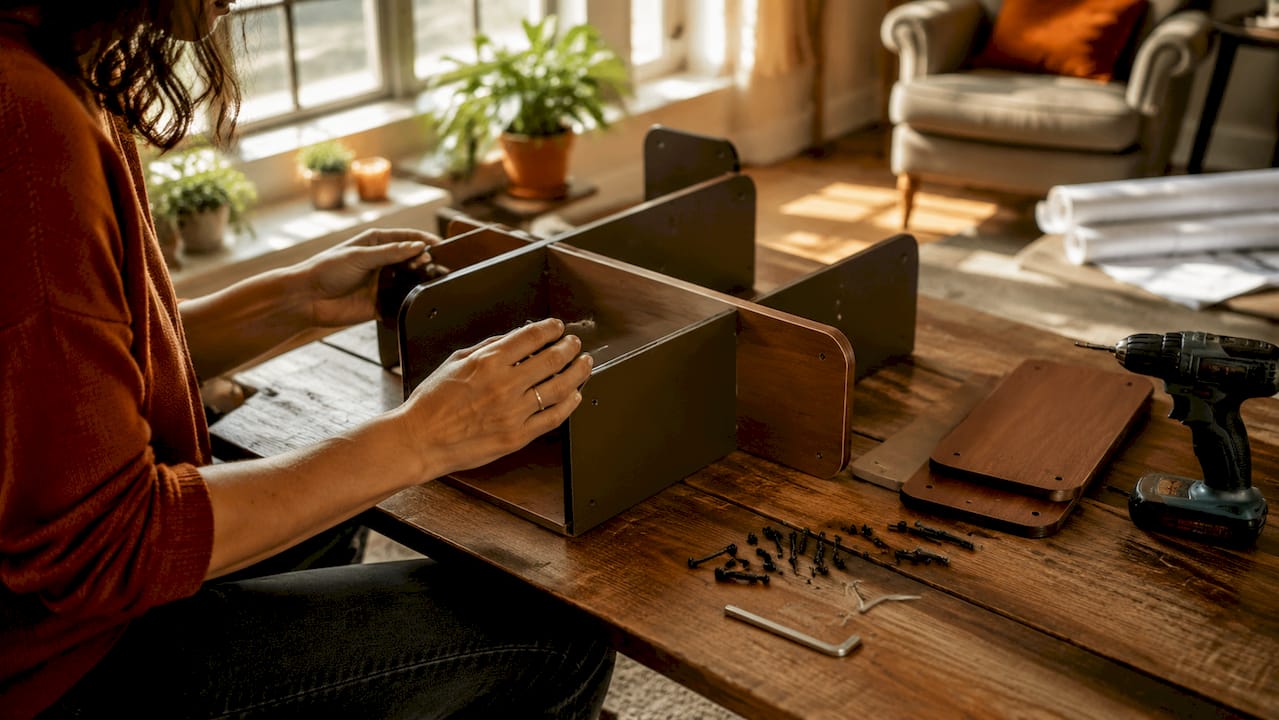
Structural foresight matters more than most people realize. Wide doorways and strategic electrical outlet placement enable multiple furniture configurations and future-proof mobility needs. These are invisible decisions made during construction or renovation that have an outsized impact on how freely a room can be reconfigured later.
The table below shows the most practical modular furniture types and how each one supports multiple uses:
| Furniture Type | Primary Use | Secondary Use | Space Saved |
|---|---|---|---|
| Murphy bed | Guest sleeping | Home office or gym | Full bedroom footprint |
| Pull-down desk | Home office | Craft or hobby station | Wall-mounted, zero floor space |
| Sliding room divider | Privacy partition | Open-plan living | No permanent wall needed |
| Modular shelving | Storage | Room divider or display | Reconfigurable layout |
| Convertible sofa | Seating | Guest bed | Eliminates need for spare room |
Adaptable design through modular furniture and sliding partitions achieves flexibility without expensive structural changes. That makes these solutions accessible to renters and homeowners alike, not just those undergoing full renovations. Choosing durable, timeless materials also matters. Durable materials in flexible spaces reduce wear and maintain aesthetics even as configurations change over time.
Pro Tip: When planning a flex room, consult with a contractor early to identify load-bearing points and the best location for utility connections. Those two factors determine how freely the room can evolve.
Flexible spaces vs. traditional fixed rooms: what the data shows
The difference between a flexible space and a traditional fixed room is not just functional. It is financial. Planning for at least one flex room that serves multiple roles saves homeowners costly renovations over a decade. A ground-floor suite that works as a home office today and an accessible bedroom tomorrow adds long-term value without a single structural change.
From a real estate perspective, the advantage is clear. Multi-use spaces increase home marketability by attracting more buyers and stronger offers. Staging a spare room as a versatile office, gym, or guest room enhances showings and buyer appeal. That is a direct return on a design decision that costs far less than adding square footage.
| Dimension | Fixed-use room | Flexible space |
|---|---|---|
| Renovation cost | High when needs change | Low, furniture-driven updates |
| Resale appeal | Limited to one buyer profile | Broad appeal across buyer types |
| Daily utility | Single purpose | Multiple daily uses |
| Lifestyle adaptability | Requires moving or rebuilding | Adapts with furniture changes |
| Stress impact | High during life transitions | Lower, space evolves with you |
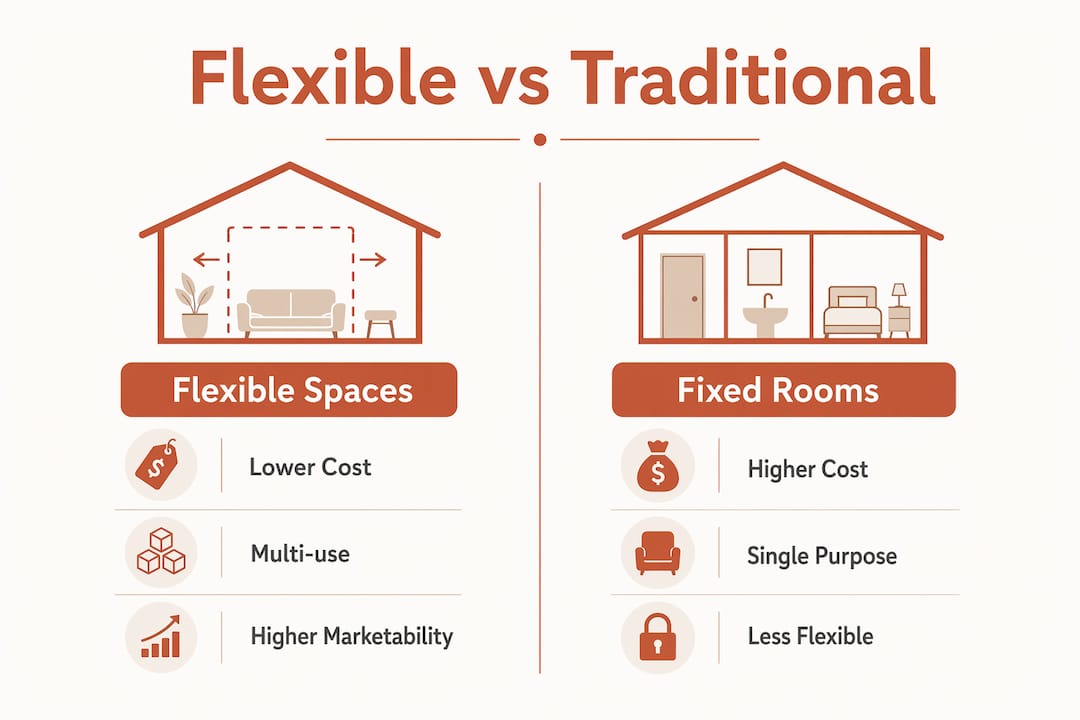
One misconception worth addressing: flexible spaces are not generic or style-free. A well-designed flex room can be as visually intentional as any dedicated space. The key is choosing furniture and materials that look cohesive whether the room is set up as an office or a fitness zone. Style and adaptability are not opposites.
Practical tips for renters and homeowners to optimize existing spaces
You do not need to own your home or hire a designer to build more flexibility into your living space. Most of the best solutions are furniture-based and fully reversible. Here is how to start:
- Use soft boundaries instead of walls. Bookshelves, open shelving units, and folding screens create visual zones without permanent construction. This approach works especially well in studio apartments or open-plan layouts.
- Invest in modular storage. Modular storage systems from brands like IKEA’s KALLAX or similar configurable units let you reorganize a room’s function in an afternoon. Storage that moves with you is always more valuable than built-ins.
- Integrate fitness without sacrificing aesthetics. Resistance bands, foldable yoga mats, and compact kettlebells store neatly in a basket or cabinet. If you live in a smaller space, check out apartment home gym essentials for ideas that work in tight square footage.
- Zone with lighting. A floor lamp in one corner and a desk lamp in another signal different activities in the same room. Lighting is one of the fastest ways to shift a room’s purpose without moving a single piece of furniture.
- Think about hybrid work needs. The shift to remote and hybrid schedules has made the home office a permanent fixture for millions of Americans. Read more about how hybrid work affects home design to see how other homeowners are solving this challenge.
Adaptable features are accessible and affordable for most homeowners despite slow industry adoption at the developer level. You do not need to wait for the housing market to catch up. Small, intentional changes to your current space deliver real results. Homes designed to flex with life stages also reduce environmental and financial waste by encouraging longer tenure and fewer renovations.
Key takeaways
Flexible living spaces are the single most cost-effective way to future-proof your home, support an active lifestyle, and increase long-term property value without structural renovation.
| Point | Details |
|---|---|
| Adaptability reduces costs | One flex room replaces costly renovations as your work, fitness, and family needs shift. |
| Modular furniture is the foundation | Murphy beds, pull-down desks, and sliding partitions reconfigure a room without construction. |
| Resale value increases | Multi-use spaces attract more buyers and stronger offers than single-purpose rooms. |
| Mental wellbeing improves | Control over your space reduces stress and supports focus, calm, and daily satisfaction. |
| Renters benefit too | Soft boundaries, lighting zones, and portable storage create flexibility without permanent changes. |
Belle’s take: flexibility is the most underrated home investment
Most people think about home improvement in terms of what they add: a new kitchen, an extra bathroom, a finished basement. I think the smarter question is what your existing rooms can become. After spending years thinking about how people actually live in their homes versus how those homes were designed, the gap is striking. A room labeled “office” sits empty most of the day. A “guest room” hosts visitors four times a year. That is a lot of square footage working against you.
What I find most compelling about flexible design is not the furniture or the floor plans. It is the mindset shift. When you stop thinking of rooms as fixed identities and start thinking of them as platforms, your whole relationship with your home changes. You stop feeling like you need more space and start feeling like you are using the space you have more honestly.
The fitness angle matters here too. One of the biggest barriers to consistent exercise is friction. If your workout space requires clearing out a dedicated room, setting up equipment, and then putting it all away, you will skip it. But if your living room floor can become a yoga space in 60 seconds, you will actually use it. That is why the 2025 home gym trends point so strongly toward compact, integrated fitness setups rather than dedicated gym rooms.
The homes I admire most are not the largest ones. They are the ones where every square foot has a clear purpose and the freedom to serve a different one tomorrow.
— Brian Dunn, Couch & Dumbbells
Build your flexible space with Couchanddumbells
Couchanddumbells curates exactly the kind of products that make flexible living real. From modular storage and multi-use furniture to compact fitness gear that blends with your décor, every item in the collection is chosen with intentional living in mind. You do not have to choose between a beautiful home and an active one. The home and interior collection at Couchanddumbells includes storage solutions, décor, and furniture designed to support adaptable layouts at every budget. If you are building a fitness corner into your living space, the fitness and gear shop has compact, stylish equipment that fits any room without taking it over. Your space should work as hard as you do.
FAQ
What is a flexible living space?
A flexible living space is a room or area designed to serve more than one function, such as a home office that converts to a guest room or a living room that doubles as a workout zone. The design relies on modular furniture, soft boundaries, and strategic layout rather than permanent walls.
How do flexible spaces increase home resale value?
Multi-use spaces increase home marketability by attracting a wider range of buyers and supporting stronger offers. Staging a room as a versatile office, gym, or guest space makes a home more appealing during showings.
Can renters create flexible living spaces without renovating?
Yes. Renters can use modular storage, foldable furniture, lighting zones, and soft boundaries like bookshelves or folding screens to create flexible zones without any permanent changes to the property.
What furniture works best in a multi-use room?
Murphy beds, pull-down desks, convertible sofas, modular shelving, and sliding partitions are the most effective options. Each one supports multiple uses while taking up minimal floor space when not in active use.
Does flexible design mean sacrificing style?
No. Flexible spaces can be just as visually intentional as dedicated rooms. Choosing timeless materials and cohesive furniture ensures the space looks polished whether it is set up as an office, a fitness zone, or a relaxation area.