

Natural materials in home decor are defined by their ability to deliver sensory richness, healthier indoor air, and emotional authenticity that synthetic alternatives cannot replicate. Wood, linen, wool, stone, cork, and lime plaster each bring micro-variations in texture, grain, and color that make a room feel genuinely alive. The reasons why natural materials home decor works so well go beyond aesthetics. They connect to how your body responds to organic surfaces, how your air quality changes, and how your values show up in the spaces where you live. This guide covers all of it, from the science of sensory warmth to practical steps for getting started.
Why do natural materials feel better in home decor?
The answer is in the surface itself. Micro-variations like linen weave and timber knots register to your senses in a way that uniform synthetic surfaces simply do not. A room furnished with natural materials has a coherence and tactile richness that feels grounded rather than staged. That is the difference between a home that looks lived-in and one that looks like a showroom floor.
Natural materials also interact with light differently than synthetics. Timber flooring absorbs and scatters light across its grain, creating visual depth that shifts throughout the day. Wool rugs diffuse light softly, reducing glare and adding warmth underfoot. Linen curtains filter sunlight into a gentle, layered glow rather than blocking it flat. Each of these effects is subtle on its own, but together they produce an atmosphere that feels cohesive and inviting.
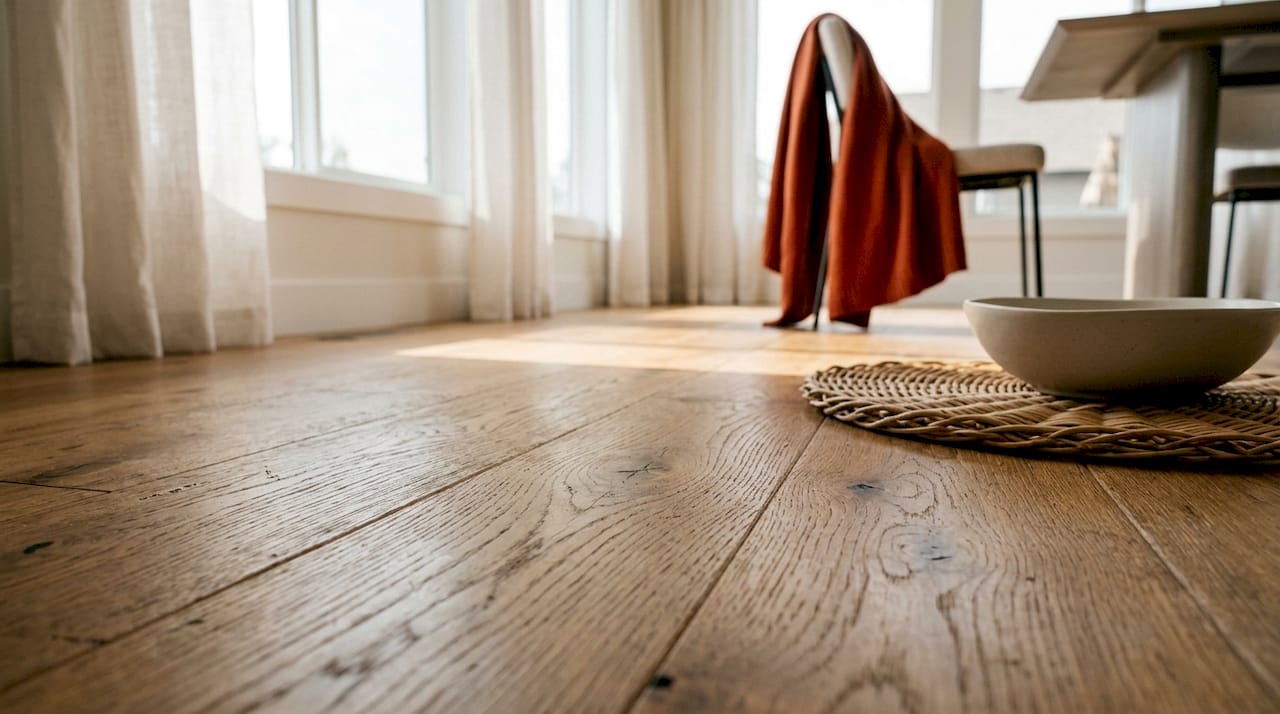
Touch matters just as much as sight. Running your hand across a rough-hewn oak shelf or a hand-knotted jute rug gives you tactile feedback that tells your nervous system “this is real.” Synthetic materials, even high-quality ones, tend toward uniformity. That uniformity is efficient to manufacture, but it reads as sterile to the senses. Homeowners increasingly seek the emotional authenticity and imperfection of natural textures, moving away from that sterile uniformity.
Here are the natural materials that deliver the strongest sensory impact:
- Linen textiles (curtains, cushion covers, table runners): visible weave variation creates warmth without heaviness
- Timber flooring (oak, walnut, reclaimed pine): grain and knots add visual depth and ground a room
- Wool rugs: soft underfoot, acoustically absorbent, and naturally flame resistant
- Terracotta tiles: earthy color variation and matte texture that no ceramic glaze fully replicates
- Rattan and cane furniture: open weave creates lightness while adding organic pattern
Pro Tip: When shopping for natural textiles, hold them up to natural light. If the weave shows variation and slight irregularity, that is a sign of genuine natural fiber. Perfectly uniform texture usually means synthetic blending.
How do natural materials improve indoor air quality and health?
Natural materials have lower VOC emissions and better humidity regulation than synthetic finishes, which matters most in tightly sealed modern homes. VOCs, or volatile organic compounds, off-gas from synthetic paints, adhesives, and flooring materials. In a well-insulated home with limited ventilation, those compounds accumulate. Natural alternatives reduce that load significantly.
Lime plaster is one of the most compelling examples. Lime plasters are zero VOC, breathable, and mold resistant, and they regulate humidity by absorbing moisture from the air and releasing it slowly. They also absorb CO₂ over time, which means your walls are actively working with your indoor environment rather than against it. The result is a calmer, spa-like atmosphere with natural acoustic softness that conventional paint cannot produce.
The psychological benefits are equally well documented. Biophilic design can reduce self-reported stress by 59.1%, as measured in multicenter studies with hospital staff using nature-based environments. That is a significant number, and it reflects something most people already sense intuitively. Rooms with wood, stone, and plant life feel calmer. The research confirms that this is a measurable physiological response, not just a preference.
“Biophilic design activates relaxation and cognitive restoration through multisensory environments that integrate natural materials with light, sound, and touch.” — Biophilic design for psychological well-being
Here is a direct comparison of how natural and synthetic materials perform across key health factors:
| Factor | Natural materials | Synthetic materials |
|---|---|---|
| VOC emissions | Low to zero | Moderate to high |
| Humidity regulation | Active (absorbs and releases) | Passive or none |
| Mold resistance | High (lime, cork, wool) | Variable, often treated chemically |
| Stress response | Reduces cortisol, improves alertness | Neutral to negative |
| Biodegradability | High | Low |
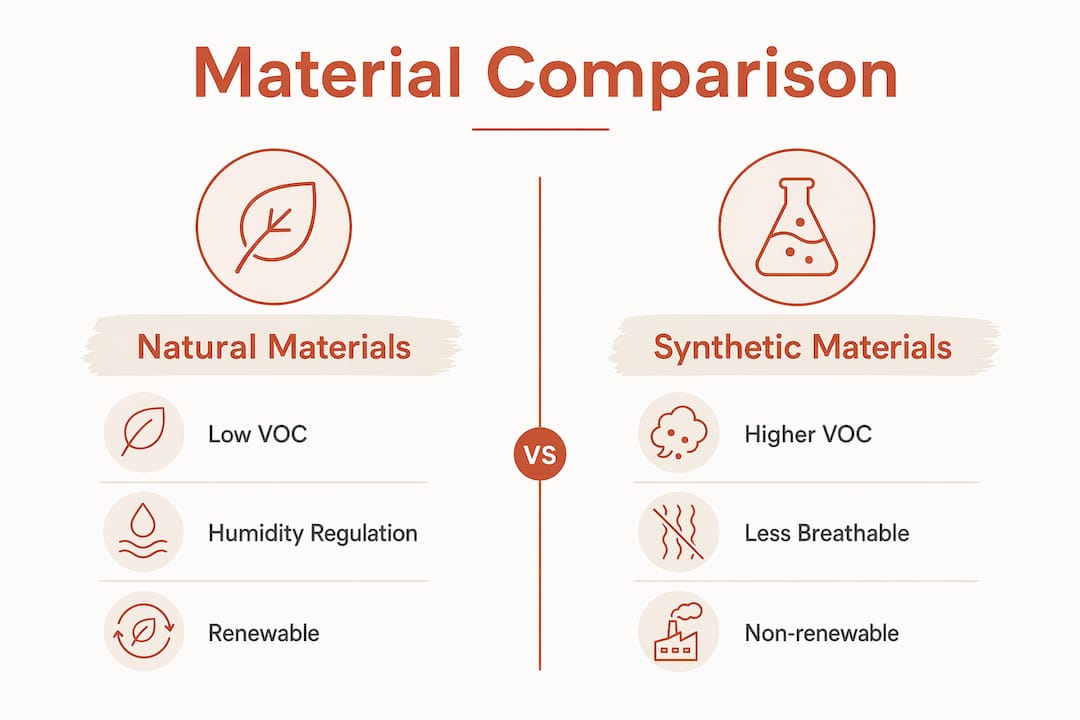
One important caveat: material choice alone is not sufficient if the adhesives, sealants, or finishes used during installation are synthetic and high-emission. A solid oak floor installed with a solvent-based adhesive can still off-gas significantly. Always check the full installation system, not just the surface material.
Why sustainability and emotional connection drive natural decor choices
Sustainability is not just a marketing angle. Many natural materials are genuinely renewable, carbon-sequestering, and biodegradable in ways that synthetic alternatives are not. Cork, for example, is harvested from the bark of living cork oak trees without cutting them down. Cork flooring provides up to 16 dB of impact sound reduction while remaining fully natural and durable under high foot traffic. That combination of ecological benefit and functional performance is rare.
Eco-friendly materials are favored for longevity, environmental responsibility, and emotional authenticity, according to 2026 design trend reporting from Elle Decor. The shift is away from overly uniform, manufactured-looking surfaces and toward materials with visible character. This is not nostalgia. It is a deliberate design philosophy that values the story a material carries.
Third-party certifications help you make confident choices. Sustainable home decor brands increasingly rely on certifications like FSC (Forest Stewardship Council) for wood, GOTS (Global Organic Textile Standard) for textiles, and Cradle to Cradle for broader product lifecycle assessment. These labels give you a way to verify claims beyond marketing copy.
The emotional dimension is just as real as the ecological one. Natural materials age with grace. A solid walnut dining table develops a patina over years of use. A linen sofa cover softens with washing. These changes are not flaws. They are evidence of a material that responds to life rather than resisting it. That quality, what designers sometimes call “wabi-sabi” or the beauty of imperfection, is something no synthetic surface can fake convincingly.
- Look for FSC certification on all wood products
- Choose GOTS-certified textiles for bedding, cushions, and upholstery
- Prioritize brands that disclose full material sourcing and production methods
- Select materials that improve with age rather than degrade visually
Pro Tip: When evaluating a “natural” product, ask the brand for its material data sheet. Legitimate natural and sustainable home furnishing suppliers will provide it without hesitation.
How to incorporate natural materials effectively in your home
Starting with textiles is the lowest-effort, highest-impact move. A wool rug, linen throw, or cotton cushion cover changes the sensory character of a room immediately and without renovation. These are also the easiest items to swap out as your taste evolves. For a room that already has synthetic flooring or painted walls, layering natural textiles is the fastest way to shift the atmosphere.
For more transformative changes, follow this sequence:
- Start with rugs and soft furnishings. Wool, jute, and cotton rugs anchor a room and add acoustic softness. They work on any floor type.
- Add timber or stone surfaces. A reclaimed wood coffee table, a marble side table, or terracotta tile in a kitchen or bathroom creates a hard-surface anchor that reads as grounded and permanent.
- Introduce living elements. Potted plants, dried botanicals, and fresh flowers are natural materials too. They add movement, scent, and biological variation that no inanimate material can replicate.
- Upgrade your walls. Lime plaster, clay paint, or natural fiber wallcoverings transform the largest surfaces in a room and deliver the air quality benefits discussed above.
- Audit your finishes. Check that adhesives, sealants, and coatings used during installation are low-VOC or water-based. The surface material and the installation system need to work together.
Pro Tip: You do not need to replace everything at once. Focus first on the surfaces you touch most often: floors, seating, and bedding. These are the points where natural materials deliver the most noticeable sensory benefit.
Balancing natural and synthetic materials is also a valid approach. Some synthetic materials outperform natural ones in specific contexts, such as outdoor upholstery exposed to UV and moisture. The goal is not purity. It is intentionality. Choose natural where it adds clear sensory, health, or ecological value, and be honest about where performance requirements point elsewhere. This connects well to thinking about how hybrid work affects home design, where multi-functional spaces benefit from materials that perform across different uses throughout the day.
What emerging innovations are shaping natural materials in interior design?
The frontier of natural materials goes well beyond wood and wool. Bio-based and regenerative materials like mycelium and bacterial cellulose are entering the interior design space with properties that conventional materials cannot match. Mycelium composites, grown from fungal root networks, are biodegradable, carbon-sequestering, and can be shaped into panels, tiles, and acoustic surfaces. Bacterial cellulose produces a material similar to leather without any animal or petroleum inputs.
| Material | Source | Key benefit | Current challenge |
|---|---|---|---|
| Mycelium composite | Fungal networks | Biodegradable, carbon-sequestering | Durability in humid conditions |
| Bacterial cellulose | Microbial fermentation | Leather-like, zero animal inputs | Scaling production cost |
| Algae-based panels | Algae cultivation | Carbon-absorbing, lightweight | Color and finish consistency |
| Reclaimed timber | Salvaged wood | Zero new resource extraction | Supply variability |
Digital fabrication is also changing how natural materials are processed and applied. CNC milling and parametric design allow timber and stone to be cut into forms that were previously impossible or prohibitively expensive. This means natural materials can now meet the precision requirements of contemporary architecture without being replaced by synthetics. The challenge for most of these emerging materials is market adoption and standardization. Mycelium panels are not yet available at your local home improvement store. But the trajectory is clear, and early adopters are already using them in residential interiors with striking results.
Key takeaways
Natural materials improve home decor by delivering sensory richness, lower VOC emissions, and emotional authenticity that synthetic alternatives cannot replicate.
| Point | Details |
|---|---|
| Sensory richness | Natural textures like timber grain and linen weave create warmth and coherence that synthetics lack. |
| Air quality benefits | Natural materials emit fewer VOCs and regulate humidity, improving health in tightly sealed homes. |
| Stress reduction | Biophilic design with natural elements reduces self-reported stress by up to 59.1% in documented studies. |
| Sustainability credentials | Certifications like FSC and GOTS verify ecological claims beyond marketing language. |
| Start with textiles | Rugs, throws, and cushion covers deliver immediate sensory impact with minimal commitment or cost. |
Why I think natural materials are worth every bit of the effort
I have spent a lot of time in rooms that look beautiful in photographs and feel flat in person. The common thread is almost always synthetic surfaces. Perfectly uniform flooring, matte-painted walls with zero texture, furniture upholstered in fabric that feels like it was designed to resist everything, including comfort. These rooms are easy to maintain and hard to love.
The first time I replaced a synthetic rug with a hand-knotted wool one, the change was immediate and physical. The room sounded different. It felt different underfoot. The light behaved differently. None of that showed up in a photo, but it changed how I wanted to spend time in that space.
What I have learned is that you do not need to overhaul your entire home to feel this shift. Start with one high-touch, high-visibility element. A wool rug, a linen sofa cover, a timber shelf. Give it a few weeks. Pay attention to how the room feels at different times of day. I think you will find that the investment pays off in ways that are hard to quantify but very easy to feel.
Mindful sourcing matters too. Not every product labeled “natural” is low-emission or sustainably produced. Ask questions, request certifications, and read material data sheets. The brands worth buying from will welcome those questions. Pairing that intentional approach to your home environment with an equally intentional approach to your physical wellness, as Couchanddumbells encourages, is how you build a lifestyle that looks good and feels even better.
— Brian Dunn, Couch & Dumbbells
Bring natural materials into your home with Couchanddumbells
Couchanddumbells curates home and interior pieces that reflect exactly what this article describes: materials with character, warmth, and purpose. Whether you are looking for textiles that add sensory depth, furniture with genuine natural material construction, or accent pieces that bring organic texture into your space, the home and interior collection is a strong starting point. Every piece is selected with quality and intentional living in mind. If you want to extend that natural aesthetic outdoors, the outdoor furniture set brings the same commitment to materials and comfort to your patio or garden. Your home is where your wellness begins. Make it count.
FAQ
What makes natural materials better than synthetic for home decor?
Natural materials deliver lower VOC emissions, better humidity regulation, and sensory richness that synthetic surfaces cannot replicate. They also support biophilic design principles linked to measurable stress reduction and improved well-being.
Are natural home decor materials more expensive?
Natural materials vary widely in price, and many entry-level options like cotton, jute, and reclaimed wood are competitively priced with synthetic alternatives. The long-term value is often higher because natural materials age well rather than degrading visually.
How do I know if a natural material product is genuinely eco-friendly?
Look for third-party certifications such as FSC for wood, GOTS for textiles, and Cradle to Cradle for broader lifecycle assessment. Reputable brands will provide material data sheets and sourcing transparency on request.
Can natural materials really improve indoor air quality?
Yes. Materials like lime plaster are zero VOC and actively regulate humidity, while natural fiber textiles do not off-gas the way synthetic carpets and upholstery can. The full installation system, including adhesives and sealants, also needs to be low-emission for maximum benefit.
Where should I start if I want to add natural materials to my home?
Start with rugs, throws, and cushion covers in wool, cotton, or linen. These deliver immediate sensory impact, require no renovation, and work in any room. From there, consider a timber or stone surface as a hard-material anchor.