

Most homeowners assume that buying cheaper patio furniture is a savvy financial move. After all, it’s just outdoor seating, right? But understanding why outdoor furniture quality matters changes that thinking quickly. Your outdoor space is used daily by 85% of homes with outdoor living areas, and the furniture you place there faces conditions that will expose every weakness in its construction. This guide breaks down what separates lasting pieces from disposable ones, and why the difference is worth your attention before you buy.
Table of Contents
- Key Takeaways
- What your outdoor furniture actually endures
- How to read material and build quality
- The real cost of buying cheap
- Choosing, maintaining, and protecting your investment
- My honest take on why this decision matters
- Upgrade your outdoor space with Couchanddumbells
- FAQ
Key Takeaways
| Point | Details |
|---|---|
| Quality outlasts cheap alternatives | Quality patio furniture lasts 5 to 10+ years versus 1 to 3 years for budget sets. |
| Material choice drives durability | Powder-coated aluminum, teak, and HDPE poly lumber resist weather far better than standard plastics. |
| Total cost favors quality | Replacing cheap furniture repeatedly costs as much as buying quality pieces once, with more waste. |
| Physical tests reveal true quality | Check frame weight, weld smoothness, and finish coverage before purchasing any outdoor furniture. |
| Maintenance extends any furniture’s life | Using covers, cleaning regularly, and storing cushions properly adds years to your investment. |
What your outdoor furniture actually endures
Your patio furniture does not get a break. Sun, rain, humidity, temperature swings, and salt air all work against it every single day. The importance of outdoor furniture construction becomes obvious once you understand what these forces actually do to materials over time.
UV radiation is one of the most damaging factors, and it works silently. UV exposure causes fading, cracking, and finish degradation in materials that lack proper protection. A cheap plastic chair left in full sun for one summer can become brittle and discolored before the season ends. Lower quality furniture skips the UV-resistant coatings and pigments that protect surfaces from this kind of breakdown.
Moisture compounds the problem. Frames without proper corrosion protection rust from the inside out, often before you notice any surface damage. Wicker that is not made from high-density polyethylene unravels and warps when it absorbs water repeatedly. These are not edge cases. They are the predictable outcome of using the wrong materials outdoors.
Here is what commonly fails on budget outdoor furniture:
- Rust formation on steel or low-grade aluminum frames, especially at joints and welds
- Unraveling or cracking wicker made from natural rattan or low-grade synthetic materials
- Brittle, yellowing plastics that lose structural integrity after one or two seasons
- Faded cushion fabrics that surface-dye quickly bleaches out under UV exposure
- Wobbling frames caused by weak joints that loosen with temperature expansion and contraction
If you live near the coast or in a high-UV region, environmental conditions shorten furniture life significantly and make material selection even more critical.
Pro Tip: If you live within a mile of the ocean, prioritize marine-grade materials like 316 stainless steel hardware and powder-coated aluminum frames. Salt air accelerates corrosion on almost every other material.
How to read material and build quality
Knowing what to look for before you buy is one of the most practical benefits of quality outdoor furniture awareness. The difference between a piece that lasts a decade and one that fails in two years often comes down to specific, testable details.
Frame materials and what they tell you
Powder-coated aluminum is the gold standard for most outdoor settings. It does not rust, resists UV damage, and stays light enough to move easily. Teak is another top performer because its natural oils repel water and resist insects without any treatment. HDPE poly lumber, made from recycled plastics, uses color-through construction that resists fading because the color runs all the way through the material rather than sitting on the surface.
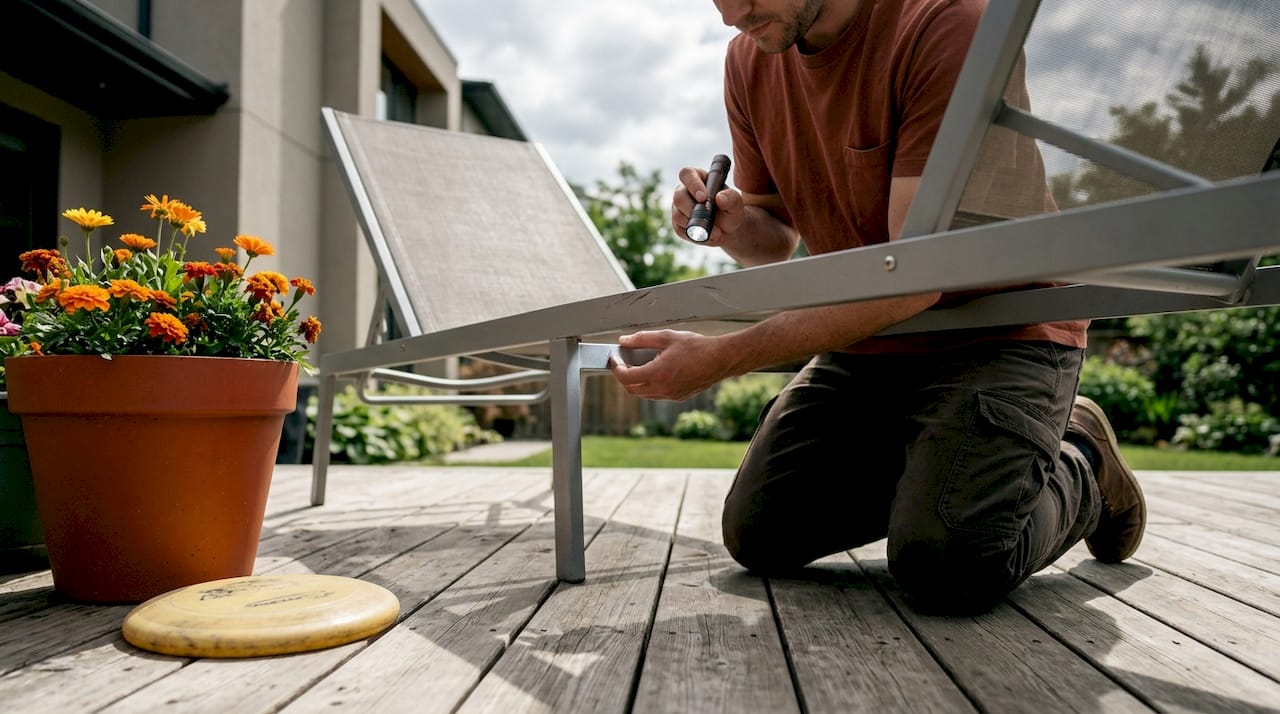
When you physically handle a frame, pay attention to weight. A chair weighing under 5 pounds likely has thin aluminum tubing and will not hold up well. Run your hand along the welds. Smooth, consistent welds indicate precision manufacturing. Rough, uneven welds suggest shortcuts were taken throughout the production process.
Finish and cushion quality
Quality powder-coated finishes cover hidden areas completely, including the undersides of frames and interior surfaces. This prevents corrosion in spots you cannot see during a quick inspection. Cheap finishes skip these areas, and that is exactly where rust starts.
For cushions, the foam type matters more than most buyers realize. Reticulated or quick-dry foam allows water to pass through rather than absorb, which prevents mold and waterlogging. On the fabric side, solution-dyed acrylic fabrics like Sunbrella maintain vibrant colors for years because the dye is locked into the fiber during manufacturing, not applied to the surface afterward.
Here is a quick comparison to guide your decision:
| Feature | Budget furniture | Quality furniture |
|---|---|---|
| Frame material | Hollow steel, thin plastic | Powder-coated aluminum, teak, HDPE |
| Finish coverage | Surface only | Complete, including hidden areas |
| Cushion foam | Standard polyurethane | Quick-dry or reticulated foam |
| Fabric type | Surface-dyed polyester | Solution-dyed acrylic |
| Expected lifespan | 1 to 3 years | 5 to 10+ years |
| Warranty | None or 90 days | 1 to 5 years or more |
The warranty signal
A strong warranty signals manufacturer confidence in durability and craftsmanship. A brand offering a five-year warranty on frames is telling you something important: they built it to last. A brand offering 90 days is telling you something equally important.
Pro Tip: Ask specifically about what the warranty covers. Frame warranties and cushion warranties are often separate. A ten-year frame warranty with a one-year cushion warranty is common and worth knowing before you buy.
The real cost of buying cheap
This is where the factors affecting outdoor furniture quality become a financial conversation, not just a comfort one. The upfront price is only part of the story.
Cheap resin or low-cost wicker sets last only 1 to 3 years, while quality powder-coated aluminum and PE wicker sets can last 5 to 10+ years. If you spend $300 on a budget set and replace it every two years, you spend $1,500 over a decade. A quality set priced at $900 that lasts ten years costs less overall, and you avoid the hassle and waste of repeated purchases.
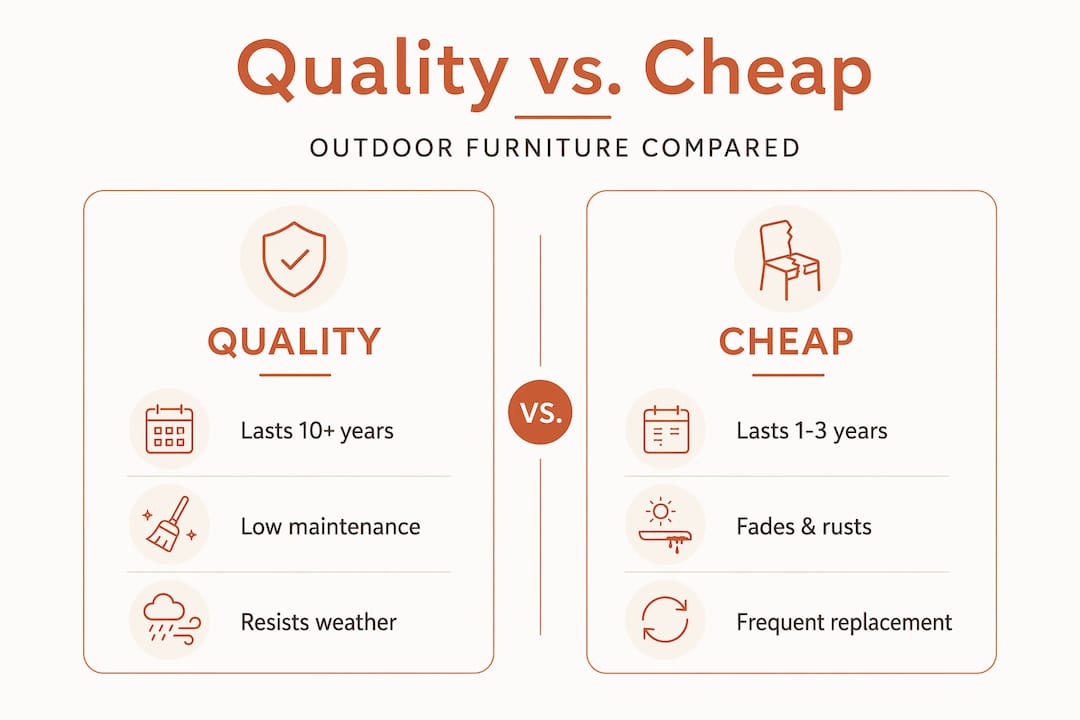
Replacing cheap furniture frequently results in total costs comparable to premium furniture but with significantly more waste generation. Most cheap patio furniture ends up in a landfill. It is not recyclable in any practical sense, and the volume adds up fast when millions of households repeat this cycle every few years.
Here is how the numbers play out over time:
| Scenario | Cost per set | Replacement cycle | 10-year total | Sets discarded |
|---|---|---|---|---|
| Budget furniture | $300 | Every 2 years | $1,500 | 5 sets |
| Mid-range furniture | $600 | Every 4 years | $1,500 | 2.5 sets |
| Quality furniture | $1,000 | Every 10+ years | $1,000 | 1 set |
The environmental math is just as clear. Choosing quality is a more sustainable habit, and that aligns with the kind of intentional, mindful living that makes your home feel good to be in.
Some additional financial considerations worth noting:
- Quality furniture often requires less maintenance spending over time
- Sling furniture frames last 10 to 15+ years, and the slings themselves are replaceable every 5 to 7 years, extending the life of the whole set affordably
- Furniture that holds its appearance adds perceived value to your outdoor space and your home overall
Choosing, maintaining, and protecting your investment
Now that you understand the importance of outdoor furniture quality, here is how to apply that knowledge practically when you shop and after you bring pieces home.
Before you buy
- Pick up the frame. Lightweight chairs under 5 pounds likely use thin tubing that will not last.
- Inspect the welds. Smooth, consistent welds indicate quality construction throughout.
- Check finish coverage. Look underneath and inside joints for complete coating, not just surface coverage.
- Squeeze the cushion foam. It should feel dense and spring back quickly, not collapse or stay compressed.
- Read the warranty carefully. Separate frame and cushion warranties are normal, but both should offer meaningful coverage.
- Consider your climate. Coastal, high-humidity, or high-UV environments narrow your material options to the most resistant choices.
After you buy
Maintenance is where many homeowners lose years of furniture life without realizing it. UV exposure is a silent destroyer that most buyers overlook until the damage is already done. Using furniture covers when pieces are not in use, especially during peak sun hours or off-season months, makes a measurable difference.
Clean frames with mild soap and water at least twice per season. Store cushions indoors or in a deck box when rain is expected. If a sling or strap breaks, replace it promptly rather than letting the frame sit unused. Many manufacturers sell replacement components, which is one of the real benefits of choosing quality outdoor furniture from reputable brands.
Pro Tip: At the start of each season, apply a UV-protective spray to your cushion fabric and a light coat of car wax to powder-coated frames. Both treatments take under 30 minutes and can add a full year to your furniture’s appearance.
My honest take on why this decision matters
I’ve watched homeowners cycle through cheap patio sets year after year, convinced they are saving money. What I’ve actually seen is the opposite. The frustration of wobbly chairs after one season, cushions that look faded and worn before summer ends, and the time spent hauling broken furniture to the curb adds up in ways that never show up in the original price tag.
What I’ve learned is that outdoor furniture is not a minor purchase. It shapes how you feel about spending time outside. When your space looks good and feels comfortable, you actually use it. You sit outside with your morning coffee. You host friends without apologizing for the furniture. You create a space that supports rest and connection, which is exactly what a well-designed home should do.
My take is this: you do not need to spend a fortune, but you do need to spend intentionally. Prioritize frame material and finish quality above all else. Those two factors determine longevity more than anything else. If budget is a concern, buy fewer pieces of genuine quality rather than a full set of mediocre ones. A beautiful, durable two-seat arrangement beats a sagging six-piece set every time.
Outdoor furniture is part of your home. Treat it like one.
— Brian Dunn, Couch & Dumbbells
Upgrade your outdoor space with Couchanddumbells
At Couchanddumbells, the belief is simple: your home, inside and out, deserves furniture that is built to last and designed to inspire. Whether you are creating a peaceful morning retreat or a space for weekend gatherings, the right outdoor furniture makes all the difference.
Couchanddumbells curates outdoor and home interior pieces with quality, durability, and intentional design at the forefront. Every selection reflects the brand’s commitment to helping you build a living space that looks good and feels even better. You can browse the full collection and find pieces that match your climate, style, and lifestyle at Couchanddumbells. For more guidance on choosing furniture that works for your space, the Couchanddumbells journal is full of practical tips and honest recommendations to help you shop smarter.
FAQ
How long should quality outdoor furniture last?
Quality outdoor furniture made from powder-coated aluminum, teak, or HDPE poly lumber typically lasts 5 to 10+ years with proper care. Budget sets made from thin plastics or untreated materials often fail within 1 to 3 years.
What outdoor furniture material holds up best?
Powder-coated aluminum, teak, and HDPE poly lumber are among the most durable options for outdoor use. Each resists moisture, UV damage, and temperature changes better than standard plastics or untreated metals.
Is outdoor furniture worth the higher upfront cost?
Yes. When you factor in replacement frequency and maintenance costs, quality outdoor furniture typically costs less over a decade than repeatedly replacing cheap alternatives, and it generates significantly less waste.
How do I know if outdoor furniture is well made before buying?
Pick up the frame to check its weight, inspect welds for smoothness and consistency, and look for complete finish coverage on hidden surfaces. These physical checks reveal build quality that price alone does not show.
How do I protect outdoor furniture from UV damage?
Use furniture covers when pieces are not in use, apply UV-protective spray to cushion fabrics at the start of each season, and store cushions indoors during heavy rain or off-season months to extend their lifespan.