

Small space design is the practice of maximizing functionality and comfort in limited living environments by optimizing every square foot for practical, aesthetic, and psychological use. For urban renters working with studios, one-bedrooms, or compact apartments, why small space design matters goes far beyond aesthetics. The right spatial decisions directly affect your daily energy, mental clarity, and even your utility bills. This article draws on 2026 psychophysiological research, architectural studies from GreenBuildingAdvisor, and insights from design professionals to give you a clear, evidence-based framework for making your space work harder.
How does small space design optimize daily usability?
The core principle of effective small space design is “right-sizing.” Right-sizing means removing low-frequency spaces like formal dining rooms, dedicated foyers, and hallways, then reallocating that square footage to areas you actually use every day. According to GreenBuildingAdvisor, formal rooms can consume over a third of a home’s total area. That is a significant portion of your rent paying for space you rarely occupy.
For renters, right-sizing is not about tearing out walls. It is about rethinking how you assign purpose to each zone. A corner that holds a rarely opened bookcase can become a compact workout area. A formal dining setup for four can shrink to a fold-down table for two, freeing up floor space for movement and daily activity. Design professionals describe this as treating your space like a flatmate: every zone must pull its weight or give up its spot.
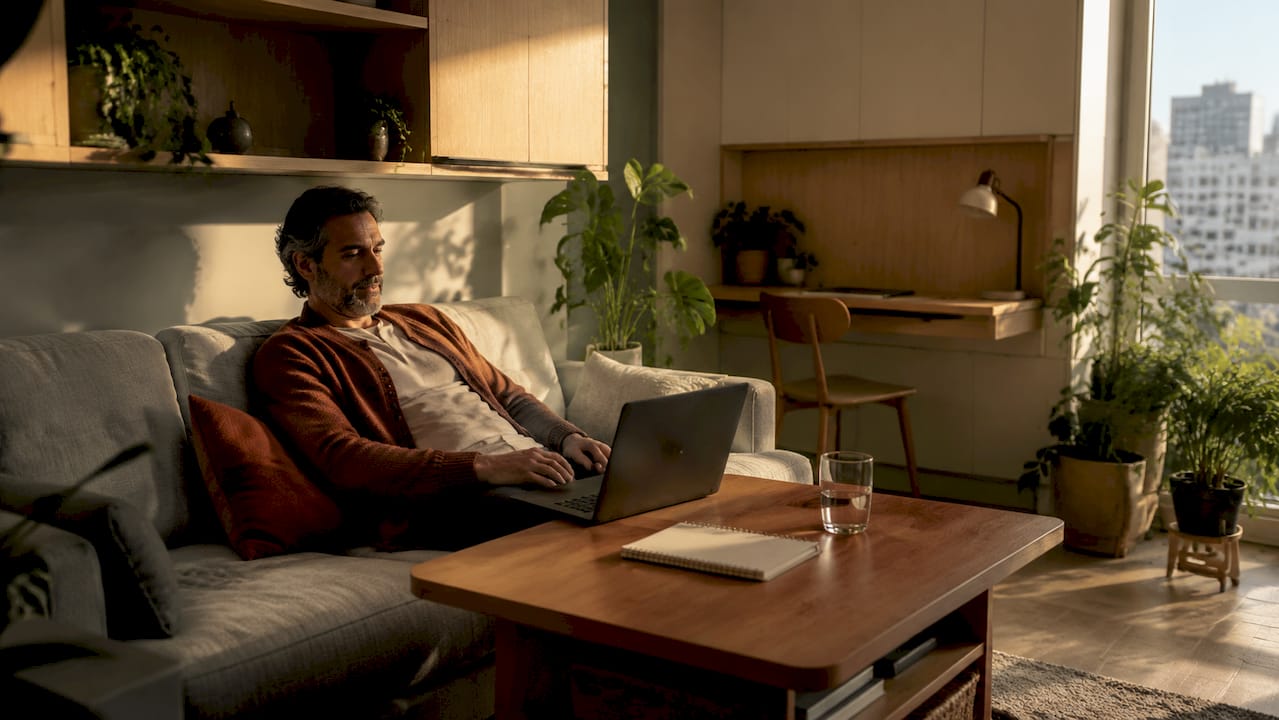
Multi-use space strategy is the practical tool that makes right-sizing work. A sofa with hidden storage, a desk that folds into a wall panel, and a bed frame with built-in drawers each serve two functions without adding visual clutter. The benefits of small space living become most obvious when you stop decorating and start programming your square footage.
Here are the most effective trade-offs urban renters can make:
- Replace a dedicated home office with a wall-mounted fold-down desk that disappears after work hours
- Swap a static coffee table for an ottoman with internal storage and a removable tray top
- Use a daybed or sleeper sofa to combine a guest room function with a living room
- Position a kitchen island on casters so it doubles as a dining surface and moves out of the way during workouts
Pro Tip: Map out every zone in your apartment and write down how many times per week you actually use it. Any zone used fewer than three times a week is a candidate for reassignment or consolidation.
What psychological principles make small spaces feel larger?
Spatial perception research published in 2026 reveals that how a space feels is often more important than how large it actually is. A psychophysiological study on spatial experience found that environments with clear activity zones, minimal visual barriers, and low clutter scored significantly higher on perceived control and behavioral readiness. This means a well-organized 400-square-foot studio can feel more livable than a cluttered 700-square-foot apartment.
Ceiling height is one of the most underused tools in small space interior solutions. Research from Aalborg University found a compression-expansion perceptual effect where people overestimate height increases by 12.11% and underestimate height reductions by 33.45%. This asymmetry means even a small visual cue that draws the eye upward, like a tall bookshelf or a vertical stripe of paint, creates a disproportionate sense of spaciousness.
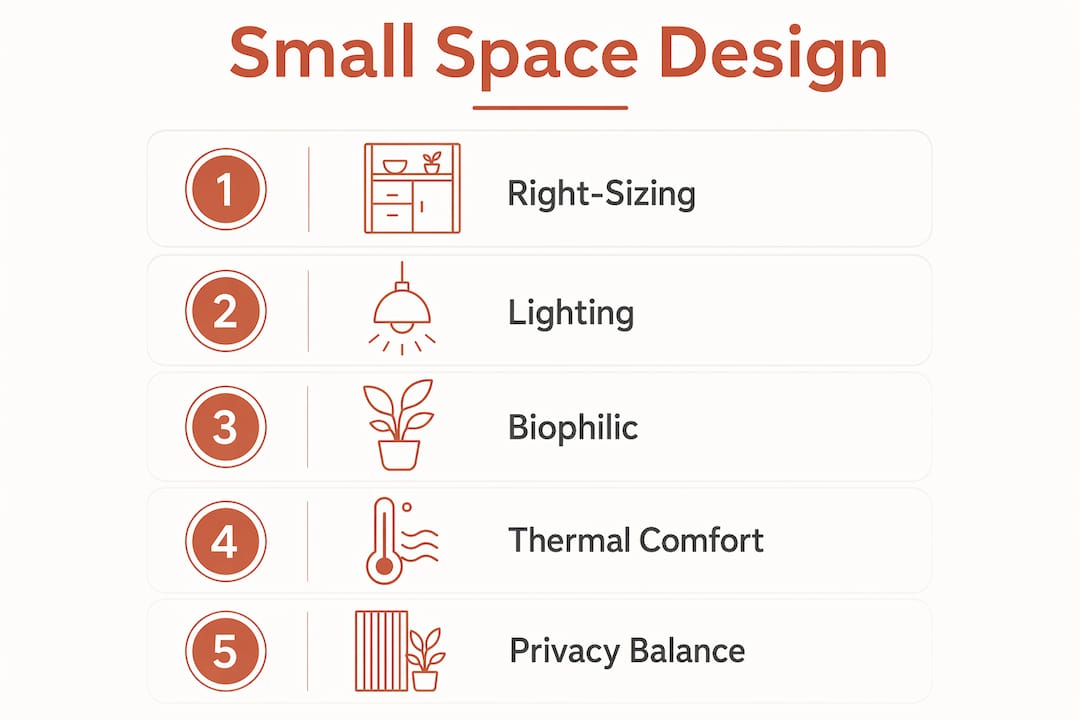
Lighting is the second major lever. Vertical illumination at 4000K to 5000K color temperature improves depth perception and psychological comfort in confined volumes. Wall-washing sconces, uplighting behind furniture, and under-cabinet strips all create the impression of a taller, wider room without changing a single dimension.
Biophilic design adds a third layer of benefit. Natural elements like plants, organic textures, and earthy color palettes strengthen nature connectedness and measurably improve psychological well-being in high-density urban residences. A small potted plant on a windowsill or a jute rug underfoot does more than look good. It reduces the psychological compression that dense urban living creates.
| Design strategy | Effect on perception |
|---|---|
| Vertical lighting (4000K–5000K) | Improves depth perception and reduces confined-space discomfort |
| Tall vertical elements (shelves, curtains) | Exploits perceptual bias to make ceilings feel higher |
| Low clutter and clear micro-zones | Lowers cognitive load and increases sense of control |
| Biophilic elements (plants, natural textures) | Strengthens well-being and reduces psychological compression |
| Minimal visual barriers between zones | Promotes behavioral readiness and spatial legibility |
How does design affect energy use and thermal comfort?
Small space design decisions have a direct impact on your energy costs and physical comfort, especially in multi-unit urban buildings where you may not control the central heating system. A 2026 NSF-funded study found that roof insulation reduced heating energy by 25.3 to 34.2% in multi-unit residential buildings, with air-source heat pumps rated highly for noise control and individual temperature management. That range of savings is meaningful for renters paying their own utility bills.
Even when you cannot retrofit the building itself, you can apply low-cost interventions that improve thermal comfort noticeably. The goal is to reduce heat loss at the perimeter and control solar gain through windows, which are the two biggest variables a renter can actually influence.
Practical interventions that work without permanent renovation:
- Install thermal blackout curtains on north-facing windows to reduce cold drafts in winter
- Use draft excluders at door bases to prevent conditioned air from escaping
- Place a portable air-source unit or smart plug-in heater in the zone you occupy most, rather than heating the entire apartment
- Add a reflective window film to south-facing glass to reduce summer heat gain without blocking light
- Use area rugs over hard floors to reduce radiant heat loss and improve perceived warmth
The connection between thermal comfort and mental well-being is direct. A space that is consistently too cold or too warm increases background stress and reduces focus. Addressing thermal comfort is not a luxury upgrade. It is a foundational part of how to design small apartments that genuinely support daily life.
What layout strategies balance openness and privacy?
The open-plan layout has dominated small apartment design for two decades, but design professionals are now pushing back. Interior Settings’ 2026 analysis argues that fully open plans reduce privacy and increase cognitive fatigue by exposing every activity zone simultaneously. When your kitchen, workspace, and sleeping area share one unbroken visual field, your brain never fully disengages from any of them.
The solution is strategic separation, not full walls. Partial partitions, open shelving units used as room dividers, and glass panels define zones without blocking light or shrinking the perceived footprint. Vertical space usage is particularly effective here. A tall bookshelf positioned perpendicular to a wall creates a visual boundary between a sleeping zone and a living zone without requiring any structural work.
Here is a step-by-step approach renters can use to add privacy without permanent changes:
- Identify the two zones that create the most cognitive conflict when combined, typically the sleep area and the work area.
- Position a freestanding shelving unit or open bookcase between them, oriented perpendicular to the longest wall.
- Add a curtain track to the ceiling using removable adhesive hooks to create a soft visual barrier that can be opened or closed.
- Use distinct lighting circuits for each zone. A warm-toned lamp in the sleep area and a cooler task light at the desk signal different behavioral modes to your brain.
- Define floor zones with area rugs in different textures or tones to reinforce the separation without adding height.
Pro Tip: Cognitive science research shows that people mentally simulate actions based on spatial layout. Designing clear, distinct zones primes your brain for the activity associated with each area, improving focus and relaxation in the right places.
Key takeaways
Thoughtful small space design improves daily usability, psychological well-being, and energy efficiency by aligning every square foot with how you actually live.
| Point | Details |
|---|---|
| Right-sizing beats decorating | Reassign rarely used zones to multi-function areas before adding any new furniture. |
| Perception is designable | Vertical lighting, tall elements, and low clutter make spaces feel measurably larger. |
| Thermal comfort is foundational | Curtains, draft excluders, and zone heating reduce energy costs and background stress. |
| Strategic separation beats open plans | Partial dividers and distinct lighting zones improve privacy without shrinking the space. |
| Biophilic elements add well-being | Plants and natural textures reduce psychological compression in dense urban environments. |
Small constraints, big clarity: my honest perspective
I have spent years watching people pour money into furniture and decor while ignoring the layout decisions that actually determine how a space feels. Architect Rachel Radley puts it well: smaller homes force clarity by eliminating the option of unused rooms. That constraint is not a problem. It is a design advantage.
The most common mistake I see is treating a small apartment as a smaller version of a large one. People try to fit a full dining table, a dedicated desk, a full sofa, and a bed into 500 square feet and then wonder why it feels cramped. The shift that changes everything is moving from “what furniture do I want?” to “what activities do I need to support?” Once you answer that second question honestly, the right pieces become obvious and the unnecessary ones disappear.
Small space living also has a wellness dimension that rarely gets discussed. When your environment is legible, organized, and thermally comfortable, your baseline stress level drops. You sleep better, focus more easily, and feel more in control of your day. That is not a minor benefit. It is the entire point of intentional design.
If you are renting and feel limited by what you can change, start with lighting and clutter. Those two variables cost almost nothing to address and deliver the largest perceptual return. Everything else builds from there.
— Brian Dunn, Couch & Dumbbells
Design your space with Couchanddumbells
The design principles in this article work best when your furniture and storage solutions are built for dual purpose. At Couchanddumbells, the home and interior collection is curated specifically for urban dwellers who want their space to look intentional and function hard. From storage-integrated seating to space-conscious shelving, every piece is selected to support the kind of multi-use, low-clutter living this article describes. If you are also thinking about fitting a workout routine into your layout, the guide on apartment home gym essentials shows exactly how to make that work without sacrificing your living space.
FAQ
Why does small space design matter for renters specifically?
Renters have limited ability to make structural changes, so design decisions about layout, lighting, and furniture selection carry more weight. Thoughtful small space design maximizes usability and comfort within those constraints without requiring permanent renovation.
What is the single most effective change for a small apartment?
Reducing visual clutter and creating clear activity zones delivers the highest return. Research links low clutter and legible zoning to lower cognitive stress and a stronger sense of control, both of which improve how a space feels to live in daily.
Does ceiling height really affect how big a room feels?
Yes, significantly. A 2026 study found that even small increases in ceiling height are overestimated by about 12%, meaning visual cues that draw the eye upward create a disproportionate sense of spaciousness.
Can good design actually lower my energy bills?
Design choices like thermal curtains, draft excluders, and zone-specific heating can reduce heat loss and improve thermal comfort without building-level retrofits. NSF research confirms that targeted insulation interventions lower heating energy use by a measurable margin in multi-unit buildings.
How do I add privacy in an open-plan apartment without building walls?
Use freestanding bookshelves as perpendicular dividers, ceiling-mounted curtain tracks with removable hooks, and distinct lighting temperatures for each zone. These tactics create clear visual and psychological separation between activity areas without any permanent changes to the space.
Recommended
- The Role of Vertical Space Interiors: a Homeowner’s Guide | Couch & Dumbbells
- Why City Living Demands Versatile Furniture: a Practical Guide | Couch & Dumbbells
- Apartment Home Gym Essentials for Urban Dwellers | Couch & Dumbbells
- How Indoor Outdoor Living Works: a Homeowner’s Guide | Couch & Dumbbells